Be Careful with the Flowers on Your Plate: Professor Cheng Cheng-yung Warns About Safety
Once, while eating shabu-shabu out with Professor Cheng Cheng-yung of the Department of Horticulture at National Taiwan University, we noticed that when Professor Cheng saw the pretty flower on the vegetable plate, not only was he unhappy, he also frowned, quickly picked the flower up off the plate and set it aside on the table, and by the way reminded us not to pick up and eat anything near that flower. After hearing that, a lot of question marks popped into our heads, and we thought, what is wrong with that flower? Isn't it just a decorative, pretty flower? Why would Professor Cheng move it away and even say not to eat anything near it? Could that flower be poisonous?
After hurrying to ask Professor Cheng more about it, we found that there really could be some problems! Professor Cheng said that this kind of flower is called Dendrobium orchid. It is highly adaptable and easy to cultivate, and because it is brightly colored with a beautiful flower shape, it is very often used as a plating garnish for food and beverage presentations. Whether at wedding banquets, Japanese cuisine, Cantonese food or Taiwanese dishes, Dendrobium orchids are commonly seen
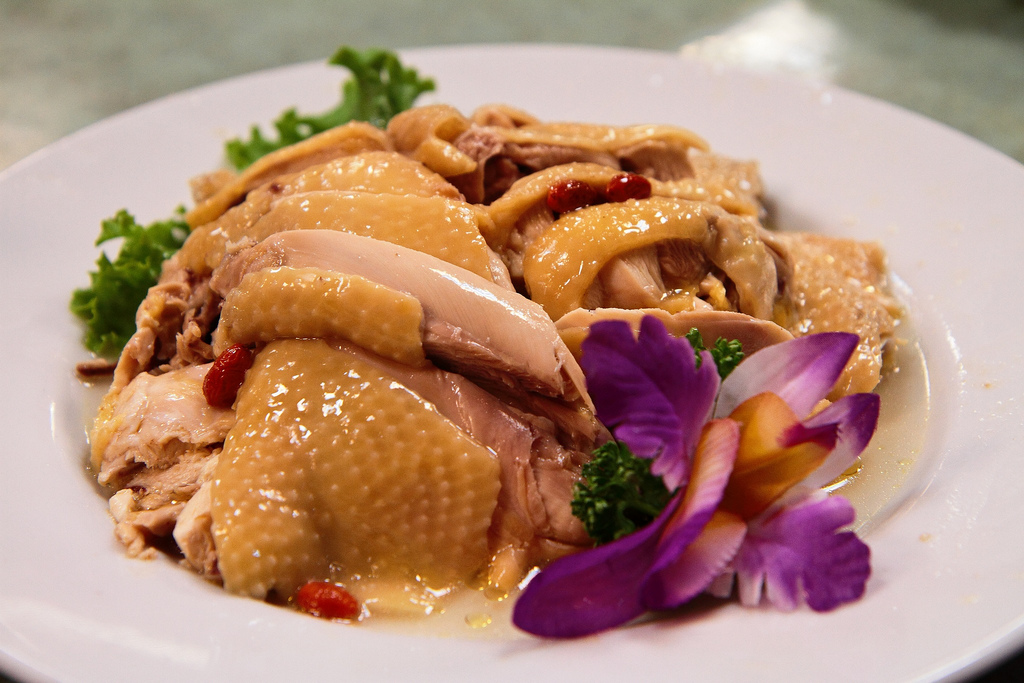
Why might such a beautiful Dendrobium orchid on a plate be potentially toxic? Professor Cheng continued…
Dendrobium orchids often have pesticide residues; moving them aside is the best policy
Dendrobium orchids are a kind of flower that is easy to grow, but during their growth process they inevitably encounter infestations by scale insects and aphids. To manage pests well, pesticides are usually sprayed. Therefore, the Dendrobium orchid on a plate mostly has pesticide residues and can easily "contaminate" the food around it. Even more worrying is that someone may very likely put it in their mouth, or children often play with it by hand and then touch utensils or directly touch food, causing the pesticide residues on it to be eaten. So, since it is impossible to know for sure whether there are pesticide residues on the Dendrobium orchid, moving the Dendrobium orchid aside is the best policy.
Don't misunderstand flower farmers; appropriate pesticide use is what gives us delicate, vibrant flowers
However, Professor Cheng also quickly stressed that for the growth and beauty of flowers, appropriate use of pesticides to control pests is very normal. As ornamental plants, these flowers do no harm to the human body, and with their beautiful appearance they bring people visual satisfaction. He hopes everyone will not misunderstand Dendrobium orchids and the flower farmers who grow them. He only hopes to let everyone understand that when ornamental flowers are combined with food and dining, they may cause harm to our food safety.
After finishing a meal, we could not help but sigh with emotion: it turns out that the beautiful flower on the table may also cause us to eat pesticides. We also sighed even more over whether the growing number of diseases of civilization and chronic diseases are caused by modern people's years of carelessness or ignorance about diet. And this lack of clarity is not because we are unwilling to understand, but because there is often no reliable channel to learn correct information. This is also Greenvines' mission - to devote ourselves to passing on professional information about eating, so you can live a better and healthier life!
So, what can be done through simple steps to make life better?
Professor Cheng and Greenvines share with you: "When you see a Dendrobium orchid on the dining table, immediately separate the flower from the food, and at the same time do not eat the food next to the flower."
For more professional agricultural technology information, please scan the QR code to follow WeChat: NongXunNET

Please indicate the source when reprinting.