65% of Elementary School Nutritious Lunch Menus Lack Clear Information
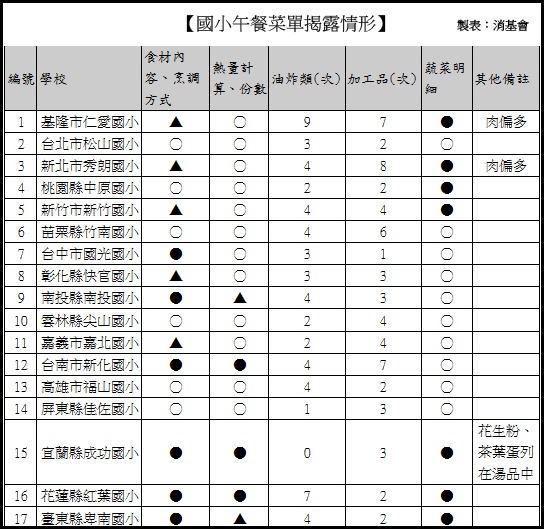
The Consumers' Foundation conducted a survey of nutritious lunches at 17 elementary schools across Taiwan, China, and found that as many as 65% failed to clearly list the ingredients and calorie content on their websites. Many operators, in order to cut costs, buy semi-processed meat products such as chicken nuggets and cuttlefish balls, which are not only full of food additives but are also mainly cooked by deep-frying. Among them, Ren'ai Elementary School in Keelung City had more than 9 fried items in March, higher than the recommended limit of 8 per month; the group meal vendor for Ren'ai Elementary School said the number of fried items could be reduced, but children prefer fried foods and meat, and they complain that they don't get full on vegetable days.
65% of Schools Have Unclear Labeling
According to statistics from the Ministry of Education, one in four children in Taiwan, China is overweight or obese. The Consumers' Foundation sampled nutritious lunch menus from elementary schools across Taiwan, China for March, randomly selecting one school from each of 17 counties and cities, but just on the matter of publishing menus, 65% of schools failed, with 6 schools not providing detailed ingredient contents and cooking methods, and 5 schools providing incomplete information. Consumers' Foundation Secretary-General Lei Li-fen said that from the dish names alone, it is impossible to tell the ingredients and cooking methods. Besides written descriptions, schools should also upload photos online, otherwise parents have no idea what their children are eating.
The survey showed that the three eastern counties of Yilan, Hualien and Taitung had the least clear nutritious lunch information. Chenggong Elementary School in Yilan County provided no ingredient contents, cooking methods, calories or serving sizes at all, and even listed peanut powder and tea eggs under the soup section. Many schools did not specify vegetable names, vaguely describing them only as "delicious seasonal vegetables" or "seasonal vegetables," leaving it unknown whether they were domestic or frozen imported vegetables.
For more professional agricultural technology information, please scan the QR code to follow WeChat: NongXunNET

Please indicate the source when reprinting.