Changhua electroplating wastewater case sparks heated debate, yet cancer risks persist long-term
Wastewater from electroplating plants in Changhua contaminating farmland has recently become a topic of national discussion again In the second half of this year, reports again emerged of electroplating factories illegally discharging wastewater in Changhua, and what followed has almost become a standard operating procedure (SOP): public agencies investigate the contamination of irrigation water and farmland, sample and test crops, destroy crops, remediate the soil, and then seek compensation from the electroplating plants as the "polluting parties." The latter half of this SOP usually unfolds like this: the institutional factors behind industrial wastewater contaminating farmland (such as factories clustered in agricultural zones and the way industrial wastewater is treated) are occasionally discussed, but before long they are forgotten; the long-term effects of industrial wastewater contamination of farmland on human health, because the pollution sources are hard to trace, are often borne by residents themselves. If this Changhua electroplating wastewater case follows that same SOP, the likely outcome is that the institutional factors behind the pollution will be forgotten and residents will continue to bear the impact of the contamination. Chang Wen-liang, a professor at National Taiwan University who has long studied farmland irrigation, once pointed out in an interview with NewsMarket: "Some studies have found that residents in the Changhua City and Hemei area have relatively high concentrations of heavy metals in their blood. People in Changhua are probably the shortest-lived and the earliest to develop cancer on Taiwan's west coast, with a particularly high rate of oral cancer. In Hualien and Taitung, the high oral cancer rate is because people chew betel nut, but in Changhua it is because of nickel pollution, because nickel affects the mucus in the mouth." However, Chang Wen-liang also admitted: "I wouldn't say that (the high oral cancer rate among Changhua residents) is definitely caused by farmland contamination, but there is certainly a connection." On the link between environmental pollution and residents' diseases, former Department of Health Director-General and epidemiologist Chen Chien-jen once studied the connection between arsenic levels in groundwater along Taiwan's southwestern coast and blackfoot disease among residents. He believes that whether a causal relationship can be established between environmental pollution and disease prevalence is a very complex question. Since 2010, Lien Yi-pin and Su Che-chun have published more than ten papers in international academic journals on the link between oral cancer in Changhua and heavy metal contamination of farmland. These research results all "find a close association between heavy metal contamination and the incidence of oral cancer, and provide a reasonable explanation for the abnormally high incidence." Many researchers have followed the same line of inquiry. Tsai Kuo-yang, an oral and maxillofacial surgeon at Changhua Christian Hospital, wrote in "The Relationship Between Environmental Heavy Metal Pollution and Oral Cancer": "Compared with southern Changhua, areas of northern and central Changhua with a higher density of electroplating factories have oral cancer patients who develop the disease at a younger age and have a worse prognosis (the patients' later condition is expected to be poor). The levels of heavy metal contamination in the environment of these areas (especially nickel and chromium) should play an important role in patients' carcinogenesis." Chiang Chi-ting and six other scholars also pointed out in "Exploring the Spatial Correlation Between Soil Heavy Metal Nickel Content and Oral Cancer Incidence" that heavy metal contamination of farmland soil in Changhua is severe, and that it is also a hotspot for oral cancer. Through spatial regression analysis, they stated: "There is a significant relationship between oral cancer incidence and soil heavy metal nickel," and inferred from this that "areas with high heavy metal nickel contamination may carry a concern of high risk for oral cancer." Over the past decade, farmland contamination in Changhua has persisted, and many experts and scholars have continued to devote substantial effort to research. It seems obvious that industrial wastewater has negative effects on human health, so why has wastewater from electroplating plants contaminating farmland continued for years? Dr. Su Che-chun, who has long studied oral cancer in Changhua and nickel contamination in farmland, believes that if you look at the whole country as a unit and compare electroplating industry revenue with oral cancer treatment spending, "electroplating plants are actually borrowing money from us and from our children and grandchildren; the cost is enormous, it's just that we can't see it right away. When one man gets oral cancer, it means a family loses its economic income and the medical system has to spend millions on treatment. Calculated across all patients, the cost may reach tens of billions, while the electroplating industry earns only one or two hundred million. Not only is soil contamination hard to restore, but it also leaves our whole society in deficit." From electroplating plant wastewater discharge, irrigation water, and farmland soil to crops and then the human body, this whole chain, through the research of many scholars, points to a "close" link between soil nickel contamination and the extremely high incidence of oral cancer. But because the pollution sources are complex and involve many dimensions, it is still impossible to state flatly that the two have a "100 percent" connection. "Changhua's soil contamination is very serious, and over the past twenty or thirty years it has become more and more serious." Dr. Su Che-chun asked helplessly: "Do we have to wait until all the land in Changhua is toxic, until researchers clearly produce findings like 'eating rice from here for ten years guarantees cancer,' before we take action?" Note: For the dynamic process of oral cancer in the Changhua area over the past thirty years, you can view the dynamic map produced by the Ministry of Health and Welfare. The link is: http://www.hpa.gov.tw/BHPnet/Portal/File/ThemeDocFile/201110310221373556/贰-一-2%20台湾口腔癌死亡率地理分布图.wmvThe Puzzle: What Does Long-Term Heavy Metal Contamination of Farmland Do to Human Health?
The Phenomenon: Changhua Residents' Oral Cancer Rate Is the Highest in the World
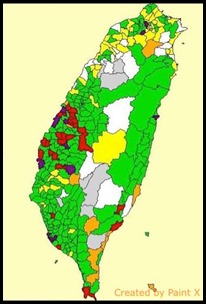

The Finding: Changhua Oral Cancer Is Closely Related to Nickel Contamination in Farmland
Is It Still Not Clear Enough That Farmland Contamination Harms Human Health?