Why can't you eat meat that has been spoiled for 10 hours?
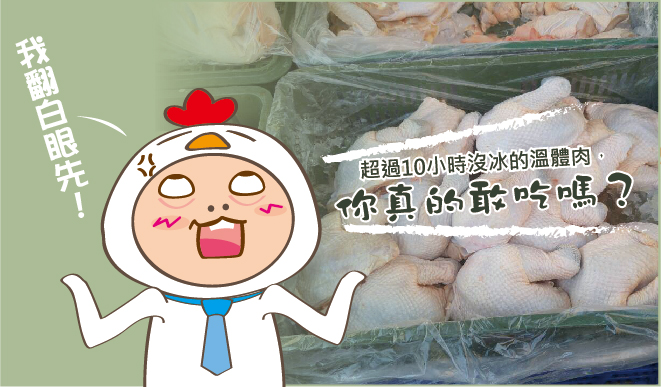
Market warm meat = meat left at room temperature for more than 10 hours. Everyone says warm meat is the freshest - what do you think?If you are even a little curious or doubtful, let us explore together why the people of this country still cling to an outdated understanding of meat hygiene and safety and cannot move forward!
Regulations in Taiwan, China and other advanced countries explicitly require that animals must be slaughtered in licensed slaughterhouses and pass inspection by government-appointed veterinarians. Also, because of avian influenza, since 2013 (the 102nd year of the Republic of China calendar) the Council of Agriculture has stipulated that "live poultry may not be slaughtered in markets" - slaughtering live animals in a traditional market is illegal.
Is there a slaughterhouse near your home? Slaughterhouses in Taiwan, China slaughter anywhere from 2,000 to 100,000 animals per day, operating from 9 p.m. to 3 a.m. the next morning, and the meat is often transported and delivered at room temperature. In fact, before you buy it, this so-called "warm meat" has already been exposed to room temperature for more than 10 hours!
1. Meat left at room temperature is bound to spoil: bacteria multiply rapidly, and the effective shelf life is only 8-12 hours.
2. Warm meat in traditional markets does not taste especially good: because the meat has already begun to go rancid. Only meat cooked and eaten within one hour of slaughter can truly be called fresh!
Go to a nearby traditional market and observe the truth for yourself!
1. Is there a slaughterhouse nearby? Where do the vendors' supplies come from?
2. Do any vendors display meat in refrigerated or frozen equipment?
I am a veterinarian - let me tell you which meat is safest:
1. Meat slaughtered in a licensed slaughterhouse and passed veterinary inspection.
2. Vacuum-packed + quick-frozen: after slaughter, wait until the core temperature of the animal's body drops below 5°C, then immediately cut and vacuum-pack it (only vacuum packaging can effectively block out air and ensure fresh quality), then place it in a -40°C quick-freeze warehouse, and after 2 days transfer it to a -18°C freezer for storage.
3. Pair it with government production and sales traceability certification to ensure the entire process is documented and verifiable.
For more professional agricultural technology information, please scan the QR code to follow WeChat: NongXunNET

Please indicate the source when reposting.