Cottonseed meal imports qualified by comparison; the Council of Agriculture has never tested them
In the past two years, Taiwan, China has imported large quantities of cottonseed meal as feed, and some members of the public worry whether gossypol could remain in the animals' bodies and indirectly end up in consumers' stomachs. After the Council of Agriculture inspected 3 feed mills the day before yesterday, it confirmed that the 37 batches of cottonseed meal imported by the manufacturers over the past two years all had gossypol levels below 100ppm (parts per million), lower than the 400ppm set by the Council of Agriculture, and accounting for 2.5% of the feed. After comparing imports with finished products, it was determined that none had been diverted to other uses.
However, after the domestic limit for gossypol content in cottonseed meal was set, it has never been tested, and no limit has been set for gossypol residues in downstream feed. Zhu Qingcheng, deputy director of the Council of Agriculture's Department of Animal Industry, said that in the future cottonseed meal will be listed as an item for border management inspection, but at present management is being carried out at the source. Cottonseed meal accounts for less than one percent of total imported feed, and for now no limit will be set for gossypol residues in downstream feed.
All imported cottonseed meal comes with inspection certificates; Council of Agriculture inspection finds none entered the food supply
Zhu Qingcheng said that when cottonseed is pressed for oil, it must first be dehulled, and the cottonseed meal left after pressing is usually used as animal feed; under our country's unified customs code, it is declared as cottonseed oil residue cake. The Council of Agriculture stipulates that the gossypol residue in imported cottonseed meal must not exceed 400ppm, but it has never been inspected.
According to customs statistics, Taiwan, China imported more than 16,000 metric tons of cottonseed oil residue cake over the past ten years, with imports surging to 5,600 metric tons last year, of which 5,000 metric tons were cottonseed meal used for feed. Zhu Qingcheng said that soybean prices have remained high in recent years, so feed mills have replaced part of the soybean with cottonseed meal; there are three feed mills in the country that import cottonseed meal, all from the same agent and the same Australian company. The Department of Animal Industry sent people to inspect the feed mills, and the 37 batches of cottonseed meal imported from Australia this year and last year all had export certificates, with gossypol content below 100ppm.
The European Union currently has limits for gossypol residues in feed: 1200ppm for the raw material cottonseed meal; when mixed into feed, the standard is 500 ppm for adult cattle feed, 300 ppm for sheep and goats, and 20ppm for laying hens. Although our country's regulation for gossypol residues in the upstream raw material is stricter than the EU's, no standard has been set for gossypol residues in the downstream feed.
Zhu Qingcheng said that cottonseed meal is coarse in fiber, and ruminants such as cattle and sheep can digest it relatively well, so feed mills can add it at a ratio of up to 10%, while the usual level is 2%-3%; calculated at 400ppm, if 2-3% is added, the gossypol content would be at most 10ppm, far below the EU standard level. "Our standard is much stricter than the EU's, and the animals are very picky; if too much cottonseed meal is added to the feed, they will not eat it."
Zhu Qingcheng said that at present Taiwan, China uses about 7 million metric tons of feed a year, of which 2 million metric tons is soybean, while cottonseed meal is less than 10,000 metric tons, so it has never been tested; starting this year, cottonseed meal will be included in border management, but from a risk management perspective, there are currently no plans to set a limit for gossypol residues in downstream feed.
Farmers demand disclosure of feed ingredients; Council of Agriculture not considering it for now
Lin Junchen, adviser to the Taiwan, China Feed Industry Association, also said that Australian cotton has had abundant harvests in recent years, so cottonseed meal imports have been relatively high, but pigs cannot digest it if they eat too much, and manufacturers will not add too much.
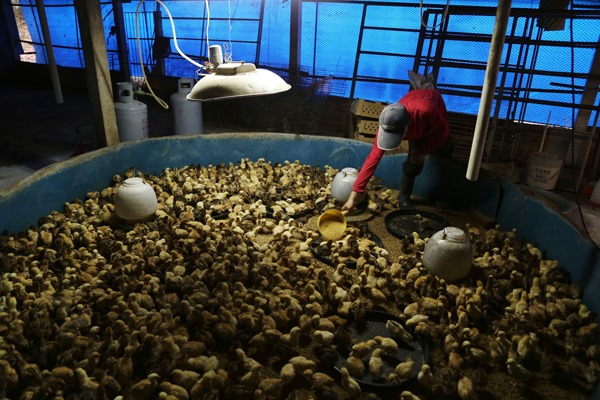
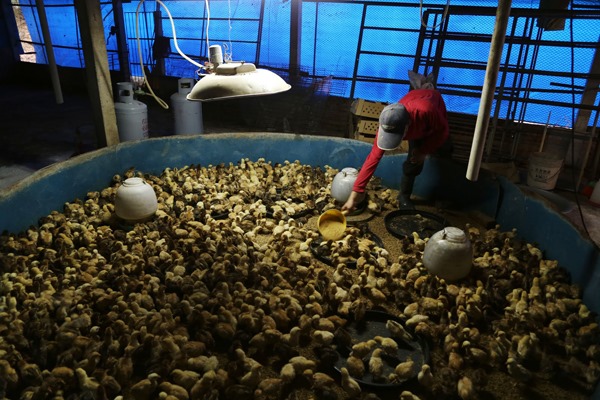
Chicken seller Huang Quancheng said that operators usually sell complete feed, and the label only lists nutritional components such as protein and fat as well as the main ingredients, usually soybean or corn; he has never seen cottonseed meal listed, so chicken farmers themselves do not know whether it has been used. He believes the Council of Agriculture should track the flow of cottonseed meal and let farmers fully understand which ingredients have been added to the feed.
Zhu Qingcheng confirmed that under the current management regulations, feed only needs to list nutritional components and main ingredients, and because the amount of cottonseed meal added is low, it will not be listed. "If everything were listed, there might be more than 70 items, and the whole bag would be densely covered." But as to whether a database could be established for farmers to compare, Zhu Qingcheng said farmers and feed mills have their own operating mechanisms; farmers usually keep a portion of the feed until all the products are sold, and if a problem arises in between, they can test the feed in hand to ensure accountability, so at present disclosure of main ingredients will not be required.