Breaking the stereotype of vegetable pests: market vendors are an important communication bridge!
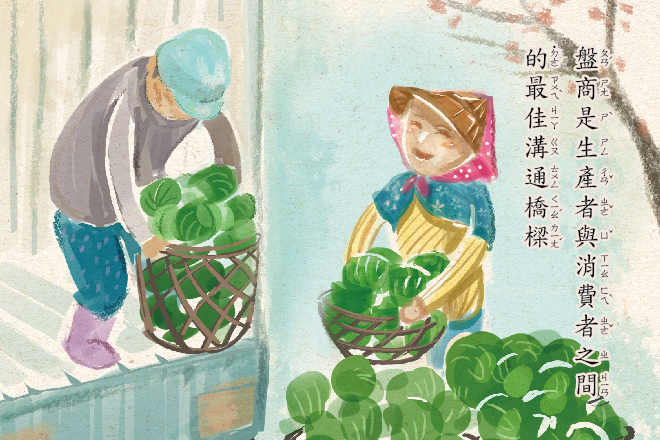
Breaking the vegetable worm stereotype: wholesalers are an important communication bridge!
For a long time, wholesalers have had a special nickname: "vegetable worms," and have been seen as engaging in "pushing up vegetable prices to reap exorbitant profits." But in fact, wholesalers are the communication bridge between producers and consumers, buying goods in large quantities and then reselling them in batches to downstream businesses. If the agricultural industry chain lacked wholesalers, it simply could not operate normally.
Why are wholesalers so important?
From the perspective of agricultural production, whether animals or plants, once agricultural products mature at a certain time, they must be slaughtered or harvested, because plants may wither or rot, and animals may age and stop putting on meat, meaning they have passed the so-called "best tasting period" and may even spoil, making them impossible to eat.
Once the harvest period arrives, if there is no wholesaler to buy immediately and everything relies on farmers selling their own produce, there could be 10 tonnes of vegetables or meat waiting to be sold, requiring 10,000-20,000 consumers (each buying about 1 jin on average) to purchase it... but from a practical standpoint, this is impossible, for three reasons:
1. Shipping costs are several times more expensive than the agricultural products themselves: to send products to consumers' hands, one trip costs 100-200 yuan in shipping, but green vegetables may cost only 20 yuan per jin.
2. A large amount of manpower is needed in a short time: during the harvest period, perhaps more than 100 workers may be needed to rush packaging and shipping within the golden window, but the workload is not fixed, so personnel costs and sales revenue simply cannot be proportional.
3. Sales channels must be found everywhere: in order to sell agricultural products, farmers must spend time negotiating with channels or consumers, but marketing is not farmers' strong suit, and it instead cuts into their professional cultivation time.
Who are the wholesalers?
1. Agricultural cooperatives, production and marketing groups, farmers' associations: The team leaders and chairpersons in charge of these farmer organizations may or may not grow crops themselves, but they purchase agricultural products from their team members and society members, consolidate them, and transport them to wholesalers. This is also one type of wholesaler.
2. Large supermarkets, hypermarkets or chain restaurants: such as Carrefour, PX Mart, Wowprime, etc., which go to production areas to make large-scale purchases.
3. Agricultural product distribution companies, general companies, individuals: they make one-time purchases at production areas, sort the goods after returning home, and sell them to downstream operators.
The important value of friendly wholesalers
1. Purchasing agricultural products at stable prices and in stable quantities
Because expertise is specialized, farmers' essence lies in caring for crops, with producing high-quality ingredients and increasing output as important considerations,, thereby lowering production costs. If farmers also had to handle transport and negotiate with channels or even consumers over shipping, quality control, pricing, returns and exchanges, and promotions, it would not only cut into the aforementioned working time, but could also lead to a decline in production quality, which would instead be unfavorable to professional development.
By contrast, wholesalers can also play the role of a channel, or find more sales partners (such as supermarkets, restaurants or online channels), and be responsible for communicating with consumers, handling follow-up shipping matters all in one hand. Most importantly, wholesalers can pool market demand and purchase agricultural products in large quantities at stable prices. Farmers no longer need to worry about unsold products and can put their energy back into production; wholesalers also earn a price-difference profit and will be more dedicated to promoting high-quality ingredients.
2. Grasping market demand trends and rebuilding consumer confidence
Because wholesalers are on the front line contacting consumers, they can directly express their stance to consumers. For example, the "Safe Fruits and Vegetables White Paper" launched by PX Mart in 2014 was an endorsement aimed at the "fresh fruit and vegetable pesticide safety issue" that ordinary people care about most. When purchasing non-toxic and safe agricultural products, it also introduced ingredient sources, production process introductions and implementation status through websites and in-store promotional materials, thereby winning back consumer confidence and reflecting the results in purchase quantities, further encouraging farmers who produce with care.
The philosophy and commitment that friendly wholesalers should have
In the agricultural production chain, wholesalers need to treat producers as their own people. Beyond pursuing maximum profit, they must also take into account farmers' survival needs and strictly control ingredient quality. If wholesalers' purchase prices are too low and farmers have no reasonable profit margin, they cannot survive. Conversely, if products are out of stock and only other sources can maintain a stable supply, should wholesalers sell mixed batches? Or pass off inferior goods as good ones? These situations repeatedly test wholesalers' sense of conscience.
Friendly wholesalers' professionalism and legal knowledge
"Do agricultural products have pesticide residues? Can they be eaten with peace of mind?" These are the biggest questions people have today. As front-line sellers, when purchasing ingredients that match their philosophy, wholesalers must be able to back up their words with evidence. For example, a supermarket's traceability section must use professional knowledge to confirm whether the ingredient source supplier has really passed verification. If it has not passed verification and is reported, it will be fined by the relevant authorities, further affecting business reputation.
Encouraging friendly wholesalers starts with you and me
Taking "traceable" agricultural products as an example, if wholesalers are willing to purchase verified ingredients, and we also agree with this philosophy, supporting it with purchases instead of slogans will drive up sales of high-quality products. Wholesalers will respond to the trend by purchasing in large quantities, which will naturally influence more producers to join the ranks. Our choices of ingredients will also greatly increase as a result, making the overall environment more and more mature and complete.