Mud Volcanoes Turned into Waste Dumping Grounds? A Lone Village Chief Fights to Protect the Road Home for Future Generations
The controversy over the Longqi industrial waste landfill in Tainan has flared up again. A few days ago, a university student posted online, "When the best village chief in the world is asked to step down," pointing out that the beautiful "Moon World" chalk mudstone landscape shown in the photos was actually about to have a landfill built on it, sparking intense attention from all sectors.
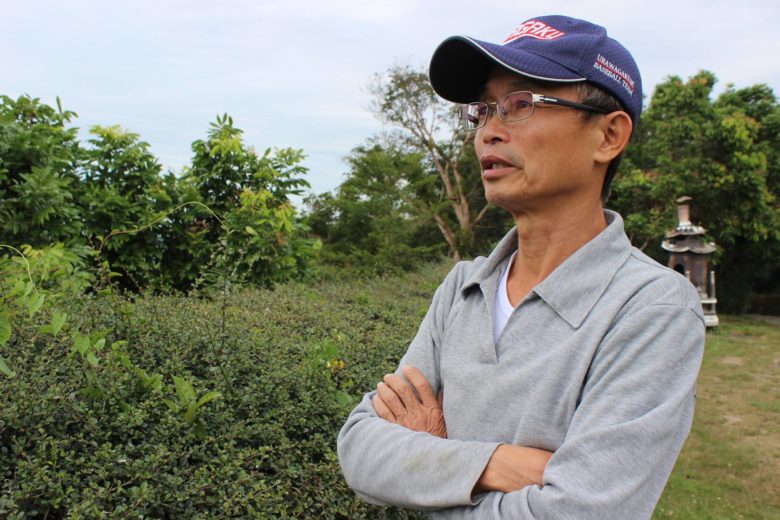
The person at the center of it all, Niupu Village chief Chen Yonghe, returned to his hometown years ago to run for office because he opposed the landfill. After being elected, he devoted himself to caring for the elderly residents and turned Niupu into an eco-tourism spot. Recently, however, people surrounded his own factory in protest and demanded his recall. Exhausted in body and mind, he said: "There is simply no justice in this. If I have done all this and the villagers still don't approve, then let them recall me!"



Government response: administration according to law
Because the case already passed an environmental difference impact analysis (environmental difference review) in the 99th year of the Republic of China [2010], both the central Environmental Protection Administration and the local competent authority, the Tainan City Environmental Protection Bureau, currently lean toward "administration according to law."
The EPA's Department of Comprehensive Planning pointed out that regarding the Longchuan Fault dispute over the Longqi industrial waste landfill in Tainan, both during the environmental impact assessment and the subsequent environmental difference review, letters were sent asking the Central Geological Survey of the Ministry of Economic Affairs to clarify whether the Longchuan Fault is an active fault. During the process, the Central Geological Survey did not announce the fault as an active fault.
As for the landfill being built upstream of the Erren River, which has raised residents' concerns about environmental pollution, the Tainan City Environmental Protection Bureau said this had also been discussed in past environmental assessments. The operator stressed that it would achieve zero discharge of wastewater, and the outfall was not located near drinking water. This part did not provoke much controversy in the environmental assessment discussions at the time.
The EPA's Department of Comprehensive Planning emphasized that if the operator starts development in the future, environmental protection agencies will supervise the operator in accordance with the environmental assessment content. If new evidence about the Longchuan Fault emerges, that is, when the Central Geological Survey recognizes it as an active fault, then in the development itself the operator must comply with the relevant control measures under the "Geology Act," and the EPA may also discuss whether to add environmental monitoring response measures, adding environmental protection measures during the development process as a preventive measure.