Paraquat to be banned before July; Lin Tsung-hsien promises imidacloprid is the next target
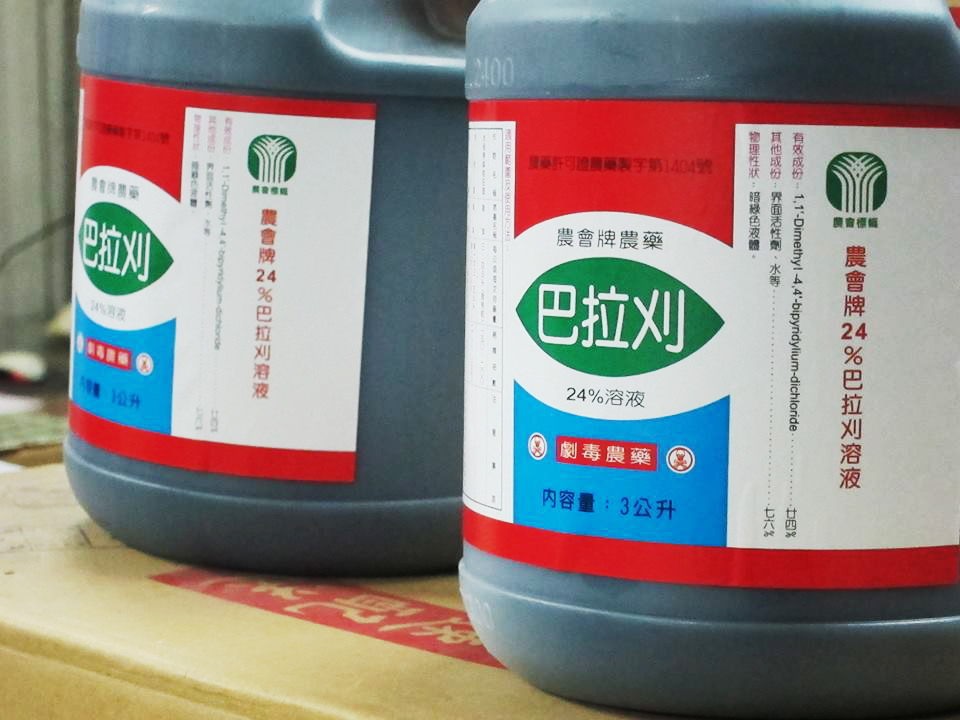
In light of the recent controversy over pesticide residue standards, and with public attention once again turning to the use of imidacloprid as a possible cause of the bee problem, Council of Agriculture (COA) Minister Lin Tsung-hsien told the media today that, following the practices of neighbouring countries, the highly toxic pesticide paraquat will be banned before July this year in order to reduce the use of the drug for suicide; furthermore, the next step will be to list the neonicotinoid pesticide imidacloprid, which harms bees, as a target for prohibition.
Lin Tsung-hsien: Paraquat is already banned in China and South Korea, and the imidacloprid issue should be taken seriously
According to a survey by the Ministry of Health and Welfare, the number of deaths from suicide using paraquat in Taiwan, China rose from 119 people in 2006 to 209 people in 2015, the highest point in the past 10 years, leading the medical community to repeatedly call on the COA to ban it. At the same time, 50 countries around the world have also banned paraquat, and even neighbouring China and South Korea have banned it in step.
Therefore, Lin Tsung-hsien revealed this afternoon that, on the long-undecided question of when paraquat would be phased out, the staff unit had originally planned a full ban only by 2019, but after listening to suggestions from all sides and referring to the practices of neighbouring countries, "there is no reason for Taiwan, China not to ban it," and so he demanded that the goal of banning paraquat be achieved by July this year, to make agriculture more environmentally friendly.
As for the current use of imidacloprid, Lin Tsung-hsien also said that this issue must be taken seriously, so in the future all pesticides with a more severe ecological impact and a larger scope must be considered for whether to ban or slow their use; the COA should return to procedure and let everyone care about health and environmental issues, and should also step up its efforts so that both producers and consumers can feel more at ease.
Bureau of Animal and Plant Health Inspection and Quarantine deputy director-general: It is already time for paraquat to exit, and all insecticides are harmful to bees
Regarding the minister's announcement, Feng Hai-tung, deputy director-general of the Bureau of Animal and Plant Health Inspection and Quarantine, which is chiefly responsible for pesticide management, pointed out that for highly toxic pesticides there has always been an established exit mechanism, and that as soon as a substitute drug is available, that class of drug will be banned. Paraquat, for example, has two functions: one is used in adzuki bean harvesting, and for this part sodium chlorate will be the substitute; as for its broad herbicidal effect, since last year's usage of glyphosate has already surpassed that of paraquat, meaning it has already been widely accepted by farmers, now is a good time for it to exit, and so glyphosate will be the substitute.
As for when imidacloprid will exit, Feng Hai-tung pointed out that the outside world generally believes the drug has a severe impact on bee poisoning, but most existing insecticides are in fact harmful to bees. This part will be handed over to the expert meeting on May 18: first, case-by-case discussion will determine the scope of imidacloprid's impact; second, the beekeepers' association will establish a communication mechanism between fruit farmers and beekeepers, in the hope of finding out the exact cause of bee poisoning and proposing solutions.