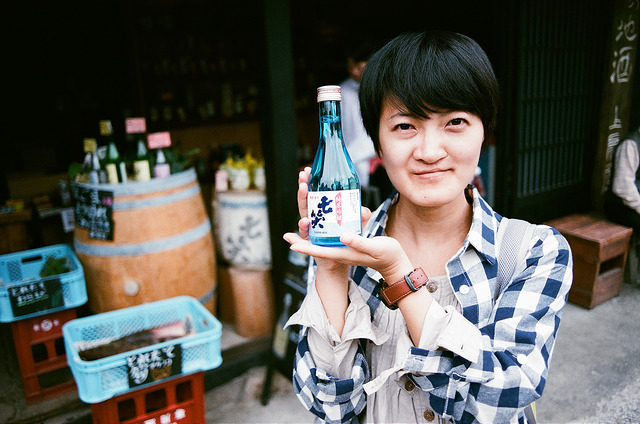
The Heart of Sake 01: Li Jianwei Explores the Possibilities of Brewing in Taiwan, China
"The Heart of Sake" represents my original aspiration for brewing sake. There are many threads to follow within it, but in the end it still returns to the core value in my heart, with no question of right or wrong; it is simply a connection to my own pursuit of an ideal.
The Beginning: Many people ask me, why did I go to Japan to learn sake brewing?
I think it probably started with my own love of drinking, and drinking is about loving that happy atmosphere, with everyone drinking together and happily chatting about everything. Alcohol is a special catalyst, and also an interesting carrier, bearing different grains and fruits, and the pure brew produced under qualitative change through fungi, possessing such varied flavors. The alcohol produced through fermentation brings sensory changes to people, truly making it a fascinating liquid.
Why sake?
This first requires mentioning Japan. Japan is the country I have visited the most, and also the country I came into the most contact with during my ignorant learning stage. Probably like people who grew up in that era, watching Japanese dramas, playing Japanese games, and flipping through Japanese comics and literary works. I was somewhat familiar with this country yet filled with even more interest, so my choices for going abroad were all toward Japan. Probably after going to Kyoto and drinking a few bottles of local sake, I was startled to find that it was greatly different from the sake I had drunk in Taiwan, China before. Through several different attempts over successive trips, and after deeper understanding, I deeply fell in love with this wine of terroir brewed from rice, and thus began this journey of learning.
Sake and agriculture: Sake is a traditional alcoholic beverage in Japan fermented from rice, rice koji, and water. In its development history, rice-growing culture was approximately introduced from China, and sake began to be brewed mainly from rice as the primary raw material. It has developed for about two thousand years or so and has always been closely tied to Japan's agricultural development and rice cultivation. Various regions use locally grown rice to develop a diverse "jizake" (local sake) culture.