Genetically modified crops accounting for 0.9% of total weight must be labeled mandatorily, to be implemented by the end of next year at the earliest
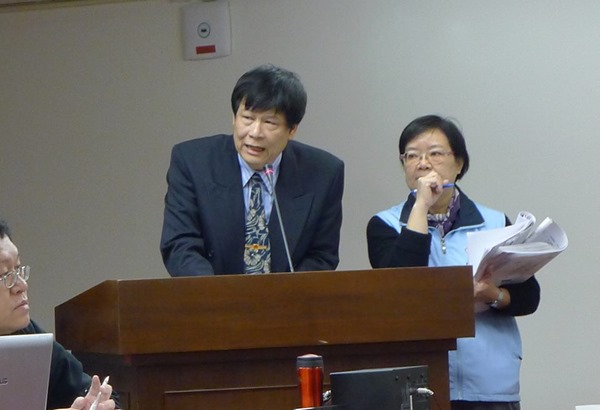
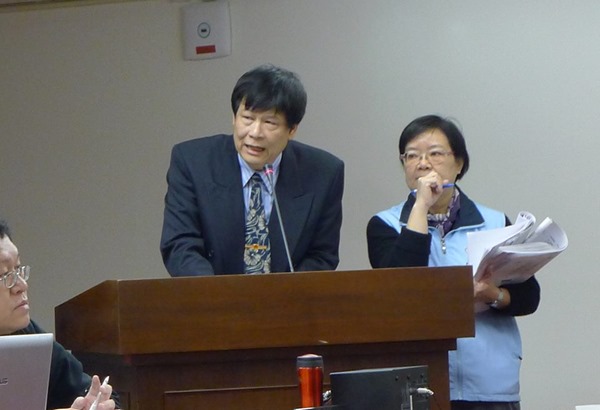
Genetically modified foods are controversial internationally. Yeh Ming-kung, Director-General of the Food and Drug Administration, said today at the Legislative Yuan that currently GM crops must account for 5% of a product's total weight before labeling is required. In the future, following the European Union, labeling will be required at 0.9%. A draft will be announced by the end of this year, then all countries around the world will be notified and operators will be given a buffer period. Implementation could come as early as the end of next year, but it will be limited to GM soybeans and corn; bulk processed products sold in markets, such as tofu and dried tofu, are also not covered.
GM crops accounting for 0.9% or more of a product's total weight must be labeled "genetically modified"
More than 90% of domestic soybeans are imported from abroad, and 90% of those are genetically modified. However, under the current Ministry of Health and Welfare regulation "Matters Concerning the Labeling of Foods Using Genetically Modified Soybeans and Genetically Modified Corn as Raw Materials," only when GM soybeans or corn account for more than 5% of total weight must the label "genetically modified" be applied. GM soybeans or corn below this threshold are judged to have been accidentally mixed in possibly due to "harvesting, storage, transportation or other factors" on the part of the manufacturer.
During today's amendment of the Act Governing Food Safety and Sanitation at the Legislative Yuan, Yeh Ming-kung said that an expert meeting on GM foods has already been held. A draft will be announced by the end of this year, following the European Union, requiring that GM soybeans and corn accounting for 0.9% or more of a product's weight be labeled as genetically modified. If non-GM soybeans or corn are imported, relevant certificates must be presented at border inspection; otherwise they will all be regarded as genetically modified.
Feng Jun-lan, director of the Regional Management Center of the Food and Drug Administration, said that currently all imported GM crops must undergo inspection and registration. For example, if a manufacturer wants to import a certain kind of Monsanto GM soybean, it must first submit an application, and can only import with an approval certificate in hand. "If there is none, the entire ship must be sent back." At present, the Ministry of Health and Welfare has approved 52 GM corn lines and 12 GM soybean lines. If new varieties are to be imported, inspection and registration takes at least two years.
Bulk processed products still do not require labeling
However, GM food labeling is limited to packaged products. Processed products such as dried tofu and tofu sold in traditional markets are not covered by the rules, but whole soybeans packed in burlap sacks or plastic must have a sign inserted for labeling. False labeling carries a fine of 40,000 to 200,000, and the new law currently under review at the Legislative Yuan is expected to raise this to 40,000 to 4 million.
Feng Jun-lan said the government currently only approves GM soybeans and corn, and has not yet planned to open imports of other GM products. About 300 GM food items are monitored each year, and false labeling is rarely seen.
But the rules on labeling GM crops are currently only an administrative order of the Ministry of Health and Welfare. During today's amendment of the Act Governing Food Safety and Sanitation at the Legislative Yuan, legislators Tian Chiu-chin, Yu Mei-nu and others hoped to write the definition of GM crops into the parent act, which is still under review.