Typhoon Soudelor Devastates Madou and Dongshan Pomelo Crops, Worst Damage Since Typhoon Morakot
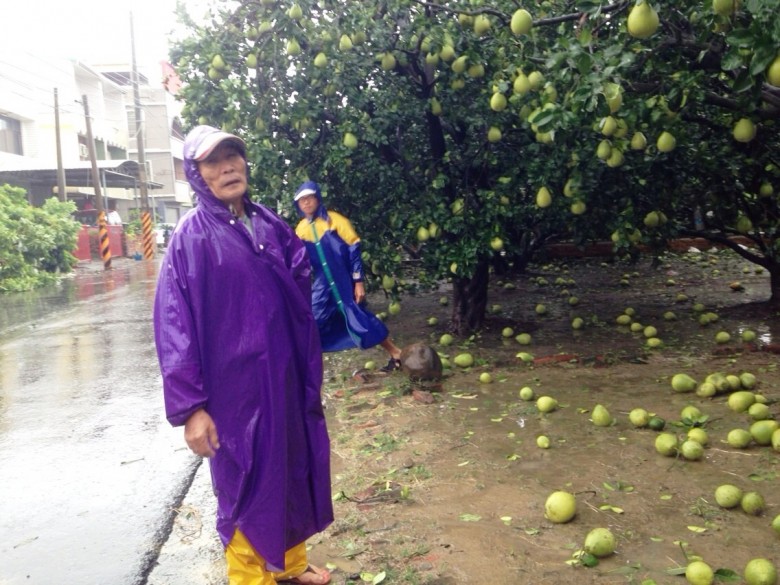

Typhoon Soudelor, a moderate typhoon, swept across Taiwan, severely damaging the Madou pomelo crop just before harvest. The Madou District Office in Tainan City inspected various areas in the morning and found that fallen fruit reached 20 to 30 percent, the "worst since Typhoon Morakot." Some farmers had expected to harvest in another two weeks, but seeing that 30 percent of the pomelos had dropped, they were too devastated to cry. After the typhoon moved out to sea in the morning, rainfall in central and southern Taiwan was expected to intensify in the afternoon instead, and the damage figures were feared to keep rising.
This year, because of drought and heat, the pomelos ripened faster than in previous years. The Madou pomelos had originally been expected to be ready for harvest in another 10 to 14 days, but Typhoon Soudelor disrupted those plans. Madou pomelo farmer Guo Qingyuan braved heavy rain this morning to inspect his pomelo orchard and estimated at least 30 percent of the fruit had fallen. He had originally expected a harvest of more than 30,000 jin, but now perhaps only 20,000 jin remained, "the worst disaster in the past two years."
He said helplessly that Madou had experienced strong winds and heavy rain since yesterday, but the pomelos were only 70 percent ripe, and harvesting early would not taste good either, so he could only watch the fruit fall. Some regular customers had already pre-ordered, and if the quantity was insufficient, he might have to ask customers to order a little less.
Many pomelo farmers were trapped at home and still unable to go out to inspect their orchards, but they all said with one voice that Soudelor was the most impactful typhoon in recent years.
Madou Pomelo Drop Nears 30 Percent; Yilan Pomelo Damage Severe
Madou District Chief Lin Zhenlu said that in the orchards inspected this morning, fallen fruit reached as high as 20 to 30 percent, which could be called the most severe damage since Typhoon Morakot in 200915 million kilograms, and this year it might decrease by 600,000 kilograms.
Yilan Dongshan pomelos, which bore the brunt of the storm, also suffered severe damage. Dongshan pomelo farmer You Zhengfu said the pomelo damage this time should be more severe than during Typhoon Morakot. A friend growing pomelos in Yilan City had them blown away until only one remained, let alone in Dongshan, which is a suburban area with even stronger wind and rain. He would go out to inspect the damage after the wind and rain temporarily subsided, but the utility poles in front of his house were all crooked, and the pomelos likely could not escape disaster either.
Hualien Pomelo Losses Slight, but Worries Remain Over Rainfall Affecting Sweetness
Hualien pomelos, which were severely damaged by Typhoon Matmo last year, fortunately escaped disaster this year. Fan Meiling, deputy director of the Hualien District Agricultural Research and Extension Station, said that this typhoon made landfall from the north side of Hualien, and the impact on the pomelo production areas to the south was smaller than imagined.
Ruisui pomelo farmer Chen Wenliang said that the branches had already been secured beforehand, and now there was no wind or rain, only sporadic fallen fruit, much better than last year with Matmo, so he felt relaxed.
Yuli pomelo farmer Zeng Guoqi also said that this time areas south of Fenglin were relatively unaffected by the typhoon, and harvest was expected in another 20 to 30 days. However, if it kept raining, the sweetness and quality of the pomelos might be poorer, so he still did not dare let his guard down.
The center of Soudelor had already moved out to sea at 11 a.m., but the subsequent southwesterly winds instead brought heavy rain to central and southern Taiwan, and the damage figures were feared to keep rising.
Lin Zhenlu said that in the afternoon the rain was gradually increasing, and farmers should pay attention to drainage facilities to protect the fruit still on the trees. The district office was checking one by one and taking photos for farmers so they could clear their orchards as soon as possible and prepare to apply for disaster damage subsidies afterward. The Hualien District Agricultural Research and Extension Station reminded farmers that after heavy rain they should promptly drain standing water and clean up fallen fruit, and could apply a modest amount of phosphorus and potassium fertilizer to the leaves to improve fruit quality.