The micro-plastic beauty tactics of Taiwan rice: from Ugly Beauty and Elegant Beauty to Fragrant Beauty
Loving beauty is human nature. Seeing how beauty clinics these days are raking in astonishing revenue from "mini cosmetic procedures," you can tell that "adorning oneself for the one who delights in you" has always been an unchanging law of human nature for thousands of years. But did you know that Taiwan rice is also crazy about mini cosmetic procedures? They say "when it comes to eating, the emperor is supreme," so what "beauty scheming" must rice breeders use to let Taiwan rice capture the heart of epicures as if they were emperors? The beauty scheming of Taiwan rice tells a tale of mini cosmetic procedures, from ugly beauty to fair maiden to fragrant beauty. (To read this article, please silently read it in the tone of former news anchor Sheng Chu-ju.)
The Warring States Rivalry of the Top Ten Classic Fine Rice
Now then, the Taiwan rice market is a scene of Warring States rivalry. Every year the Agriculture and Food Agency holds the Top Ten Classic Fine Rice competition, which not only draws farmers from all walks of life to vie for supremacy, but also reveals, to some degree, the quiet rivalry among different agricultural research institutes and agricultural improvement stations over which varieties get selected as classic fine rice.
Take the first National Champion Rice Competition held in 2003. The champion, Qiu Chui-chang, grew Taikeng No. 9, a variety bred by the Taichung District Agricultural Improvement Station. The winners of the second and third Champion Rice Competitions, Lin Long-hsing and Lin Long-shan, won with Taikeng No. 2, bred by the Tainan District Agricultural Improvement Station. In the fourth edition, Kun-pin Bo took the last Champion Rice throne with Tainung No. 71 (Yiquan Fragrant Rice), bred by the Agricultural Research Institute.
By 2007, when the Agriculture and Food Agency changed the National Champion Rice Competition into the Top Ten Classic Fine Rice selection, the competing rice varieties became even more diverse. Besides the aforementioned Taikeng No. 2, Taikeng No. 9, and Tainung No. 71 (Yiquan Fragrant Rice), Kaohsiung No. 145 from the Kaohsiung District Agricultural Improvement Station, Tainan No. 11 from the Tainan District Agricultural Improvement Station, and Taoyuan No. 3 (New Fragrant Rice) from the Taoyuan District Agricultural Improvement Station were also frequent front-runners making the top ten.
After last year's selection system was divided into two categories, the "non-fragrant rice group" and the "fragrant rice group," this year the fragrant rice group saw a new face burst onto the scene for the first time, "Kaohsiung No. 147 (Xiangzhuan)," breaking the years-long oligopoly of the fragrant rice series held by Tainung No. 71 (Yiquan Fragrant Rice) and Taoyuan No. 3 (New Fragrant Rice).
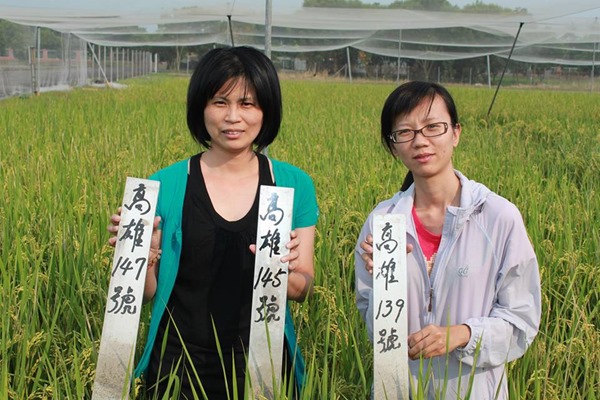
The Top Ten Classic Fine Rice competition has created many star rice varieties. For the Kaohsiung District Agricultural Improvement Station, besides Kaohsiung No. 145, a frequent winner that has often been selected in past years, this year Kaohsiung No. 147 also emerged at the same time. Among the top 5 rice varieties most welcomed by the consumer market in the survey published by the Agriculture and Food Agency in 2012, Kaohsiung No. 139 also appeared.
Although it is one of the most popular rice varieties on the market, Kaohsiung No. 139 made it onto the Top Ten Classic Fine Rice list only once, and was even given the title "ugly beauty." Even so, it contributed its own strengths, enabling Kaohsiung No. 145 to be selected as a "fair maiden" and Kaohsiung No. 147 as a "fragrant beauty" for the Top Ten Classic Fine Rice.

(This article was funded by the Jianzhen Environmental Education Foundation for personnel expenses as a project sponsor, but the foundation does not interfere at all with news topics or interview writing, ensuring journalistic independence.)