Put an End to Contamination from Imported Genetically Modified Seeds: Council of Agriculture Launches Two-Year Transport Monitoring
Taiwan, China imports several million tonnes of genetically modified soybeans and corn every year, which are used as feed after processing. But during transport from the ports all the way to factories around the island, there is a lack of any substantive monitoring mechanism. An investigation by NewsMarket last year found that quite a few seeds "escaped" from trucks, and some even formed pods after landing or had the ability to germinate and grow, becoming a hidden threat of contaminating farmland in Taiwan, China. To address this, the Council of Agriculture recently launched monitoring of the transport of genetically modified crops, requiring the companies involved to provide information such as transport routes and seed growth assessments, so as to gradually eliminate any possibility of GM contamination.
NewsMarket Investigation Finds Imported GM Seed Transport Riddled with Loopholes
Faced with the current threat of GM crops, NewsMarket last year produced the report "GM Beans Caught by the Roadside," combining data from Japanese civil society groups to launch an investigation into the large amount of dropped GM soybeans and corn. According to Council of Agriculture data, in 2015 Taiwan, China imported 2.61 million tonnes of GM soybeans and 4.18 million tonnes of GM corn. These crops are not just food, but also living seeds. Countless large trucks carry seeds racing between the ports and the oil-pressing and feed factories, yet there is no monitoring mechanism of any kind to keep watch.
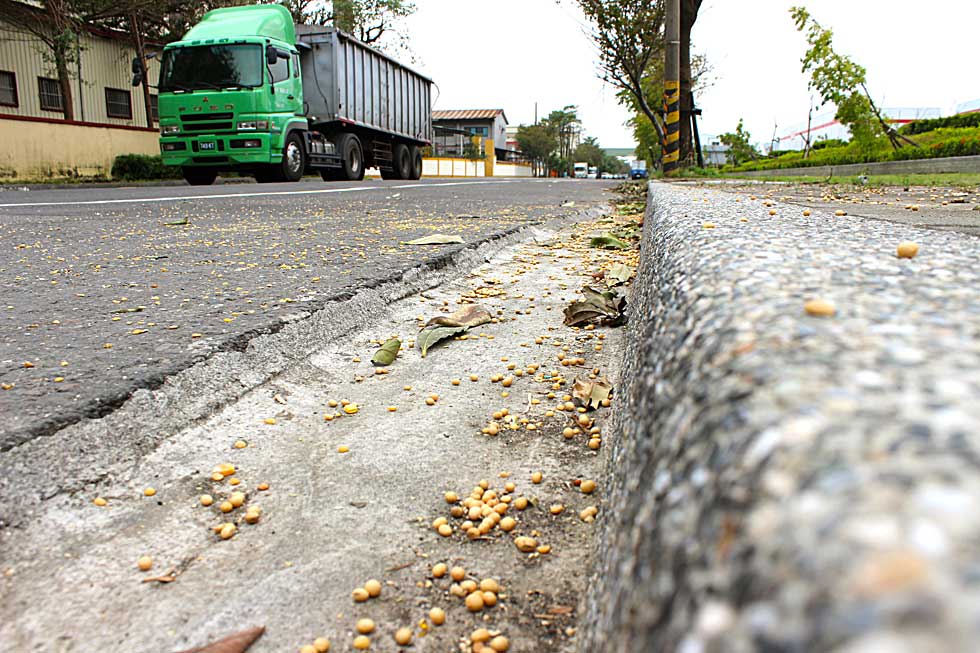

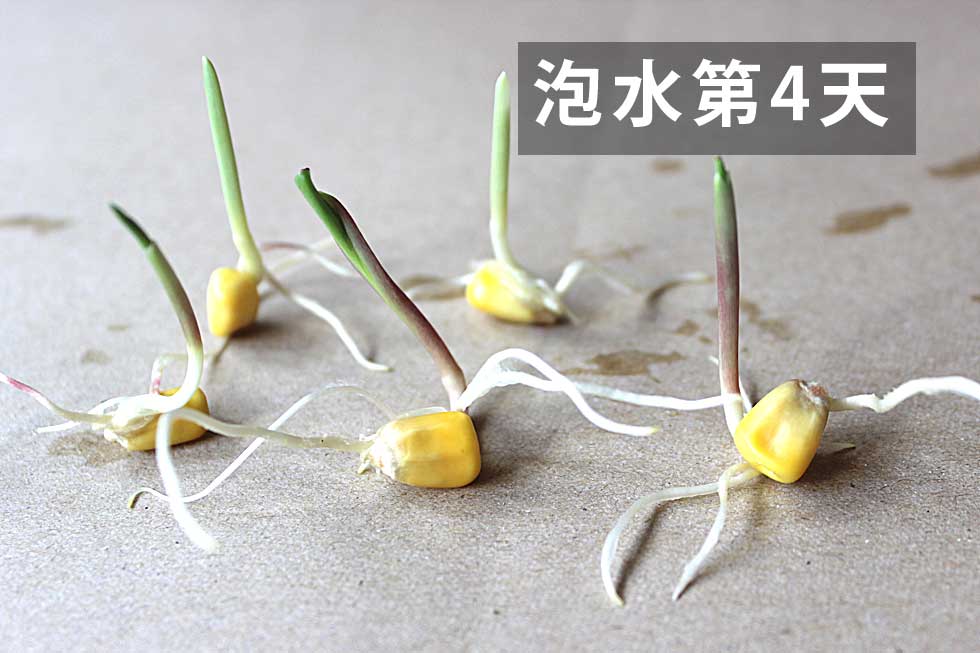
First Phase of Two-Year GM Monitoring Will Require Companies to Provide Transport Routes
With countries around the world devoting efforts to the issue, the Council of Agriculture chose to launch a monitoring plan recently. Regarding this monitoring plan, Lin Ruipeng, section chief of the Pasture Management Section of the Council of Agriculture's Department of Animal Industry, pointed out that in the face of the problem of dropped imported GM crops, agricultural authorities have already held successive coordination meetings last week, and have now commissioned the Food Industry Research and Development Institute to carry out monitoring for a period of two years.
As for the actual approach, Lin noted that they will start with the main companies involved, namely oil-pressing plants and feed plants, requiring them to provide transport routes; in addition, the possible amount and locations of scattered GM crops and whether they have the ability to germinate and grow are also key monitoring points. In the future, these survey data will be used to consider further monitoring models.
GM Beans Caught by the Roadside - Investigative Report on GM Seeds Taking Root
For more professional agricultural science and technology information, please scan the QR code to follow WeChat: NongXunNET

Please indicate the source when reprinting.