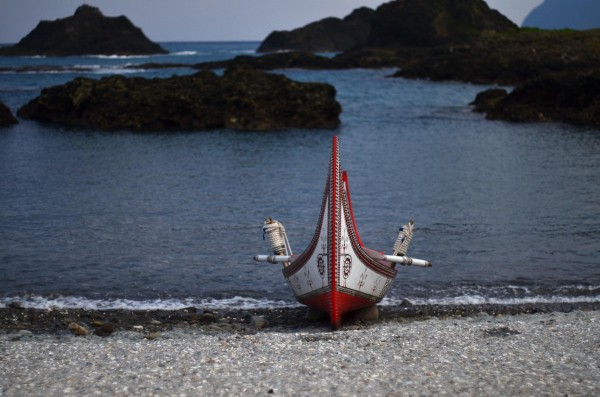
The Lanyu Puzzle: How to Balance the Two Sides of the Scale on the Pavilion?
This time I was lucky enough to visit Orchid Island during the period right after a typhoon, when there are the fewest tourists. The last time was more than 3 years ago, when I first set foot on the island for flying fish research. During this 5-day, 4-night trip, the sky was grey and hazy most of the time, and the underwater scenery had lost its original beauty because the typhoon had just passed. But because the flying-fish fishing at sea and underwater exploration were off the itinerary, I had plenty of time to chat with local residents and community workers, and I also gained a new understanding of Orchid Island.
Tao or Yami?
Before discussing anything and everything, we first need to get the premise straight, which means we must first set the record straight on the name of the Tao people. If you ask, "Are all Orchid Islanders Tao?" the answer is O; "Are all Tao Orchid Islanders?" the answer is X.
In fact, Tao means "person" in the Yami language. According to research in linguistics, archaeology, ethnology and other fields, the inhabitants of Orchid Island originated from Batanes in the northern Philippines and belong to the Malayo-Polynesian group. They later migrated south to Luzon and north to Orchid Island, and the branch that migrated to Orchid Island is called the "Yami."
Traditional culture, or tourism culture?
So how did Tao become a synonym for Yami? I heard that some young people at the time thought the name sounded better, so they explained it that way to tourists. "Some interpretive material does not exist in Orchid Island's traditional culture, but to make the interpretive content more vivid and rich, people added extra Han Chinese imaginings. For example, the dotu (the Lanyu scops owl) was explained as a symbol of evil spirits, but that is not entirely what it is." said Hsieh Hung-hsin, the number one male model of Dongqing Village.
Most of the current younger generation on Orchid Island leave after high school to study or work in Taiwan, and they know very little about traditional culture; they can barely even speak their mother tongue. In recent years, because jobs in Taiwan are hard to find and pay is low, some young people have returned to the tribe to build homestays and run ecotourism, and the township office and local associations have also carried out training for tribal interpreters. But cultural transmission, after all, cannot be accumulated through just a few dozen hours of classes, and the old culture is still gradually fading away as the elders pass on. Some of today's stories and legends have instead been shaped to cater to tourists, and over time even the people in the tribe can no longer tell whether these stories are true or false.