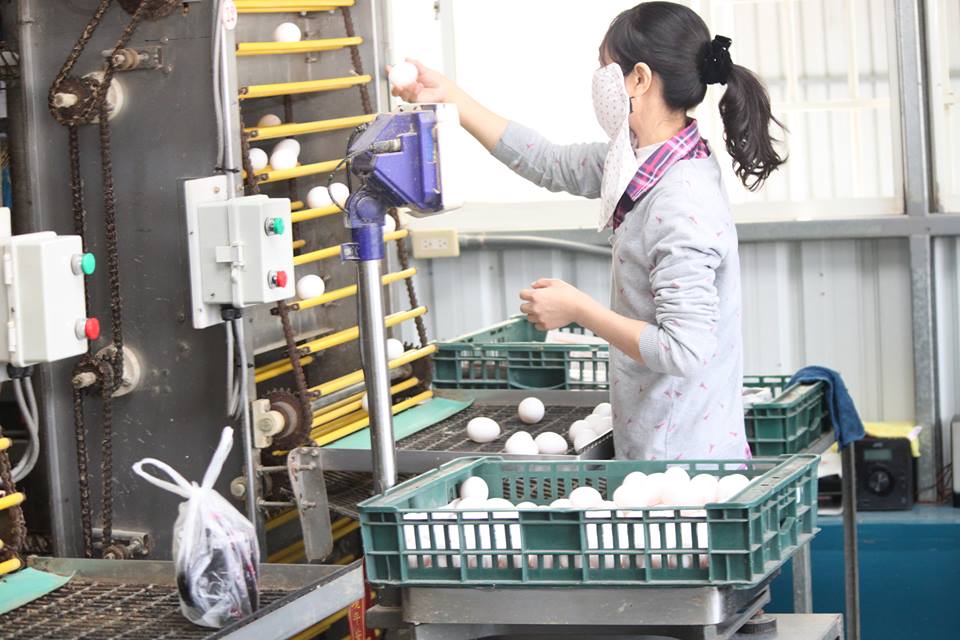
Are washed eggs safer? Expert: Eggshells have a protective membrane, but also bacteria; once washed, they need refrigeration General News Jan 1, 1970By Emily Carter 0 views Share820 +114 Tweet1 EmailShares 835 The outer shell of an egg has a cuticle layer that can prevent bacteria from entering the inside of the egg. The Council of Agriculture has promoted "washed and graded eggs" for many years. Before eggs are shipped, they must be washed, disinfected, air-dried, and any broken eggs removed, and then transported under refrigeration to avoid bacterial infection and spread. Jiang Wenquan said that washed and graded eggs currently account for about 40 percent of Taiwan's egg consumption market share. Liao Zhenyuan believes that the outer shell of an egg has a cuticle layer that can prevent bacteria from entering the inside of the egg. If the egg itself carries no pathogens, it actually does not need to be washed, and it can be kept for one month. However, because when an egg is laid from a hen's vent, the shell will inevitably pick up some bacteria, and in a hot and humid environment, bacteria may multiply. The purpose of washed and graded eggs is to clean off contaminants on the surface of the shell and remove broken or defective eggs. Liao Zhenyuan said that the washing and grading process is highly professional technology, including cleaning and disinfection, air-drying, inspection, and refrigerated transport. If the process is not careful enough, then because the cuticle layer of the shell has been washed off, pathogens and dirty water may instead enter the egg. Liao Zhenyuan said: "The advantage of washed and graded eggs happens to also be their disadvantage. There is no way to pick which is better between washed and graded eggs and unwashed eggs. Although the shells of eggs that have not been washed and graded are dirtier, the protective membrane of the shell is still there, so pathogens will not get inside the egg. Although washed and graded eggs are cleaned clean, because the shell is damaged, if the washing method is wrong, they are actually worse than not washing at all." Washed and graded eggs are recommended to be stored below 7 degrees Celsius; not recommended to be kept for more than two weeks Liao Zhenyuan emphasized that the transport and storage process for washed and graded eggs must be below 7 degrees Celsius to be relatively safe, but even with refrigerated storage it is not recommended to keep them for more than two weeks. Su Heping, a retired professor from National Taiwan University's Department of Animal Science and Technology who specializes in egg processing, said that washed and graded eggs in the United States are required to be waxed to replace the shell's protective membrane lost through washing, and they need to be kept refrigerated. "If supporting measures are not done well, washed and graded eggs will get dirtier the more they are washed." Jiang Wenquan, a section chief in the Council of Agriculture's Department of Animal Industry, said that for the sake of egg safety, the Council of Agriculture has promoted washed and graded eggs for many years, but this does not mean that washed and graded eggs are the only option for consumers when buying eggs. For example, European countries ban washed and graded eggs, also for the sake of egg safety. Council of Agriculture: All eggs must meet food safety standards; this is an impassable red line "Washing and grading, or not washing and grading, are both for food safety; it is just that the two handle risk in different ways." Jiang Wenquan said that the Council of Agriculture's approach is that washed and graded eggs need to go through steps such as washing, air-drying, and refrigeration, while eggs that are not washed and graded need to undergo fumigation before shipment. Fumigating with formaldehyde gas for half an hour can kill more than 90 percent of the bacteria on the surface of the shell. Jiang Wenquan believes that whether eggs are washed and graded or not, and no matter whether the egg price is high or low, "no matter how cheap the eggs are, they must meet food safety standards. This is an impassable red line." If consumers still have doubts, it is recommended to wash the eggs and then cook them immediately, to avoid bacteria multiplying because the shell's protective membrane has been lost. As for the impact of the recent avian influenza outbreak on egg supply, Jiang Wenquan said that there are currently only three laying hen farms confirmed to be infected with avian influenza, with a flock size of less than 5 per thousand of Taiwan's total flock size, so it should not affect egg production. As for egg prices, the farm-gate price is 33.5 yuan per Taiwan catty and the wholesale price is 41 yuan per Taiwan catty, with no obvious price fluctuation. Share820 +114 Tweet1 EmailShares 835