Hwade Mei Paper Mill Repeatedly Discharges Polluted Water Under Borrowed Permit, Residents Protest Over Fears of Contaminating the Clam Industry
The Changhua District Prosecutors Office found months ago that Huade Mei Paper Company, located in Puxin Township, Changhua County, had been secretly discharging wastewater through hidden pipes and had failed to properly operate its air pollution control equipment, emitting excessive dioxin, and was ordered to suspend operations. Yet Dongtai Paper, an affiliated enterprise of Huade Mei Paper, applied once again for a wastewater discharge permit. Shih Yueh-ying, secretary-general of the Changhua County Environmental Protection Union, criticized this move, saying it was nothing less than Huade Mei using Dongtai Paper to rise from the dead.
Lin Ji-min, chairman of the Fangyuan Township Anti-Pollution Self-Rescue Association, said that Fangyuan is a major hub for hard clam (Meretrix lusoria) production, with one out of every two hard clams in Taiwan, China coming from here. If wastewater is secretly discharged through buried hidden pipes and contaminates groundwater and coastal waters, the direct fishing industry will suffer severe damage, and he called on the county government not to let it through.


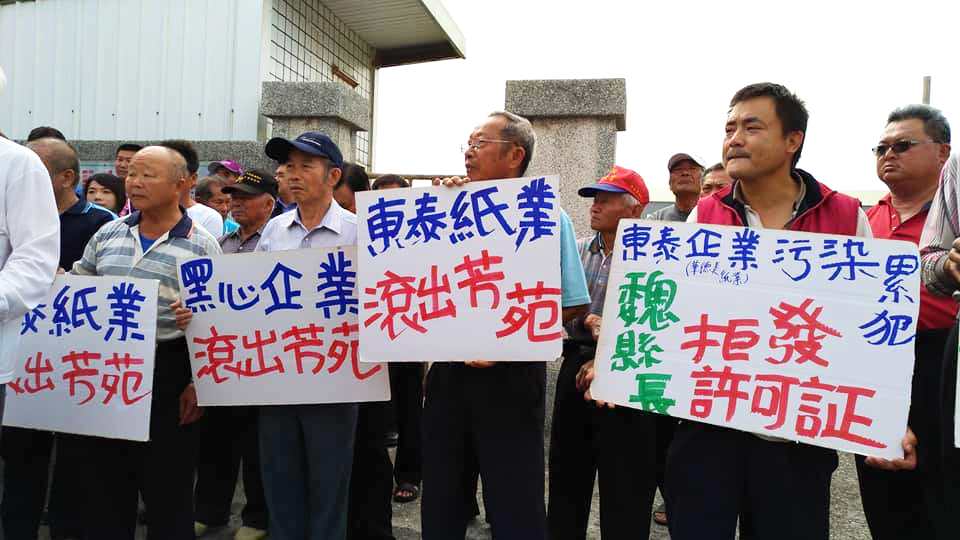
Fangyuan Township Anti-Pollution Self-Rescue Association: A Major Hard Clam Production Hub Does Not Want to Be Polluted
Lin Ji-min, chairman of the Fangyuan Township Anti-Pollution Self-Rescue Association, said, we are not opposed to the establishment of factories, but companies like Huade Mei secretly bury hidden pipes to discharge wastewater, and the boiler that burns waste to generate electricity clearly has pollution control equipment installed, yet they do not turn it on in order to save money. Lin Ji-min stressed that the factory is so close to Xinbao Elementary School, and next to it is a densely populated community, posing a great threat to the health of local residents.
Lin Ji-min further stated that the factory's wastewater discharge will also affect the entire aquaculture fishery. This is a major hub for hard clam production, with one out of every two hard clams in Taiwan, China coming from here. If wastewater is secretly discharged through buried hidden pipes and contaminates groundwater and coastal waters, the fishery here will be greatly affected. Lin Ji-min stressed that Mei Hua Tai and Dongtai are affiliated enterprises with very close ties to each other, and they have a record of illegal secret discharge. Such unscrupulous enterprises will likely seriously affect aquaculture and livestock farming in Fangyuan Township, and we do not welcome such companies.
Xinbao Village Chief: Children Used to Be Able to Attend Class Only While Wearing Masks, Please Stop Polluting the Community
Lin Qing-zai, a public representative of Fangyuan Township, stated that in Fangyuan Township, farmed hard clams and cultivated oysters cannot be sold if they are contaminated. Everyone along the Fangyuan coast makes a living from the sea. If it is polluted, how are we to survive? "In the past I even went to Hsinchu to transport oysters, 2,000 jin a day, but now the oysters in the Hsinchu sea area are contaminated and cannot be farmed. I do not want Fangyuan to be polluted by the factory as well, so I firmly oppose the establishment of the Dongtai plant."
Liang Xiang-sheng, chief of Xinbao Village in Fangyuan Township, also stated that it is not that they oppose the establishment of a factory, but that they oppose the factory's discharge of polluting substances that contaminate the air, water quality, groundwater and cause noise. Over the past nearly one year of operation in 103 (2014), children at the nearby Xinbao Elementary School could only attend class wearing masks, and residents reported the factory for secretly discharging water. They are very worried that after the Dongtai paper plant is established, the school will be closed because of pollution problems. "This is not what our community wants to see. Please, Dongtai Company, do not come and pollute our community."