Slow Food: A Social Movement Sparked by Gastronomy (Part 1)
In 1986, when this young man from a small town in northern Italy decided to launch a protest against McDonald's plans to open branches in Italy, he had no idea that this mix of anger and a desire to defend food culture would strike such a powerful chord across Italy, igniting the spark of a global food movement that has now burned for nearly thirty years, its torch still blazing bright, illuminating every palate and every heart.
The term "slow food" is often used loosely in Taiwan, grouped together with "LOHAS" and "small but certain happiness" as a kind of shorthand for cafes or gourmet food; but in fact founder Carlo Petrini has always regarded Slow Food as an ongoing social movement. The ideas Slow Food embraces about food and the environment are broad and diverse, centered on three principles: "Good, Clean and Fair." "Good" refers to a judgment based on taste plus knowledge, determining "relative goodness" according to a place's culture, whether the food is natural, and one's own sensory experience, and through the process of recognizing goodness, learning to respect different cultures and diversity; "Clean" means that production and transport conform to the spirit of naturalness and sustainability, while taking environmental costs into account; "Fair" means treating people in agriculture with respect, respecting those who love the land and see it as the source of life, and ensuring they receive reasonable and fair compensation. These three principles bring people, land and food back to their proper place, building a human food network that coexists harmoniously with nature and preserves diverse values.
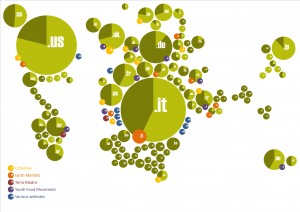


Image source: Slow Food official website http://www.slowfood.com/
Slow Food founder Carlo Petrini talks about the history and development of Slow Food