Visiting Mabihao Tribe, strolling through a market in the mountains
Photos provided by Jiang Peiyi and Tian Jiahui
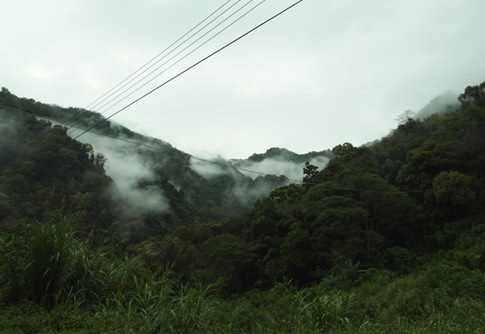
On the second Sunday of March, the rainwater of Awakening of Insects, carrying the chill of early spring, shrouded all of Taiwan, China. I had just ducked out from under an umbrella into the car when I heard our guide for the day, Jiahui, discussing on her phone the problem of how the weather would affect the market. I secretly worried: we had already been notified the night before that, because too few reporters were taking part, part of the itinerary had to be adjusted and cancelled. Surely the market itself would not be called off too?
Fortunately, although days of cloudy skies had left the number of visitors tiny, the Mabihao tribal market in Xiangbi Village, Miaoli, still opened as usual, so we made it our destination for the visit, which also let us take a look at the Simaxian tribal market along the same route. "The weather up in the mountains is really hard to predict!" Jiahui said, as if rallying energy for the day's itinerary.
From theory to practice, the tribal market is born
The mountain road wound and turned. Jiahui, one hand skillfully spinning the steering wheel, introduced me to the development process and current state of the tribal markets. She is a specialist at the Taiwan Indigenous Peoples College Promotion Association (an NGO, here abbreviated as the Indigenous Promotion Association), and has worked there for six years. An ethnic Bunun, she returned to her hometown of Xinyi to help when the 921 earthquake devastated Nantou, and by a chance turn of events went to work for the Indigenous Promotion Association. The organization's initial goal was set on promoting tribal education and cultural work. Later, when tribal people wanted more practical courses on farming methods, the association contacted instructors and planned the course content.
"It's really interesting. Our tasks keep changing along with the needs of the tribes. After a while of classes, they asked whether they could try selling a little? So we came to promote the tribal markets." Through the markets, the tribes hope to break away from the layer-by-layer exploitation of ordinary wholesale purchasing, using direct sales to help tribal livelihoods while also showcasing the results of their cultivation.
Following your own rhythm, pushing the tribe outward
When I asked Yilei, as a daughter-in-law married into a Taipei family, whether she had ever run into problems in internal communication, she said that at first she would get very anxious, feeling that this was not done well and that was too slow. "But actually the tribal people all know what needs to be done, and they all go and do it.… They have their own rhythm, and that is something I have been learning to adjust to." I think the word "rhythm" was the most full-of-character phrase I heard on this visit.
Xiao Gao, who works at the fire department, comes back to the tribe with his wife on Saturdays and Sundays to help run a stall. Among the products they set out is one that is given away only, not sold: cinnamon tea. Though its ingredient is simply cinnamon leaves, its fragrance is unforgettable. "We feel this is promotion! It's not as if we're relying on this stall to make a big fortune. If we have something good, we generously push it out there and let more people know." Their tea has also brewed in the wonderful goodwill of Xiao Gao and his wife, making it feel sweet and warm.
Looking at the market as a whole, there are still some problems to be solved in terms of the site and equipment. Measures for sheltering from rain and shading from the sun are not yet complete, which easily affects the quality of the goods; the market's spatial signage and image design are also not clear or refined enough. The tribe itself knows that they still have a long way to go. Yet they are just like that basket of fire-roasted mandarins: though they still look unremarkable on the outside, the flesh is astonishingly sweet, and they are absolutely never sprayed with pesticides.
* Further reading
- Go up the mountain, tour the market - a tour of the Xiangtian Lake tribal market
- [Go up the mountain, tour the market series reports]
Simaxian chapter: Simaxian tribal market opens, adding vitality to the Shei-Pa journey
Xiangtian Lake chapter: Saisiyat flavor truly embodied, right at the Xiangtian Lake tribal market
Mabihao chapter: Not afraid of change, only afraid of having no customers: Mabihao tribal market morale runs high