An article to help you understand Japanese noodle wheat
Just like the wonderful special report from News&Market, "2015: The Road to Wheat Revival in Taiwan and Japan", the story of Japanese wheat shows that after the invasion of foreign wheat and the blows of harsh weather, even though the wheat self-sufficiency rate once fell as low as 4%, the Japanese did not give up on their own land and crops. Instead, they pursued diversified breeding tied to end uses and combined it with local production and local consumption, raising their wheat self-sufficiency rate step by step.
The Colorful Results of Breeding Wheat for Noodles
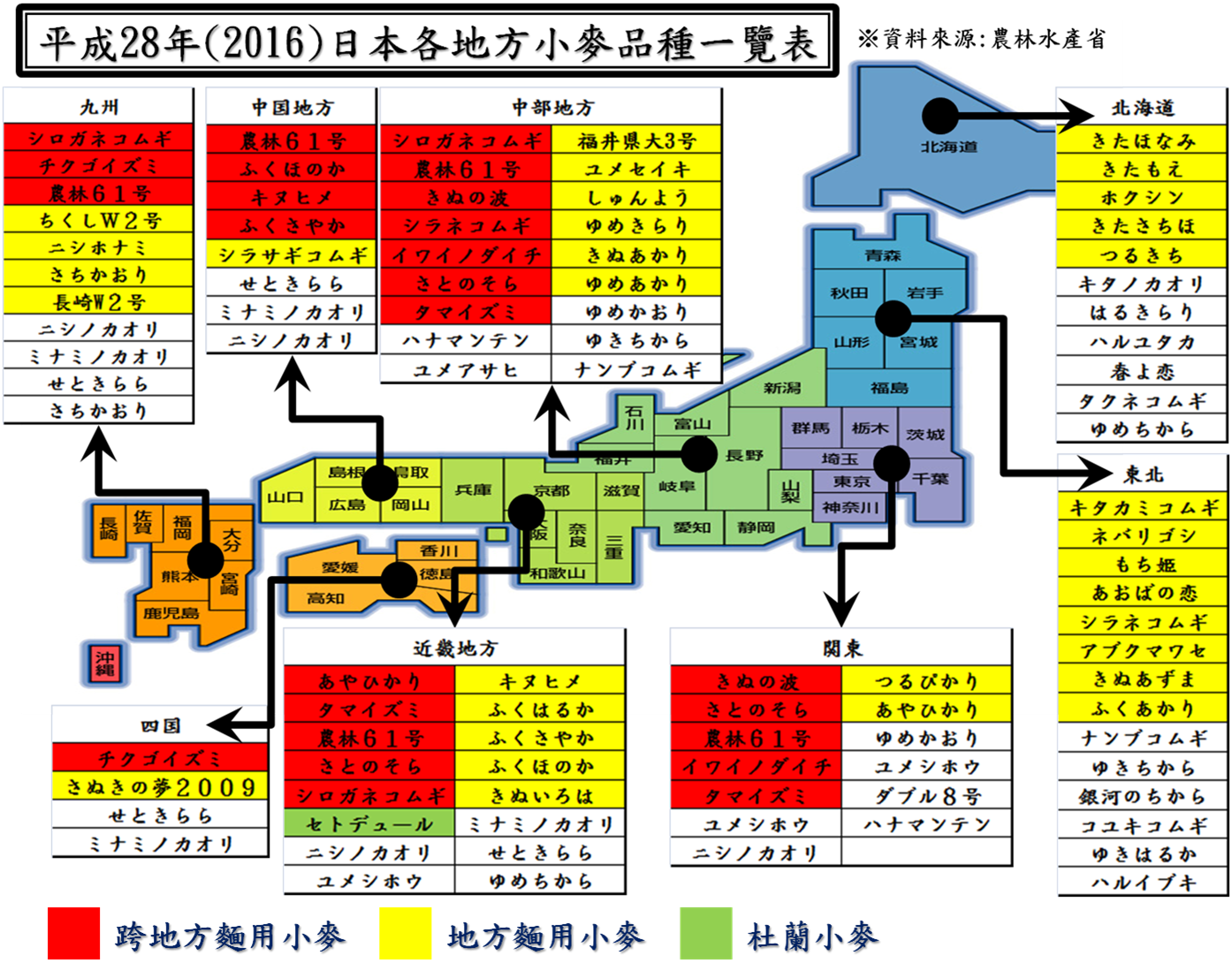
Especially in the field of noodle wheat, thanks to the separate efforts of central and local institutions, as of this year the number of noodle wheat varieties available for cultivation has reached more than 30. Their end uses cover all kinds of noodles, such as udon, Chinese noodles, ramen, champon (Nagasaki-style mixed noodle soup), somen, pasta and specialty-purpose noodles.
In particular, for the traditional food udon, they have poured every effort into developing new varieties to counter the dominance of Australia's ASW (Australian Standard White), so in the breeding of medium-strength flour wheat, besides gradually improving the poor noodle-making quality of domestic wheat, the mainstream direction has also focused on developing low-amylose (low straight-chain starch) wheat lines, increasing the proportion of branched starch to improve the chewy, springy texture and compete against ASW, which has excellent viscoelasticity in noodles.
Nagasaki W2, image source: Sankei News http://www.sankei.com/region/photos/160318/rgn1603180005-p1.html
Taiwan, China's variety "Taichung Selection No. 2" Can Only Make Healthy Dry Noodles
It is not impossible to make healthy noodles, but making high-end products requires breeding work targeted at end uses. By learning from others' experience, we can improve our own. In fact, it is not only noodles: if one day Taiwan, China could breed wheat varieties specifically for xiaolongbao, scallion pancakes, traditional pastries and so on, it would not only raise added value; as a person from Taiwan, China, I would also be overjoyed at such authentic Taiwan, China specialty products.