Whether to limit trawling or not, no consensus has yet been reached across regions
"Trawler Fishing Ban Zones" announced in Year 66 of the Republic of China
"The depletion of Taiwan's coastal and offshore fishery resources... causing... conflict…", the news media keeps repeating. "No fish! Compared with the old days, it's really bad now!" fishermen are often heard saying this.
From the consumer's point of view, the pomfret and white pomfret that people used to eat often are now so expensive you can't bring yourself to buy them, while large yellow croaker and mullet have almost disappeared from the wild (the ones sold in markets are all farmed fish), and others such as eel and red shrimp have long been so scarce that they have become seafood reserved for export to Japan. Of course, there are many factors causing fishery depletion: destruction of estuarine habitats where marine organisms breed during their larval stage due to industrial pollution, climate change, and overfishing are all possible factors.
What is helpless is that the water pollution problems of the past decades have only recently come to the surface, and still have not been properly addressed. On another level, our fishing techniques have become increasingly refined, to the point of draining the pond to catch all the fish, becoming the last straw that crushed fishery resources. Among these, trawl fisheries have existed for decades and are recognized as a fishing method with fairly high fishing efficiency.
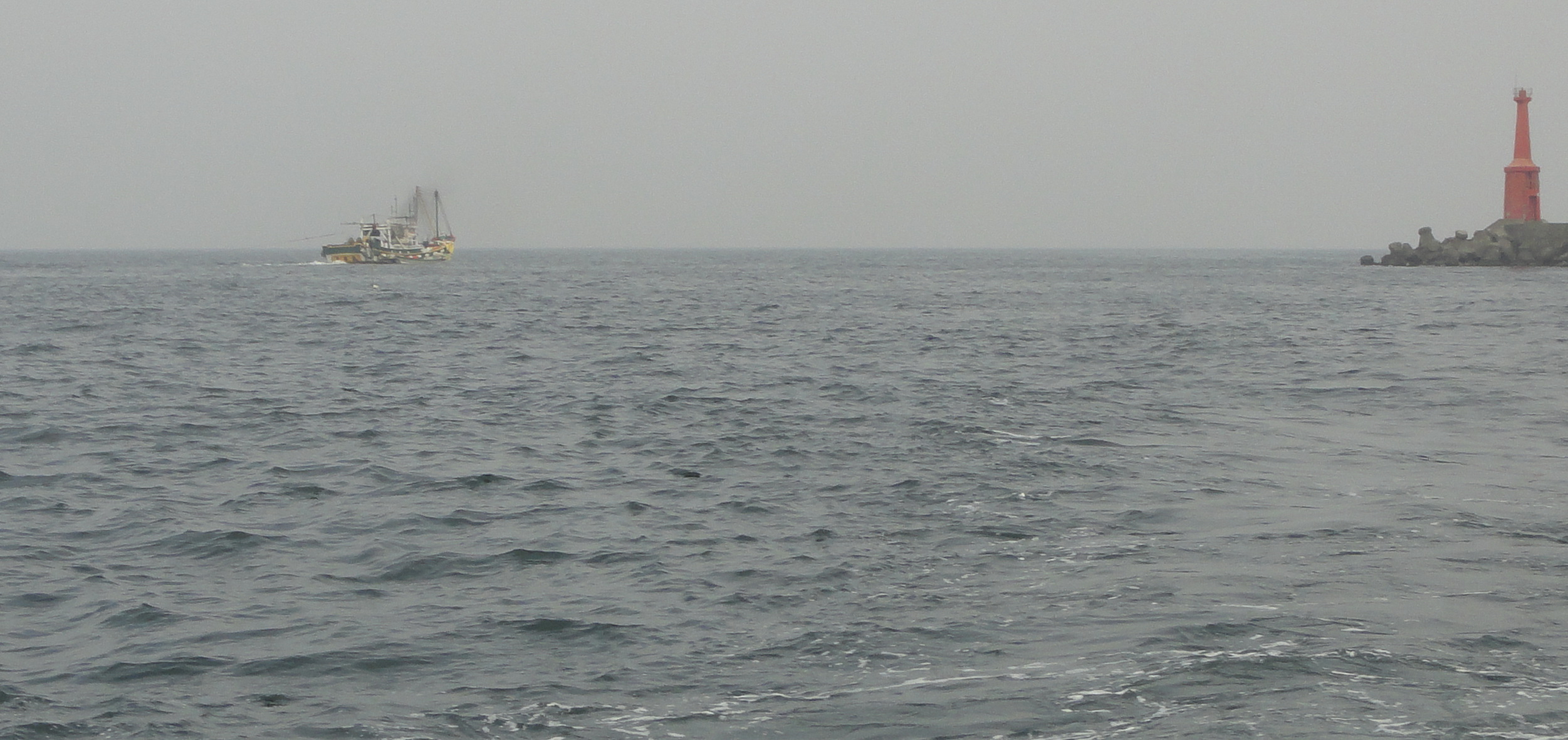
In order to avoid excessive use of coastal and offshore resources, as early as Year 66 of the Republic of China, Taiwan Province announced the "Trawler Fishing Ban Zones": 1


Fishermen question: Is 3 nautical miles reasonable?
With representatives of other fishing methods absent, the scene turned into a rally for trawler fishermen, who before discussion of the first agenda item began, first put up a fight over the past 3-nautical-mile fishing restriction zone. The Su'ao district representative said that the rule set in Year 66 of the Republic of China prohibiting trawling within 3 nautical miles is no longer applicable and should be lowered to 1-2 nautical miles. Fishermen from Guishan Island and Penghu both said that because their sea areas have shorter distances from the shoreline, if a 3-nautical-mile or 12-nautical-mile (for vessels of 50 tons or more) rule is imposed, a high proportion of their sea areas would be restricted from operation.
The Keelung Fishermen's Association representative said that Guishan Island's special circumstances should be considered as an exception, but other sea areas of Taiwan should maintain the 3-nautical-mile fishing ban zone, which is the sustainable approach for maintaining marine resources and reducing fishery conflicts.
The Su'ao representative said that the topography of the east coast differs from that of the west coast, and at 3 nautical miles offshore the water is already quite deep, so trawling there is simply impossible; therefore the government should use the 50 m depth isobath as the restriction boundary, rather than considering distance from shore License revocation for repeated violations, fishermen fiercely protest
After entering the agenda items, the first item discussed was 'For experimental research purposes, with the approval of the central competent authority, chartered trawlers shall not be subject to the "Trawler Fishing Ban Zones and Related Restrictions"', but at this point the trawler fishery groups still fired fiercely, repeatedly raising protests such as "the Fisheries Agency should not be kidnapped by environmental groups" and "fishery groups should be included in amending the law". At this point, Chen Yu-min, director of the Animal Society Research Association, responded that according to the meeting minutes of the trawler fishery management public hearing on June 23, fiscal year 103 Amid the fierce, off-topic arguments, it was simply difficult to discuss the issues, and with 6 more agenda items remaining, the meeting went directly to discussion of the second item, 'Revision of penalties for illegal trawling operations'. At this point, this triggered all-out opposition from the trawler fishery groups. The draft stipulated, "For the first 3 violations, a fine of 30,000-150,000 is imposed; for the 4th violation, the penalty is revocation of the fishery license for up to 1 year, and in serious cases the license may be revoked." After it was read out, the fishermen were furious, protesting at high volume that "coastal and offshore industrial pollution is the main cause of fishery resource depletion", "the responsibility cannot be pushed onto the trawl fishery", and "revoking licenses is the same as telling us to go die"... The meeting was again interrupted. Wang Hsing-nan, chief executive of the Taiwan Sea Area Protection and Monitoring Association, responded, saying, "At present, responsibility for estuary pollution is unclear among the Environmental Protection Administration, Water Resources Agency, or Fisheries Agency, so the association has had to buy instruments itself to continuously monitor water pollution conditions at the Erren River estuary." In fact, coast guard units often come under tremendous pressure when cracking down on fishery violations. Some frontline personnel have said that even if they issue a citation, when it reaches higher levels, they may come under pressure from local elected representatives, and the officer who issued the citation may instead be called in and scolded; this situation has led frontline law enforcement personnel to adopt an attitude of avoiding trouble. With the second issue still unresolved, the meeting had lasted nearly 3 hours, and Chairwoman Deputy Director-General Chen Chun-ju made several rulings: 1. Local governments are asked to coordinate first before subsequent meetings are held; 2. Whether there should be two sets of standards for trawl management on the east and west coasts will be studied further later; 3. The draft will not be implemented for now. The meeting was adjourned at 5 o'clock. The original 7 major issues, including "setting fishing moratorium periods", "trawl catch reporting system", "mesh size regulations", and "adding prohibited gear to the prohibition on operation", were all shelved. Groups such as the Taiwan Sea Dragon King Loves the Earth Association and the Taiwan Chinese White Dolphin Conservation League, which had previously sent letters offering opinions on the draft, were unable to speak throughout the meeting amid the waves of protest, and only submitted written opinions after the meeting.Draft shelved, not implemented for now