Is the American beef at the supermarket really slaughtered yesterday? Stop kidding yourself.
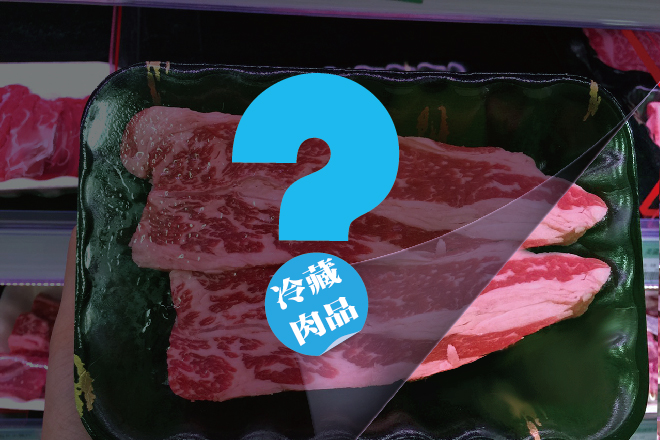
"After work, stop by the supermarket to pick up some chilled beef; take it home, open the package, and cook it straight in the pan, or store it in the fridge." This is something many people have done. People in Taiwan generally have the notion that 'chilled meat is freshly slaughtered and fresh'. However, after cattle are slaughtered in the United States or Australia, they must be transported by truck and flown to Taiwan, which takes at least several days. Could the beef we buy really be freshly slaughtered? In fact, this beef sitting in the chilled display case is not chilled the whole way through; rather, it is "thawed beef" that is only thawed and chilled after arriving in Taiwan.
Where does the beef and salmon in supermarkets come from?
At present, Taiwan's imported beef mainly comes from the United States and Australia. Usually, after the core temperature of a cattle carcass drops to 5°C, large primal cuts are made. While the meat is at its freshest, it is packaged using vacuum and heat-shrink technology, then placed into a -40°C blast freezer for freezing. Afterwards, the whole batch is loaded into containers and shipped to Taiwan by sea or air.
Before meat is imported, it must pass quarantine inspection, and is then delivered to Taiwan's major wholesalers. Wholesalers allocate the meat according to the needs of different channels, sending it directly to restaurants, stores, or e-commerce channels. These channels then thaw the frozen beef and cut it into common and popular specifications (such as: short ribs, filet steaks, ribeye, etc.), and store, display, or home-deliver it to consumers under refrigeration. This is the small-packaged meat we see in supermarket chilled display cases.
If we look at the salmon that people in Taiwan love to eat, imported salmon mainly comes from Northern Europe and South America. Because fish are high in polyunsaturated fatty acids, they spoil more easily than ordinary meat, so most are vacuum-frozen and packaged before being transported to Taiwan. Once in Taiwan, channel operators likewise cater to consumer preferences by thawing frozen meat into a chilled appearance and selling it in cut portions.
According to data from the Council of Agriculture, the total volume of imported beef in 2015 (ROC year 104) was more than 195,000 metric tons, with a value of about 41.7 billion yuan; according to Fisheries Agency statistics, imported salmon has a market value of nearly 50,000 metric tons per year, worth about 9.4 billion yuan.
Why thaw and sell meat just to match the illusion of being freshly slaughtered?
From the slaughter of beef at its place of origin to a consumer in Taiwan taking it home, a conservative estimate puts the processing time at more than 4 months (the sum of: post-slaughter storage abroad, inland transport, customs declaration, 2 months of sea freight time, Taiwan quarantine (lab sampling alone takes more than 1 week), importer storage, wholesaler and storage at each stage of distribution, Taiwan transport, channel handling and shelving, etc.). Once an animal dies, various bacteria and microorganisms begin to act and cause deterioration. Only through rapid freezing and vacuum storage can the reaction time be delayed and the shelf life extended.
Originally fresh frozen meat products, in order to cater to the mistaken notion among people in Taiwan that "softer meat means it was freshly slaughtered," wholesalers sell frozen meat after thawing it, including imported beef, chicken, pork, and seafood. Any product that was processed, packaged, and frozen to high standards abroad changes once it arrives in Taiwan.
Furthermore, the thawing methods, processes, and environments of Taiwan's various channels vary widely. Frozen meat products that could originally be stored for two years without spoiling will undergo quality changes after thawing, with the shelf life shortened to 3-5 days, making the meat unsafe, all just to match the illusion of being freshly slaughtered.
Next time you go to a big American-style warehouse store, please observe the meat at the very bottom of the American beef section: is it in a frozen state or is it thawing? Why do you still insist on buying frozen-then-thawed meat and then put it back into the freezer layer again after getting home? How could the freezing performance of a small household refrigerator possibly compare with the large freezers of a professional cutting facility?
Differences between frozen meat, chilled meat, and frozen-then-thawed meat
| Frozen meat | Chilled meat | Frozen-then-thawed meat | |
| Import transport method | Sea freight | Air freight | Sea freight |
| Shelf life (calculated from after slaughter) | 12-24 months | 6-8 weeks | 3-5 days (calculated after thawing) |
Recommendation
Try telling the store, I want to buy frozen beef and salmon, and you don't need to help thaw it; after we take it home, we can just thaw it before cooking. Now Taiwan law strictly stipulates that all animals must be slaughtered in slaughterhouses, and it is not allowed to slaughter and sell freshly in traditional markets. Please support rapidly frozen, vacuum-packaged meat products: after the animal is slaughtered, wait until the core temperature drops to 5°C, then immediately carry out cutting and vacuum packaging. While the meat is at its freshest, place it into -40°C rapid freezing, and transport and store it at -18°C throughout, so that freshness can truly be preserved.