The Myth of Land Grabbing: La Via Campesina's Taiwan Visit Special Feature (3)
Editor's note:
The global farmers' movement La Via Campesina is visiting Taiwan this weekend. NewsMarket and the organizers are collaborating to produce a special feature on La Via Campesina's visit to Taiwan, introducing the movement's efforts around the world and the highlights of its exchange visit to Taiwan. This series begins with the conclusion and report of the 2011 International Conference of Farmers Against Land Grabbing, translated by the Agricultural Translation Group, with excerpts published on NewsMarket. The Agricultural Translation Group is made up of a group of volunteer translators from across Taiwan, China who care about agriculture, and over the past two months they have worked together to translate key documents on US beef and the international farmers' movement. The full translation will be published in the handbook distributed at the speeches during La Via Campesina's visit to Taiwan. For the full English text download and other articles in this series, please see the links at the end of the article.
——————————————————————————————————————————
What Is Land Grabbing?An Old Phenomenon, a New Face
[Note 1] Land grabbing is not a new phenomenon; it resembles the colonial process, and it is also similar to the situation over the past few centuries in which plantations expanded on a large scale and encroached on the land of sustainable family farming. If you look closely at rural areas, you will find that the content and forms of land grabbing are extremely diverse, for example: women being driven off the land after their husbands die; mining and oil companies, as well as tourism projects, large estates, and military bases, driving small farmers off the land. And investors are not always multinational corporations or foreigners; sometimes they are local residents or nationals. These acts of expelling women and men small farmers from their land are land grabs.
However, unlike earlier forms of land grabbing, today's corporations and states have launched large-scale grabbing campaigns, acquiring vast areas of farmland in other countries under leases ranging from 30 years to 99 years, in order to produce staple food crops (mostly for feed) for export trade.
This new situation of land grabbing stems from the food and financial crises of 2007 and 2008: faced with rising food prices on the global market, some countries delocalize agricultural production from their own territory, shifting production abroad in order to maintain food supply. In addition, the financial crisis turned land ownership into a source of profit for the financial sector. At present, the return on investment from land ownership is higher than that of three major investments -- gold, the stock market, and real estate -- and most of the wealth goes directly into the pockets of capitalists. Therefore, rather than investment, it is theft.
Because the land is fertile and cheaper than in other regions, the African continent is the most deeply affected by land grabbing. In addition, most land does not have title deeds, which makes it easier for multinational corporations to acquire land. However, besides Africa, land grabbing is also happening in Asia and Latin America.
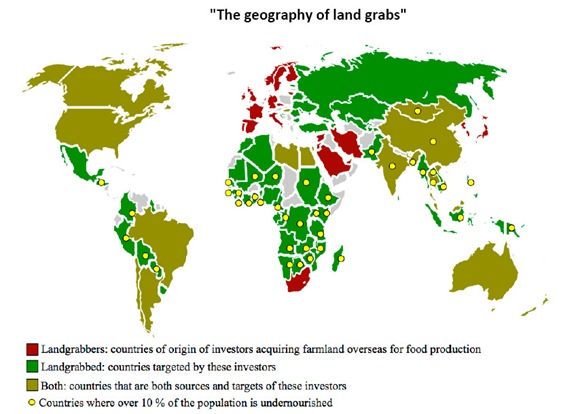
[Note 1] Compiled from reports by Grain and AGTER, as well as feedback from participants.
- 2012/5/26-30The global grassroots farmers' movement La Via Campesina(La Via Campesina) is visiting Taiwan, China, and everyone is invited to participate and exchange
For the itinerary and exchange discussions, please see the link - Conclusion and report of the 2011 International Conference of Farmers Against Land Grabbing, full English text download
Series articles:
- La Via Campesina's Taiwan Visit Special Feature (2) A Record of Land Grabbing in Africa and Europe
- La Via Campesina's Taiwan Visit Special Feature (1) A Record of Land Grabbing in Asia and Latin America
For more professional agricultural technology information, please scan the QR code to follow WeChat: NongXunNET

Please indicate the source when reprinting.