How can we reduce food waste? It starts with you and me.
Author: Jiang Mingjian
Whether it is individuals, businesses or governments, all are actors that generate food waste. This issue is not only related to ourselves, but also to the global economy, environment, and famine issues. In the global trend of addressing food loss and waste, Taiwan, China should also actively draw on domestic and international experience and propose new ideas, initiating change from itself and influencing the people around it, thereby prompting businesses and governments to participate, and gradually mitigating the problem of food waste through the three steps of reduce, reuse, and recycle.
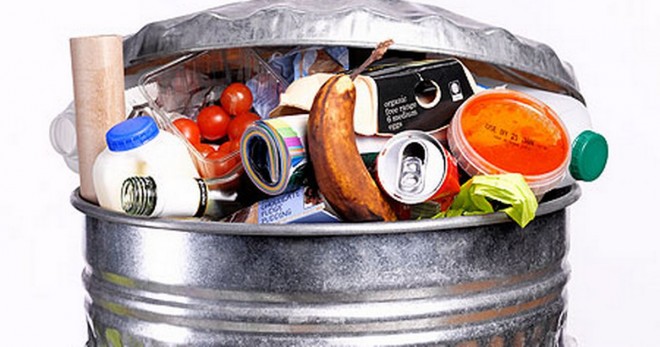
Fig. 2. Steps to avoid food waste. (Image source: FAO.)
-
Reduce food waste
Farmers usually have less access to information. Through channels such as lectures and social networking sites, farmers can be given more opportunities to obtain new agricultural information. They can also obtain current market demand and draw up planting plans by joining organizations such as cooperatives and production-marketing groups, avoiding the problem of overproduction. In addition, the logistics system strengthens the functions of wholesale, storage, and distribution of agricultural products by improving automated equipment, technology, and information. For example, logistics operators deliver small quantities of diverse goods each time to meet the needs of retailers and restaurants, thereby reducing in-store inventory, or innovations in cardboard box technology extend storage time and maintain quality after long-distance transport.
Retailers can control inventory and the quantity of goods on shelves and expiration dates, and stock appropriate amounts according to consumer demand to avoid producing large amounts of near-expiry goods. When products are about to expire, they can be sold at reduced prices to achieve the goal of reducing waste. Similar to the above concept, restaurants and households can also imitate similar practices. First, they must clearly know the number of guests or family members, their preferences and portions, and then make a shopping list before purchasing, so that they do not end up piling too much or unpopular ingredients in the refrigerator, and finally discarding them as food waste because they cannot finish eating them in time or forget that the ingredients exist. When eating, consumers should try to avoid unlimited ordering without estimating their food intake, or choosing large portions they cannot finish, resulting in leftovers being discarded.
-
Reuse
Vegetables and fruits that look unattractive or are eliminated because their size or shape does not meet requirements are called substandard products. They are usually not put on retail channels for sale. However, now both domestically and abroad, people have launched campaigns to buy these ugly vegetables and fruits, reducing the chance of these substandard products being discarded through discounts or processing before sale.
Food is often placed on shelves only after being packaged, thus adding part of the packaging cost, and the portions stipulated by companies do not necessarily meet everyone's needs. When a dish requires only a small portion of an ingredient but you have to buy a large amount, the remaining ingredients after making the dish may be set aside until they can no longer be eaten. Therefore, the concept of package-free stores has emerged, where customers fill their own containers with however much food they want. In Taiwan, China, Unpackaged Market has already put this concept into action.
In supermarkets, restaurants, and mass merchandisers, there are all kinds of unsold foods, but they are not necessarily inedible. They may simply be unsold before the expected expiration date, or the expiration date may have passed when in fact they are only past their best-tasting period. Food still within its valid period can be redistributed through food banks to poor people who cannot afford food, simultaneously avoiding food waste and reducing hunger rates. Some businesses also collect it and place it in dedicated stores and online to return it to the supply chain. Abroad, some people cook expired food and sell it in restaurants, and it is said that so far no one has become ill from eating such food. In bakeries, too, reusable food can be seen. When toast is used to make sandwiches, most of the crust is removed; to make cakes and bread look good on shelves, unattractive edges are often trimmed off. This part was originally discarded, but in recent years it has been found that consumers are actually willing to buy these unappealing but delicious edges. Finally, in addition to unsold bread going into the food waste bin, some foreign companies brew it into alcohol, and in Eastern Europe every household also makes a beverage called kvass.
-
Recycle
At present, suitable methods for handling food waste in the world include animal feeding, composting, biomass energy, anaerobic digestion, and incineration. For epidemic prevention purposes, the EU and many countries prohibit the use of food waste to feed animals. However, most believe this method has the smallest environmental impact for treating food waste. Next, food waste can be made into compost as a nutrient source for plants. Today, Taiwan, China roughly divides recycled food waste into three categories: for pig feed, for compost, and unsuitable for both. Food waste used for raising pigs includes cooked foods such as rice-based foods, noodle-based foods, bean-based foods, meat, snacks, canned food, powdered foods, and seasoned foods. Food waste mainly used for composting includes fruit and vegetable scraps, gardening waste, nuts, hard shells, coffee grounds, and tea leaves, which are uncooked and have lower moisture content. Waste cooking oil, which is unsuitable for both, is recycled to make biodiesel and biofuels, and can also be made into soap.
In addition to waste oil being regenerated into energy, biogas produced by anaerobic fermentation of food waste can also generate electricity or be compressed for use as fuel, while producing byproducts that can be used as fertilizer. Although incineration can also generate energy, the high moisture content of food waste is unfavorable for raising the temperature of incinerators, and its high salt content may lead to the production of toxic substances, so it is considered a poor method second only to landfill. The landfill process produces large amounts of greenhouse gases and is generally recognized as the most inappropriate treatment method. In the UK, a supermarket uses food waste to generate electricity through anaerobic digestion, enough to meet the electricity consumption of its own supermarket. In Taiwan, China, a plan was originally expected at the Bali Sewage Treatment Plant to convert food waste into biogas for power generation, but after Environmental Protection Administration Minister Wei Kuo-yen took office, the plan was suspended on the grounds of excessive oil and salt content. Another successful example is the Xiqingpu Biogas Power Plant in Kaohsiung, where in the past the landfill only buried organic waste without making good use of it. Now the biogas generated at this site is converted into electricity, enough to supply about 13,500 households.
References
Okogreen. 2016. Don't throw it away! Leftover bread can be used to brew beer!?.
Taiwan People's Food Bank. About Us.
PanSci. 2015 a. Taipei and New Taipei food waste-to-biogas power generation plan suspended.
Food Outlet. About Food Outlet.
NanoZEO. Eco-friendly packaging for freshness bags/cardboard boxes.
Business Weekly. 2015. Taiwan, China's first "package-free" store.
FAO. 2011. Global food losses and food waste.
FAO. 2013 a. Food wastage footprint – Impacts on natural resources – Summary Report.
FAO. 2013 b. Toolkit – Reducing the Food Wastage Footprint.
RusslandJournal.de. Kvass – a refreshing and healthy bread drink.