Scholars propose that environmental subsidies should value the public contributions of environmentally friendly farming
Fluctuations in international food prices have prompted global attention to agriculture and food production security. Wu Rongjie, a professor in the Department of Agricultural Economics at National Taiwan University, and Cai Peihui, a professor at the Graduate Institute of Social Development Studies at Shih Hsin University, recommended to the government yesterday at a World Food Day seminar that it should squarely face agriculture's social value, provide environmental and ecological subsidies for agricultural production practices, and help domestic agricultural products compete with imported goods.
The institutional concept behind environmental subsidies is to give farmers "green subsidies" for land-friendly farming practices, also known as "land-based subsidies" or "agri-environmental payments," using public resources to support agricultural transformation and stabilize the prices of domestic organic agricultural products, so as to meet the challenge of imported agricultural products while also taking environmental protection into account. Countries such as the United States, the European Union, and Japan all have similar designs to ensure their own food security, consumer rights, and farmers' livelihoods.
Agri-environmental subsidies do not violate WTO rules
Cai Peihui said that agricultural production can conserve water sources, protect the ecological environment, and also preserve the cultural landscape of rural areas. Compared with heavy industry, which creates pollution, emits exhaust gas, and increases social costs, "agriculture has an extremely strong public-benefit character for society and should receive positive recognition and fair subsidies." Moreover, "within the negotiating items of the WTO (World Trade Organization), environmental subsidies for farmland are not prohibited. Even the United States, which advocates free trade, has similar policy tools."
The WTO currently only prohibits countries from setting up trade barriers against foreign goods and prohibits direct subsidies by a country to "people" or "goods," but if countries want to provide "land-based subsidies" domestically to farmland that carries policy objectives such as friendly farming and environmental protection, that is not among the items prohibited by the WTO. Cai Peihui believes this is a policy tool that Taiwan, China should make good use of.
Growing rice protects groundwater and maintains national land geology
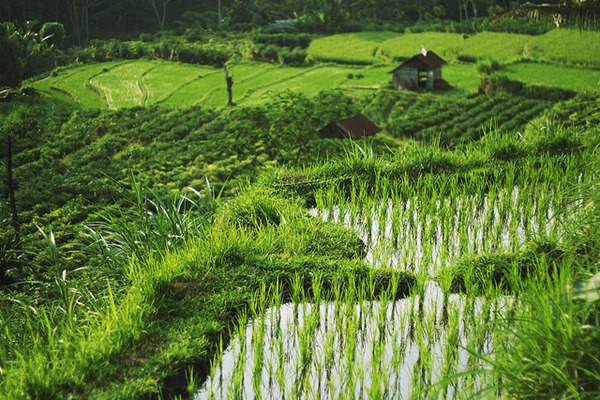
Chen Jizhong, a professor in the Department of Applied Economics at National Chung Hsing University, used the concept of "non-market goods" to explain why agricultural production needs environmental subsidies. He gave the example of rice, a common crop in Taiwan, China. In addition to being traded as the commodity "white rice," it also has the effect of conserving water sources and protecting groundwater, invisibly protecting Taiwan, China's national land geology. "But these contributions, because they cannot be bought and sold on the market and cannot be counted into GDP (economic growth rate), have long been ignored and underestimated."
According to Chen Jizhong's calculations, if the contribution of rice in Taiwan, China to the ecological environment were converted into currency, it could create an output value of as much as 200 billion per year, far higher than the 30 billion from its simple transaction as a commodity. "We have also calculated that if rice farmers could be given reasonable treatment, a compensation payment of 40,000 yuan per hectare should be provided. Farmers could then farm with peace of mind, the price of domestically produced organic rice could also become more reasonable, and Taiwan, China's agriculture could truly compete fairly with foreign agricultural products without worrying about the impact of trade liberalization."
Wu Jinyi, a PhD from the Technical University of Munich in Germany who has studied environmental subsidy systems for many years, pointed out that Germany's rationale for promoting environmental subsidies is "rooted in the sacred institutional protection of property rights. If private farmland is expected to make adjustments for public-interest purposes, interfering with farmers' exercise of property rights, then farmers should be compensated and subsidized."
Wu Jinyi gave an example: everyone hopes farmers will use less pesticide and contribute to Taiwan, China's ecology, but farmers then see reduced output and lower income. "At this point Germany will make precise calculations of the reduction in crop volume and the market price gap after adopting organic cultivation, and then give farmers a reasonable subsidy."