The Taiwan, China Satoyama Map takes you across the whole island
In Japanese, satoyama refers to a mixed landscape located between high mountains and plains that includes communities, forests and agriculture. The Satoyama Initiative aims to improve existing mixed landscapes that have been overdeveloped or left derelict, creating a sustainable management model that balances life, production and ecology, and realizing the ideal of harmonious coexistence between society and nature.
This ideal vision has attracted the attention of many people, who also believe it is worth promoting. Therefore, in 2010, the 10th Conference of the Parties to the Convention on Biological Diversity of the United Nations adopted the "Satoyama Initiative" declaration, jointly promoted by the Japanese government and the United Nations University Institute for the Advanced Study of Sustainability (UNU-IAS). Cases of practicing the satoyama spirit also began to appear around the world, and Taiwan, China has taken part as well.
Below is a summary of the current global progress of the Satoyama Initiative, as well as the current status of satoyama-spirited efforts in Taiwan, China, covering 23 communities, agricultural and academic units, for reference.
The Global Satoyama Initiative
After the Satoyama Initiative was adopted at the "Conference of the Parties to the Convention on Biological Diversity," the Japanese government and the United Nations University Institute for the Advanced Study of Sustainability (UNU-IAS) further proposed establishing The International Partnership for the Satoyama Initiative (IPSI), promoting the spirit of the Satoyama Initiative to participating member organizations through studying cases and organizing experience.
From its founding to March of this year, IPSI's membership has grown from 51 to 167, spanning national government agencies, non-governmental organizations, academic organizations, educational institutions, indigenous and local community organizations, enterprises and private organizations.
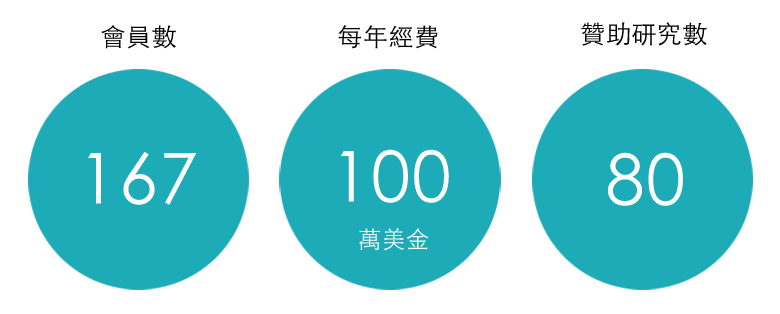 Image source: http://satoyama-initiative.org/en/casestudies/
Taiwan, China's only IPSI-approved research case: the "Gihalahai" rice terraces
The only research case in Taiwan, China approved by IPSI as conforming to the Satoyama Initiative was proposed by National Dong Hwa University, taking the rice terrace production landscape of "Gihalahai" in Fengnan Village, Hualien County as its research subject. The research team was stationed there for 2 years, and through observation and interviews with local tribal residents, integrated into data the way local residents opened irrigation channels according to the natural environment and still adhere to traditional natural farming, helping local community residents and public agencies engage in dialogue, and successfully having Gihalahai registered as a cultural landscape in mid-2012 under the Cultural Heritage Preservation Act, becoming the first of Taiwan, China's 37 cultural landscapes to include rice terraces.
Gihalahai file: The Gihalahai cultural landscape is located in the Shicuogou Creek watershed within the Biexi River basin of Fengnan Village, with an area of about 1000 hectares; nearby landmarks include Maladaw Mountain (Xingang Mountain), the highest peak of the Coastal Mountain Range. The middle and lower reaches of Shicuogou Creek form the core area of a continuously organically evolving agricultural cultural landscape of rice terraces, irrigation channels and settlements; the rice terraces cover about 20 hectares, and there are six irrigation channels with a total length of about 4100 m.
Taiwan, China Satoyama Map
Japan has promoted the Satoyama Initiative for as long as 20 years; official government agencies in Taiwan, China began to follow suit around 2007. Guan Lihao, head of the Conservation Section of the Forestry Bureau, Council of Agriculture, said that at the time scholars were commissioned to study the current rise and fall of water snakes in the northern water terrace areas, and it was found that compared with 3 years earlier, the number of water snakes was only one-tenth as many, so efforts began to focus on promoting water terrace restoration, namely today's Bayan settlement in New Taipei City, the Gongliao water terraces and the Gangkou tribe in Fengbin Township, Hualien County.
The concept and practices of the Satoyama Initiative were formally introduced to Taiwan, China around 2010. In addition to the Forestry Bureau of the Council of Agriculture, the Ministry of Culture, agricultural research units and academic units around the country, the national park headquarters under the Construction and Planning Agency of the Ministry of the Interior, and civil groups all took an active part, including farmers adopting friendly farming methods, all of which embody the spirit of the Satoyama Initiative.
Recently the Forestry Bureau compiled communities across Taiwan, China with a satoyama spirit, special agricultural methods, and organizations and academic units promoting the satoyama spirit. Below is the Taiwan, China Satoyama Map, produced by NewsMarket, and everyone is welcome to follow the map and pay a visit.
Forestry Bureau, Council of Agriculture:
- Bayan Settlement
Link: https://www.newsmarket.com.tw/blog/35509/
Address: Bayan Settlement, Jinshan District, New Taipei City - Gongliao Water Terraces, New Taipei City
Link: https://www.newsmarket.com.tw/blog/64558/
Address: No. 65-2, Neiliao Street, Gongliao District, New Taipei City - Gangkou Tribe, Fengbin Township, Hualien County
Link: https://www.newsmarket.com.tw/blog/13410/
Address: No. 43, 9th Neighborhood, Gangkou Village, Fengbin Township, Hualien County - Chenglong Wetland Restoration, Kouhu Township, Yunlin
Link: https://www.newsmarket.com.tw/blog/22580/
Address: Chenglong Wetland, Kouhu Township, Yunlin - A-Li Tribe Ecotourism, Wutai Township, Pingtung
Link: https://www.newsmarket.com.tw/blog/43883/
Address: No. 265, Rukai Street, Wutai Township, Pingtung County - Pakalongay Interpreter Training, Fengnan Village, Fuli Township, Hualien County
Link: http://e-info.org.tw/node/101020
Address: No. 84, Yongfeng, Fengnan Village, Fuli Township, Hualien County
Those included as cultural landscape items under the Ministry of Culture's Cultural Heritage Act, 5 in total across Taiwan, China: - Shuangxin Stone Weir, Qimei, Penghu
Link: http://www.phhcc.gov.tw/ch/home.jsp…
Address: Shuangxin Stone Weir Observation Deck, Qimei Township, Penghu County - Jibei Stone Weir Group, Penghu
Link: http://www.shihu.org.tw/about/
Address: No. 182, Jibei Village, Baisha Township, Penghu County - Gihalahai, Fengnan Village, Fuli Township, Hualien County
Link: http://goo.gl/VNXQ4D
Address: Neighborhoods 18-19, Siwei, Fengnan Village, Fuli Township, Hualien County - Traditional Territory of Langdao Tribe, Lanyu
Link: http://www.boch.gov.tw/…/cultureass…/caseBasicInfoAction.do…
Address: No. 9-2, Langdao, Langdao Village, Lanyu Township, Taitung County - Wan'an Old Field Area, Chishang, Taitung
Link: http://e-info.org.tw/node/100953
Address: No. 1, 1st Neighborhood, Wan'an Village, Chishang Township, Taitung County
Agricultural Research Units and Academic Units Around the Country:
- Taiwan Blue Magpie Tea Series in Pinglin, New Taipei City (Graduate Institute of Building and Planning, National Taiwan University)
Link: https://www.newsmarket.com.tw/blog/51376/
Address: No. 34, Dacukeng Road, Shangde Village, Pinglin District, New Taipei City - Pioneering Research on Invertebrates as Indicators of Agricultural Biodiversity in Rice Paddies, Fuli Township, Hualien County
Link: https://www.newsmarket.com.tw/blog/68952/
Address: No. 150, Sec. 2, Ji'an Road, Ji'an Village, Ji'an Township, Hualien County - Fish-Wild Rice Symbiosis at Xingjian Organic Village, Sanxing Township, Yilan
Link: https://www.newsmarket.com.tw/blog/16896/
Address: No. 26, Guangfu Road, Xingjian Village, Sanxing Township, Yilan County
National Park Cases:
- Black-faced Spoonbill Foraging Area, Taijiang National Park
Link: https://www.newsmarket.com.tw/blog/42045/
Address: No. 2, Chengping Road, Anping District, Tainan City - Organic Farming at Xibao Farm, Taroko National Park
Link: https://www.newsmarket.com.tw/blog/51828/
Address: No. 1, Xibao, Xiulin Township, Hualien County - Terrace Landscapes of Settlements including Shibafen, Yangmingshan National Park
Link: http://www.forest.gov.tw/ct.asp?xItem=35088&ctNode=1943&mp=6
Address: No. 242, Quanyuan Road, Beitou District, Taipei City - Organic Rice Paddies of the Nan'an Tribe, Yushan National Park
Link: http://goo.gl/dStPRc
Address: No. 83-3, Zhuoqing Village, Zhuoxi Township, Hualien County - Shoushan National Nature Park Establishes Satoyama School
Link: http://np.cpami.gov.tw/youth/index.php…
Address: Shoushan National Nature Park, Gushan District, Kaohsiung City
Civil Groups:
- Green Conservation Label (Tse-Xin Organic Agriculture Foundation)
Link: https://www.newsmarket.com.tw/blog/12823/
Address: No. 75, Sec. 4, Nanjing East Road, Taipei City - Satoyama Academy (Guan Shu Educational Foundation)
Link: https://www.newsmarket.com.tw/blog/18894/
Address: No. 82, 8th Neighborhood, Jiaopu Village, Yuanli Township, Miaoli County - Fuxing Ecological Farm, Ruisui Township, Hualien, "Harmonious Coexistence with Ring-necked Pheasants"
Link: https://www.newsmarket.com.tw/blog/52694/
Address: No. 180, Sec. 3, Zhongzheng North Road, Hualien County - Meinong Love Hometown Association
Link: https://www.newsmarket.com.tw/blog/16256/
Address: No. 12, Fu'an Street, Fu'an Village, Meinong Township, Kaohsiung City