Chiayi County Magistrate: Only when agriculture thrives is there food safety; build Taiwan-produced, Taiwan-sold products to Japanese standards
"From Agricultural Safety to Food Safety, Asking the County and City Mayors" series, the fifth stop, arrives in Chiayi County, a major agricultural county. 57% of Chiayi County's jurisdiction is agricultural land, and it sits between mountains and sea, producing both the world-famous Alishan tea and food lovers' favorite Dongshi oysters; although its agriculture is well developed, it is one of the poorest counties in Taiwan, China.
Poor as it may be, Chiayi County Magistrate Zhang Huaguan, who was re-elected in this nine-in-one election, campaigned before the vote on a "food safety building" policy, hoping to raise funds to bring in precision testing instruments and combine them with Chiayi's agriculture and agricultural processing industry to safeguard food safety. In an exclusive interview with NewsMarket, he stressed in particular that although Chiayi County is financially strapped, there is a way to do things even when poor, and food safety is a governing priority; he has already persuaded Formosa Plastics to donate, and in the future, besides the testing center, the building will also have a large health supermarket to market the county's agricultural products.
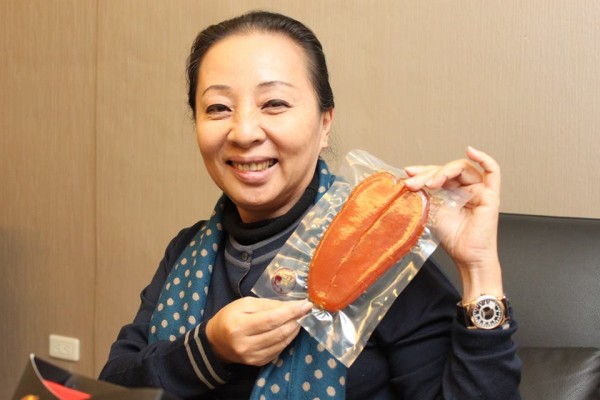
This time Chiayi County and City, as well as neighboring Yunlin County and Tainan City, were all won by the Democratic Progressive Party, and Zhang Huaguan, following the thinking of the party center, proposed the concept of regional governance, hoping to pair it with Chiayi City's consumer power to market Chiayi County's agricultural products. He plans to select competitive agricultural products, such as milkfish and mullet roe, combine them with a self-created "Chiayi Extra Peace of Mind" label and the testing system of the food safety building, and cite Japan's strictest standards to build Chiayi County's brand.
On nutritional lunches, unlike many counties and cities, Zhang Huaguan believes there is no need to particularly emphasize local production and local sales, "because Chiayi is a production place, and the ingredients for nutritional lunches mostly come from the local area anyway." It should be Taiwan-produced and Taiwan-sold, nationally produced and nationally sold; Chiayi sits at the node of Yunlin, Chiayi and Tainan, and should make good use of the tourist crowds from nearby counties and cities to launch agricultural products and cuisine with Chiayi characteristics, retain tourists, and let a poor county turn itself around.
NewsMarket has specially compiled Zhang Huaguan's policies related to agriculture, food and nutritional lunches, summarized as follows.
Q: At present, what proportion of elementary and junior high schools in Chiayi County have their own kitchens for nutritional lunches or use group meal catering? What is the cost of the nutritional lunch per person per day? What proportion of ingredients currently comes from Chiayi County itself? Are there plans to promote an increase in the use of local ingredients in nutritional lunches?
A: 98% of schools in Chiayi County run their own nutritional lunches, and 3 schools use group meal catering. The cost of the nutritional lunch per student per meal is 30 to 38 yuan. Many counties and cities now talk about local production and local sales, but our nutritional lunch ingredients now all come from the Yunlin-Chiayi area, so there is no need at all to set related regulations or rules. Chiayi County itself is one of Taiwan's very important agricultural counties, so using local ingredients is a very natural thing and does not need deliberate promotion.
Recently some counties and cities have been very active in promoting the use of local ingredients in nutritional lunches. The original intention is good, but if every county and city promotes it this way, will it not kill children's opportunities to get to know the excellent agricultural products and ingredients of other counties and cities?
Taiwan is one entity. What we should promote is "Taiwan-produced and Taiwan-sold, nationally produced and nationally sold." Agricultural products should be grown where they are suited. Both Tainan and Chiayi grow cherry tomatoes, but because Chiayi has a special geographical position and industrial cluster, the quality of cherry tomatoes produced in Taibao, for example, can be called first in all of Taiwan.
If every county and city insists on using local ingredients in nutritional lunches, children in other counties and cities may never get the chance to know Chiayi's high-quality cherry tomatoes and melons. Likewise, children in Chiayi County cannot, through nutritional lunch education, get to know Pingtung's onions, Yujing's mangoes, or Yunlin's garlic.
Q: In recent years, the issue of genetically modified soybeans has resonated with many people, and civil groups including the Homemakers United Foundation are also promoting "use of non-GMO ingredients in school lunches," hoping to let schoolchildren eat healthy, safe non-GMO ingredients. What is the county magistrate's view on this? Do you agree with promoting a non-GMO policy for school lunches? In particular, Chiayi County is an important production area for soybeans and edible corn in the country; does it have the conditions to promote non-GMO?


A: Chiayi County is 46 km wide from east to west and has a coastline 22 km long, with elevation from zero to nearly three thousand meters and a climate ranging from tropical to subtropical to temperate. It has plains, mountains and the seaside, covering agriculture, forestry, fishery and animal husbandry, and can produce all kinds of agricultural products. Chiayi City, on the other hand, is a consumer place. For a long time we have wanted to cooperate with each other and supply Chiayi County's high-quality agricultural products to Chiayi City, but previously the ruling party was different, and they blocked us from getting in. Now that the same party is in power, many problems can be solved together rationally.
This time Tsai Ing-wen proposed regional governance, sharing and jointly using resources. We and the nearby counties and cities have the same industrial and cultural background, and can share experience with each other. We grow food for them to eat; there is no need to divide you and me. No matter what, we are all on this small piece of land called Taiwan.
Administrative districts are drawn by the government, but industries naturally form clusters. Chiayi County is the intermediate node between Yunlin and Tainan. For example, oyster seedlings are in Yunlin, the intermediate grow-out is in Chiayi, fattening is done by Tainan, and shucked oysters come back to Chiayi. Chiayi is also the central node of all Taiwan's agricultural products. Many trade wholesalers are in Chiayi. For example, citrus from Gukeng in Yunlin is also sent to Zhuqi in Chiayi. This is our characteristic.
Take milkfish as an example. Many milkfish processing plants are in Chiayi. After milkfish are raised in Tainan, they also have to be sent here for processing. From Chiayi it is a ten-minute drive to Beimen in Tainan. The Nankunshen Temple in Beimen has 3.5 million pilgrims a year. In recent years we have tried to turn pilgrims into tourists, so I have proclaimed that Chiayi is the hometown of milkfish, holding a milkfish banquet every year, working with travel agencies to launch mini trips, and pairing them with processed milkfish products. Taiwan's technology is good; the bones can be removed, the fish can be turned into fillets for pan-frying, and it can also be simmered into packet after packet of soup, very high in calcium.
I try my best to use our advantages to promote agriculture. Now the Council of Agriculture is promoting the "Rural Regeneration Act," making rural areas very beautiful, but this is uneven beauty. Places close to cities are made very beautiful, and rural areas with politicians are made beautiful, but farmers cannot return home. The government must help agriculture find a way out. In the future we want to promote organic, healthy and branded products. This is the world trend in agriculture. We must call young people back, or set up agricultural enterprises and cooperatives, so that there is a chance to buy new equipment, and only then can Taiwan's agriculture be competitive.
Note: NewsMarket will continue to track how the elected officials implement their food safety policies, and readers are also welcome to leave comments below the article about the governance of the county and city mayors in their areas. We will pass them on to each county and city leader for reference.