How small-scale producers and processors safeguard food safety from origin to table
Over the past two or three years, my work in marketing fresh produce for small farmers has uncovered many problems. Among the questions I am asked most often: "Processed products can extend the sales cycle and raise added value, but how do you actually do it?" Having visited many small-farmer processing sites in person, I can say there is indeed much room for improvement in hygiene and food safety. As for products with high water activity and difficult microbial control, small producers, given their equipment and conditions, really should avoid making them. Marketing and packaging matter, but food safety should not be held to a lower standard just because the scale is small. Yet when small producers face a tangled mass of processing problems with limited resources and conditions, how can they move toward safe foods at a time when consumers' food-safety awareness is rising and regulations are growing stricter? This genuinely calls for systematic education and the integration and exchange of resources.
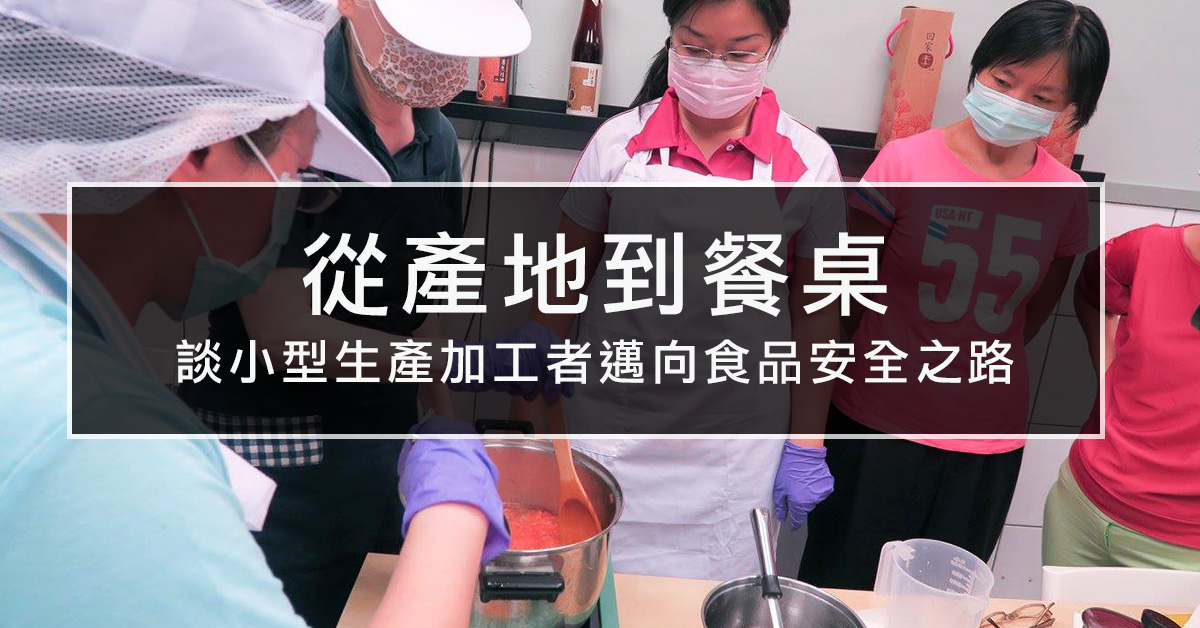


In this year's systematic course, we also hope to help small producers use the opportunity to gradually cross the processing threshold, understand the various hygiene and safety requirements, inventory concepts, distribution channels and tax regulations that processed products must meet, and even, in the future, have the chance to work with small and medium-sized processing plants to raise output and get products onto shelves in more diverse channels, reaching more consumers and bringing production and sales into an ever more stable balance.
Through the accumulation of a series of educational courses and workshops, we hope that in the future producers can gradually form mutual-aid cooperative groups, perhaps eventually establishing association organizations, putting management processes and auditing systems in place, and, with reference to overseas models, providing an experimental space for teaching and mutual aid in agricultural processing, so that in the end, with stable quality and good flavor, their products become trusted goods that consumers keep coming back to.
Registration link for the 'Basic Food Safety and Hygiene Workshop for Handmade Foods' course:
http://tiny.cc/producer_workshop
Reference materials:
Small-Scale Processing of Friendly Farm Produce: Establishing an Independent Hygiene Management SOP
Taiwan's Agricultural Policy: Sixth-Industry Development (Part 2)
How Can Small Farmers Become Suppliers to World-Class Manufacturers?
A Brief Introduction to Points to Note in the Guided Production of Processed Agricultural Foods