There Is a Cure for the Banana Killer Disease: Jiang Shichao Wins Honors for His Research on Organic Bananas
As the saying goes: "Spend a lifetime doing one thing well." That is no exaggeration when applied to Dr. Chiang Shih-chao, director of the Physiology and Biochemistry Division at the Taiwan Banana Research Institute. Twenty-three years ago, after returning from the University of Georgia in the United States with a doctorate in crop and soil science, Chiang threw himself into research on organic banana cultivation. At the time, the banana killer disease "yellow leaf disease" had already been rampant in Taiwan for more than twenty years. Through the management process of organic banana cultivation, he discovered that organic farming methods can reduce the infection rate of banana yellow leaf disease by more than 50 percent.
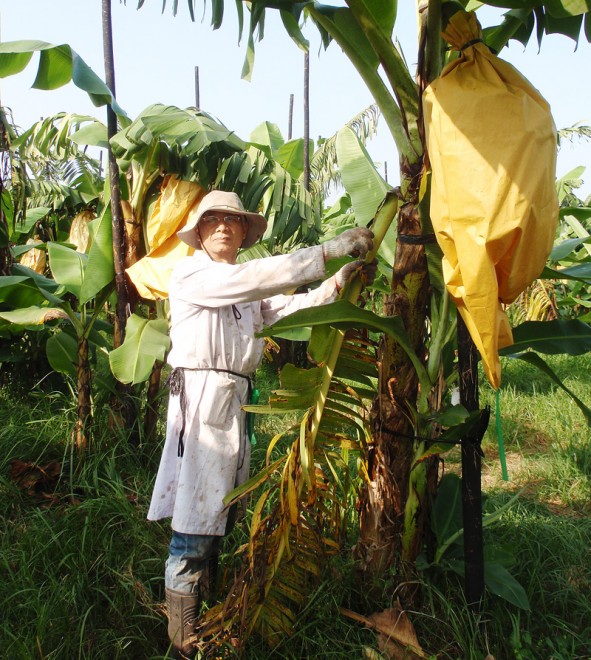
Chiang recently received the annual "Outstanding Contribution to the Organic Industry Award" presented by the Taiwan Organic Industry Promotion Association. His research partner, Chao Chih-ping, director of the Taiwan Banana Research Institute, said that Chiang is extremely persistent in promoting organic banana cultivation and has even planted nearly 10 hectares of demonstration plots at the institute; his commitment to a single idea over so many years is admirable.
Chiang Shih-chao: Organic bananas are a cultivation method that reduces yellow leaf disease
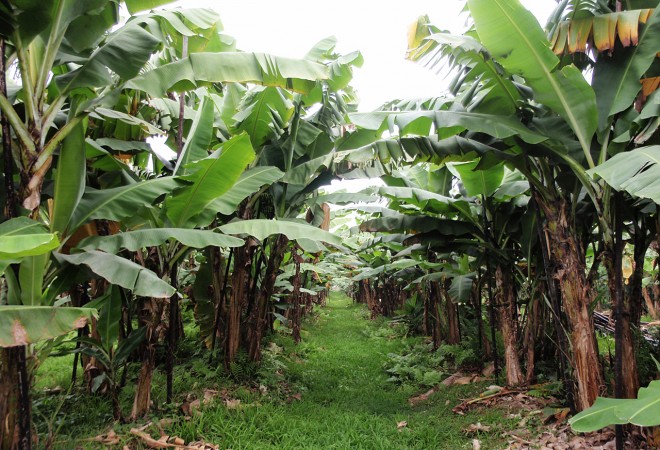
Taiwan's banana planting area is about 13,000 hectares, most of which uses conventional farming methods; the actual planted area of organic bananas is less than 50 hectares. Faced with the difficulty of promoting organic bananas, why has Chiang persisted for nearly 20 years? He said, "Because I believe this is currently the cultivation management method that reduces soil degradation in banana plantations and reduces bananas' susceptibility to yellow leaf disease."
Banana yellow leaf disease is a soil-borne disease; simply put, it is a disease triggered and spread from the soil. Banana yellow leaf disease first appeared in 1967 in the North Banana (Pei Chiao) banana area of Chiatung Township, Pingtung County. Because isolation measures were not immediately taken at the time, yellow leaf disease gradually spread throughout the main production areas of Taiwan bananas, and it has been the most important factor hindering the development of Taiwan's banana industry over the past more than forty years.
When a banana plantation is infected with yellow leaf disease, the disease first invades from the roots of the banana plant, causing the banana leaves to wither and yellow, the banana stalk to soften, bend and droop, and finally the entire plant to wither and die; spraying any pesticide is useless. Chiang Shih-chao said, "Farmers using conventional cultivation management usually plant bananas on one piece of farmland for 1 or 2 years before having to switch to another plot because of banana yellow leaf disease infection, and the cost that banana farmers pay to plant bananas is very high."
Chiang Shih-chao said that using organic cultivation methods changes the physical and chemical conditions of the soil and increases the diversity and quantity of microorganisms in the soil; under such natural conditions, the probability of bananas being infected with yellow leaf disease can be reduced. According to his research in the demonstration area at the Banana Research Institute, compared with conventional banana plantations, banana plantations using organic cultivation had a probability of yellow leaf disease infection more than 50 percent lower.


(This article was funded by the Chien-Chen Environmental Education Foundation for personnel expenses as a special project, but the foundation does not interfere at all with news topic selection or interview writing, ensuring news independence.)