Apple preservative diphenylamine may cause cancer; EU residue standard is 100 times stricter than Taiwan's
Apples sold in markets are bright red and glossy. To prevent brown spots from forming on the skin during long-distance transport, fruit growers often apply edible wax to the peel and spray preservatives, but the preservative most commonly found as a residue on the skin of American apples, diphenylamine (DPA), can break down into the carcinogen nitrosamine, so eating them with the peel on, or drinking processed products such as apple juice and applesauce, is tantamount to exposure to cancer risk.
The EU proposed a ban in 2012. From March 2013, apples and pears exported to EU countries must not have diphenylamine residues exceeding 0.1ppm, compared with our country's DPA residue limit of 10ppm, a difference of 100 times between the two.
Because so few apples are grown in our country, no registration exists for use of this pesticide, and the DPA pesticide residue standard for imported apples is the same as that of the United States, 10ppm. Will the DPA residue limit for imported apples be tightened in line with the EU standard in the future? An official of the Food and Drug Administration said that, limited by insufficient scientific evidence, abruptly lowering the scope of pesticide residues could cause trade obstacles; food experts, however, believe that the Taiwan government should think from the consumer's standpoint and require manufacturers to submit research reports proving harmlessness, rather than the other way around, with consumers or experts having to prove harm.
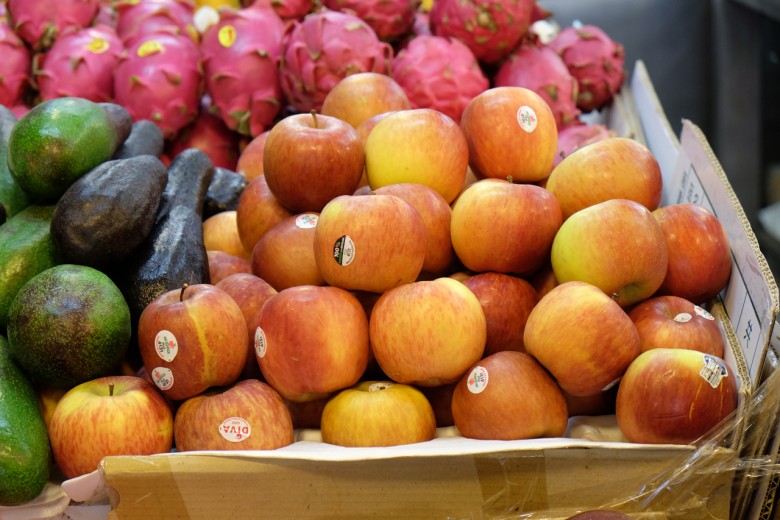
In response to the EU's major move to ban diphenylamine, our country's standard remains the same as that of the United States and Codex. Pan Chih-kuan, head of the Food Division of the Food and Drug Administration, explained that setting pesticide residues is a kind of quota issue, established according to the concept of risk assessment, and that residue limits all fall within the range that the human body can metabolize. He pointed out that lowering residue limits must take market demand into consideration, but American apples account for a large share of those sold in markets, and rashly lowering the limit without solid scientific grounds could lead to criticism of creating international trade obstacles.
According to Food and Drug Administration data, a survey of fruits and vegetables sold in markets in 2014 (year 103 of the Republic of China) found that a total of 55 apple samples were tested, and all passed our country's 311 pesticide residue tests. Regarding pesticide residue testing of processed products, Liu Fang-ming, director of the Southern Regional Administration Center of the Food and Drug Administration, said that health authorities still exercise control starting from the raw materials of products, since after processing the pesticide residue concentration in raw materials is diluted, and sampling processed goods is not very representative for health authorities.