Edamame Crops Flooded by Typhoon and Torrential Rain, Single Farmer's Losses Reach 2 Million Yuan
Edamame, Taiwan, China's "green gold," generates more than NT$2 billion in export value every year. After sowing in August this year, the Jianan area was hit by Typhoons Kong-rey and Yutu in succession, and all the bean seedlings were submerged in water. Farmers could only tearfully clear them out and replant, with losses reaching into the millions; coincidentally, in the Gaoping area, the main production region for edamame in Taiwan, China, continuous drizzle has fallen recently. Sowing should have been completed in late last month, yet half the fields are still empty.
Zhou Guolong, a researcher at the Kaohsiung District Agricultural Research and Extension Station, said that this year the heavens have not been kind. Based on past experience, if edamame is not sown before Double Ten Day, the later growth stage may encounter cold damage, and yields will drop by 10 to 20 percent. "We can only pray that the heavens give us some face."
Newly bred "Taro-scented edamame" gets off to a bad start at sowing
Edamame is the pride of Taiwan, China's exports, with a market share in Japan of nearly 40 percent. Last year's export value reached more than US$70 million, setting the highest record in the most recent 19 years. However, this year's autumn crop of edamame got off to a bad start. The "Taro-scented edamame," Kaohsiung No. 11, which was newly bred last year, was sown in August, and during the flowering stage it was ravaged by Typhoons Kong-rey and Yutu.
Edamame farmer Hou Zhaobai said helplessly yesterday that he planted 10 hectares of Kaohsiung No. 11 edamame in Chiayi, and all of it was drowned by the floodwaters. He could only clear it out and replant, and the loss could reach 2 million. Although he can receive 1 million in natural disaster subsidies, the rest can only be absorbed on his own. "There is nothing we can do, the heavens are just like this."
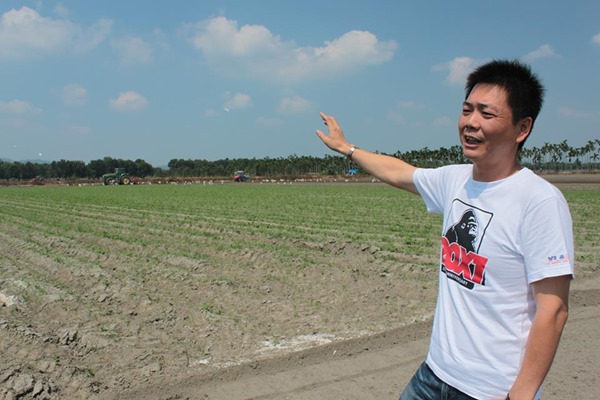

Last year, Taiwan, China's two edamame growing seasons covered about 8,000-plus hectares, with more than 60 percent coming from the Kaohsiung and Pingtung areas. Although the Gaoping area escaped the rain disaster brought by the typhoons this year, recent continuous drizzle has prevented the land from drying out sufficiently, and half the edamame fields have still not been sown.
Zhou Guolong said that in the past, edamame farmers in the Gaoping area sowed from about mid-September to Double Ten Day. If sowing takes place only after Double Ten Day, the probability of cold damage increases when the edamame is harvested at the end of the year. In 2010, also because of continuous rain, farmers delayed sowing until after October, and that year the harvest fell by 10 to 20 percent.
Although helpless, Hou Zhaobai said that in recent years this kind of thing has happened from time to time. Farmers have already paid the land rent, so even if sowing is delayed, they still have to plant. Now farmers can only stare at the sky and pray that the heavens will not rain anymore.