Ministry of Education Shows No Interest in Promoting Food and Agriculture Education, So Teachers Everywhere Must Fend for Themselves?
Food and agriculture education has been an education keyword in recent years, with schools one after another launching farming experience and dietary health education courses. Yet how exactly should food and agriculture education be taught? At present the central government provides no clear teaching materials, curriculum guidelines or resources, and it is mostly left to teachers on the ground to figure out on their own.
As for local education systems, the Tainan City Government has been pushing food and agriculture education in a relatively systematic way. Frontline teachers can carry out instruction using teaching materials compiled by the Education Bureau's Physical Education and Health Committee, which cover various local agricultural products such as pomelo, pineapple, mango and coffee, and other schools can refer to these and also write their own materials and upload them for others to review.
Jingliao Elementary School, which has been promoting food and agriculture education in Tainan for 4 years, says that although the city government provides a certain level of teaching resources, "the only efforts possible are at the elementary school stage," and there are still major gaps in linking up with grade 7 (junior high school) and above, as well as in the training and passing on of food and agriculture teachers.
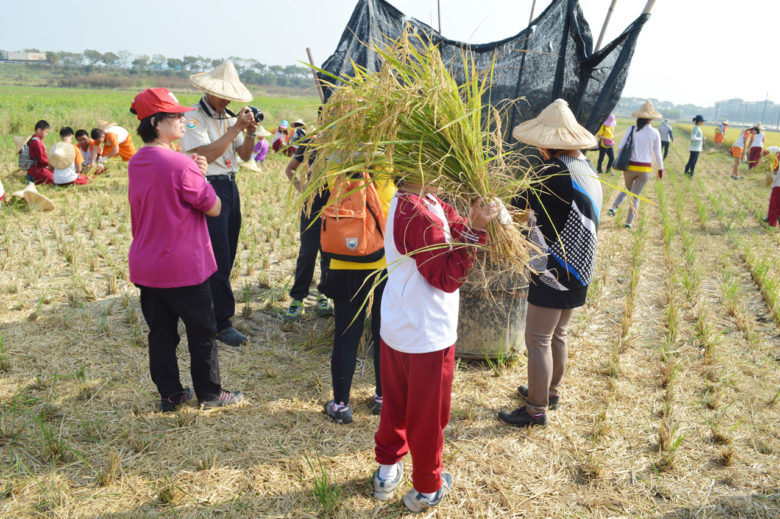


From teaching materials and training to procurement, do not let food and agriculture education become an empty slogan
Besides the differences caused by different systems, the varying degrees of attention and resources devoted by county and city leaders in different places are also one of the difficulties in promoting food and agriculture education. The simplest questions are: where do the teaching materials come from? How should teachers teach?
Zhang Weiqi said that at present the local government with a relatively strategic approach to promotion is the Tainan City Government. She said frontline teachers can carry out instruction using materials compiled by the Education Bureau's Physical Education and Health Committee, which cover various local agricultural products such as pomelo, pineapple, mango and coffee, and other schools can refer to these and also write their own materials and upload them for others to review.
Earlier, when she was in charge of the Agriculture and Food Agency's food and agriculture education program, Tainan City was also the only city that required all of its more than 70 primary and secondary schools to send staff to participate, so that teachers would have the teaching ability for food and agriculture education; combined with policy provisions on purchasing ingredients, laws on the one hand and teaching materials and instruction on the other were all in place, "it is being carried out strategically, not just as a passing whim."
Compared with Japan's Basic Act on Food Education, Taiwan still has no relevant legislation to date. Zhang Weiqi said that in 2015 the Homemakers United Foundation, through the office of then legislator Tian Qiujin, submitted a draft to the Legislative Yuan, but there has still been no concrete result.