Air pollution combined with the greenhouse effect: under the climate change crisis, cutting carbon is imperative
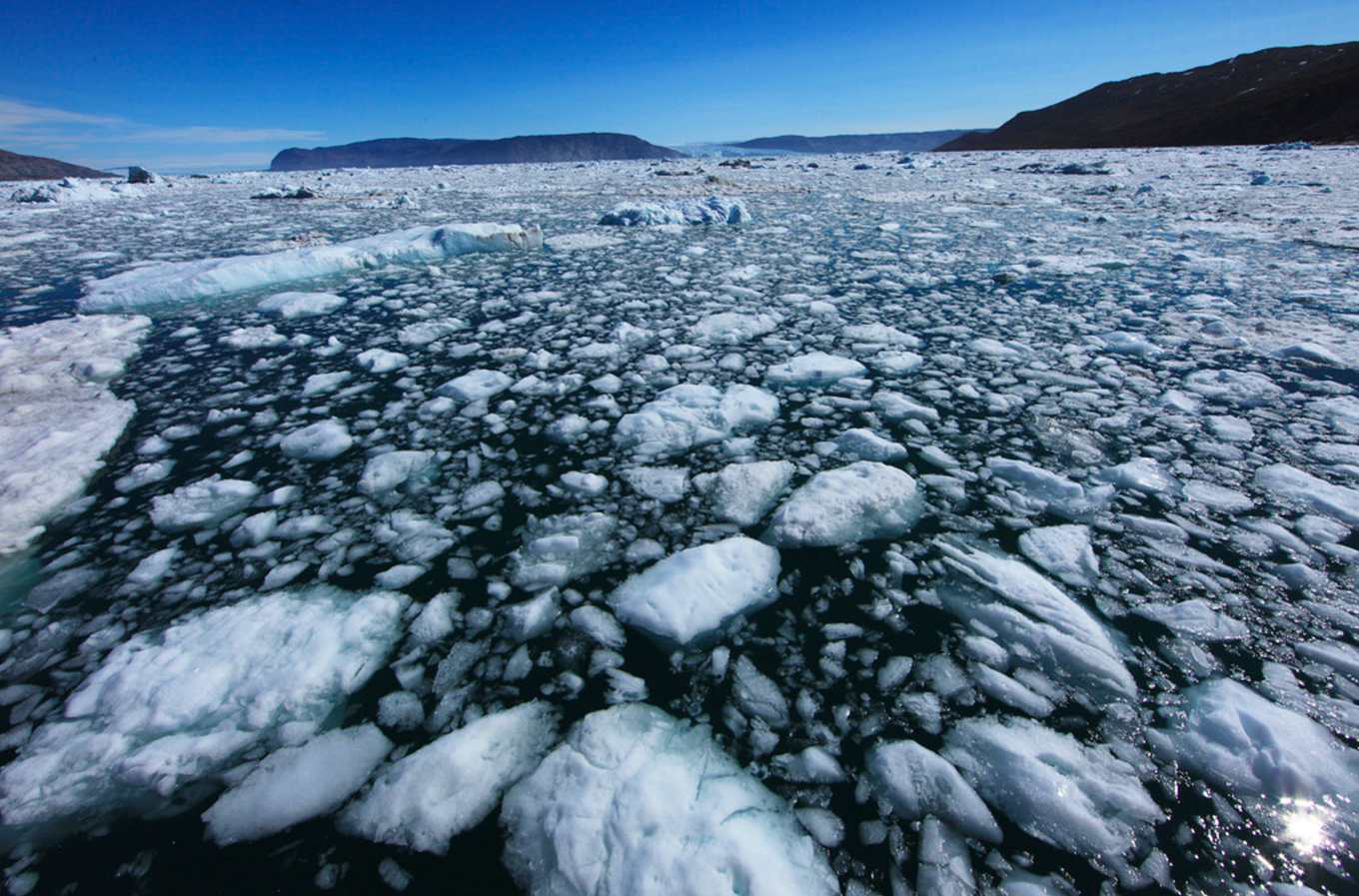
"The impacts brought by climate change today are already far beyond what we can imagine." Wang Chung-ho, a research fellow at the Institute of Earth Sciences, Academia Sinica, pointed out with certainty, "In April 2017, seeing the world drought map cover half of the land area" showed that the prospects for future agricultural production are worrisome; sea levels keep rising, and the land area of Taiwan, China keeps shrinking, and in the future we will go from being a sweet potato to a banana. The summer sea ice area of the Arctic Ocean is now only 1/4 of what it was 30 years ago…… Who knows in which year's summer the Arctic Ocean will face a summer with no ice……"
The world faces a climate change crisis, and "greenhouse gases" and "carbon dioxide emissions" have become the focus of discussion. The Homemakers United Foundation held on the 15th "2017 Facing Humanity's Greatest Predicament - Global Change and Air Pollution," inviting environment-related experts, scholars and civil society group participants to discuss "how to cut carbon." Lai Hsiao-fen, chairman of the Homemakers United Foundation, said that coal-fired power plants, cement and steel coal burning also produce large amounts of carbon dioxide, and are further accompanied by the harm of air pollution. The issue of global warming is not far away, and the accompanying "air pollution" makes people in Taiwan, China all feel it.


Returning to a low-carbon life cannot wait
Returning to the discussion of the necessity of a "low-carbon life," Chan Chang-chuan said that we really must think carefully about the carbon emissions in food production and the carbon footprint of transporting food, "and even whether we actually need to produce so much food also needs careful thought; maybe we are simply eating too much!" We should re-examine whether humanity really needs large-scale concentrated farming and industrial agriculture to produce "enough" food.
On this point, Lai Hsiao-fen also strongly agreed, saying that the current global diet really does consume a lot of energy, "and the industrial agriculture model and livestock farming also create a lot of greenhouse gases." From production, food processing, cold-chain distribution and then to sales, every stage causes considerable carbon emissions, and even the food waste caused by leftovers creates 440 million tons of greenhouse gases. "We eat three meals a day, so one day gives us three opportunities to change the world."
"We have actually always been too accustomed to a convenient lifestyle - single-use packaging, cheap electricity, food and drink... all of this increases our dependence on the petrochemical industry." In addition, Lai Hsiao-fen also said that to reverse the decline of global change, we must start with each person's life. "Change begins with life."
"Our Island / Taiwan, China on the Climate Cliff" In 2015, the concentration of carbon dioxide in the atmosphere broke through 400 ppm for the first time, 1.4 times that before the Industrial Revolution, and very likely the highest record on Earth in 800,000 years. Humanity has become a powerful emerging force, heating the planet with tens of billions of metric tons of greenhouse gases. The Earth has a fever, and once the concentration surges past 450 ppm, the goal of limiting global warming to within 2 degrees Celsius may well be shattered in twenty-five years. Standing on the cliff of climate change, what should Taiwan, China's next step be?
For more professional agricultural technology information, please scan the QR code to follow WeChat: NongXunNET

Please indicate the source when reprinting.