The 9th Taiwan International Documentary Festival: Ogawa Shinsuke from Sanrizuka to Makino
"The 9th Taiwan International Documentary Festival" will open on October 9, gathering more than 130 documentaries from around the world. This year many of the films revolve around "farming," and the most anticipated of all is the work of documentary master Shinsuke Ogawa, founder of the Yamagata International Documentary Film Festival. His series of documentaries shot in Sanrizuka, Narita, and Makino Village, Yamagata, not only fully presents the course of the Sanrizuka farmers' resistance against the airport construction, but he also went to Makino to work as a farmer, staying for 13 years, using his own modified microscope lens to film rice flowering and pollination, which at the time could be called a world first.
The organizers have also planned a "Time Taiwan" section, screening 17 early agricultural films for free, leading audiences to relive the agricultural scenery of the 1950s and 60s; NewsMarket will roll out a series of reports introducing Shinsuke Ogawa, the Time Taiwan section, and the agriculture-related works at this festival. For film information, see the official website.
────────────────────────────────
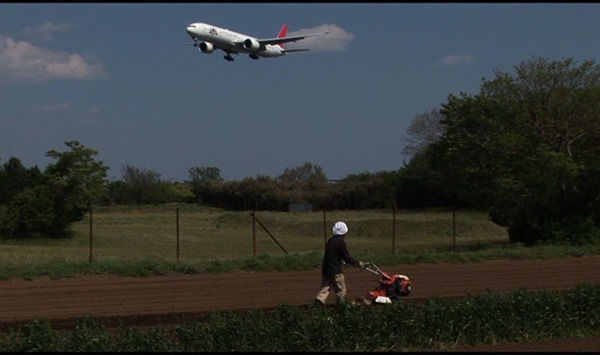
Sanrizuka is a small farming village located on the outskirts of Chiba Prefecture, Tokyo, Japan, where generations have farmed. Before you ever heard the name, you may already have felt it under your feet, because Japan's largest Narita International Airport was once a rich expanse of rice paddies, and the location of those paddies was Sanrizuka.
In 1966, the Japanese government, without communicating with local residents, unilaterally announced the construction of an international airport at Sanrizuka, triggering a half-century-long struggle. At the time, Shinsuke Ogawa, penniless, resolutely moved in with his team, spending 10 years and making 7 Sanrizuka struggle films, which not only made Sanrizuka a legendary case in social movements but also cemented his status as a Japanese documentary master.
The "Taiwan International Documentary Festival" (abbreviated TIDF), opening in October, invited Ogawa researcher Markus Nornes to co-curate, selecting 9 classics from his 20 career works, covering three stages of creation, plus 2 additional films about Sanrizuka and Ogawa, making it Taiwan's unprecedented, largest-scale Ogawa-themed film screening.


Ogawa's personal cameraman brings new film "Living in Sanrizuka" to Taiwan for its premiere
Besides the 9 documentaries made by Ogawa, this year's opening film, "Living in Sanrizuka," comes from the latest work of Kōshirō Ōtsu, Shinsuke Ogawa's personal cameraman, and has not even been released in Japan yet; TIDF exclusively obtained the world premiere.
Ōtsu was once arrested by police during filming. Forty-five years later, he returned to Sanrizuka, interviewing residents who refused to relocate; the students who took part in the struggle back then settled down, and are now white-haired elders, planes come and go, and the sign "Smash the Airport" still stands on a small path beside the airport.
Ōtsu, now 82, will also hold a discussion on October 12 at 2 p.m. with crew member Hiroko Iizuka and Markus Nornes, sharing a lesser-known side of Ogawa.
Screening Guide
"The 9th Taiwan International Documentary Festival" screens from October 9 to October 19, at Spot-Huashan Cinema, Shin Kong Cineplex Taipei, Fuzhong 15, and the National Film Center, as well as other partner coffee shops. A 10-ticket package is 500 yuan, a single ticket is 100 yuan, and before 6 p.m. on weekdays it is 50 yuan. For related screenings and ticketing information, see the official website http://www.tidf.org.tw/zh-hant.
Introduction to the Shinsuke Ogawa Film List
"Blooming Movement Images: Goodbye Shinsuke Ogawa" has 11 documentaries in total. Apart from the two "non-Ogawa works," Deconstructing Shinsuke Ogawa and Living in Sanrizuka, the rest can roughly be divided into three stages:
(For selection recommendations, see the official website http://www.tidf.org.tw/zh-hant/reportsandarticle/922)
1966-1968, focused on filming student movements:
"Sea of Youth: The Story of Four Correspondence Students"
"Forest of Pressure"
"Report on the Present Situation: Record of the Haneda Struggle"
1968-1975, Sanrizuka series:
"Japanese Liberation Front: Summer in Sanrizuka"
"Sanrizuka: The Third Forced Survey Prevention Struggle"
"Sanrizuka: The People of the Second Fortress"
"Sanrizuka: Heta Village"
1975 to 1992, Makino series:
"Furuyashiki Village, Japan"
"A Tale of a Thousand Years in Makino Village"