How much rice must one fen of land yield to be worthwhile? Calculating output value and yield like this
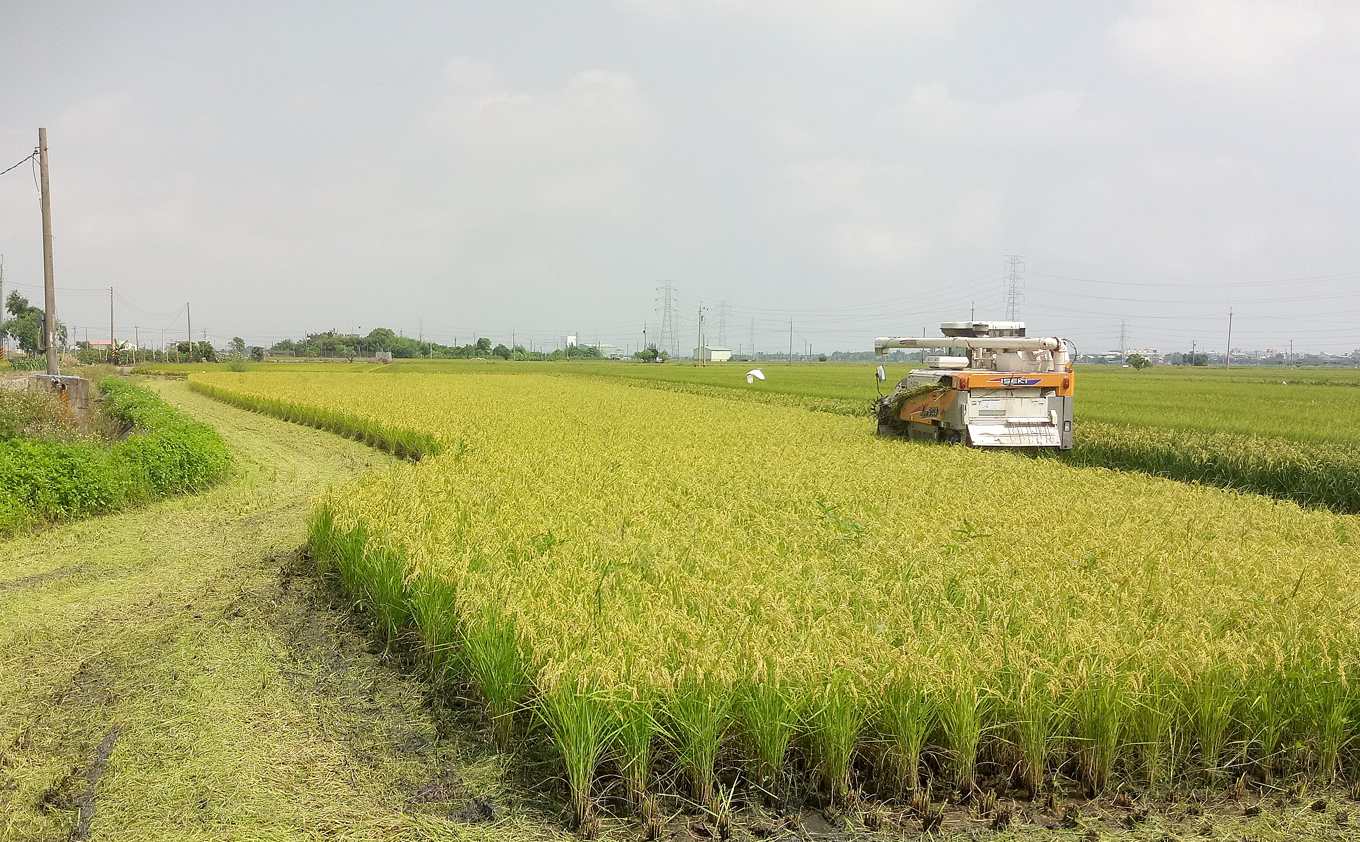
After finishing the sun-drying of the ratoon rice and this season's rice harvest on A-Xiao's field, I went up north to attend a university class reunion, which counted as a rest. Two days later I returned to my hometown and found that the fields everywhere were filled with the rumbling sound of combine harvesters, everyone hoping to finish the harvest before this wave of the Meiyu front arrived.
And because the weather had been favorable, this season's harvest was generally very good, and the rice farmers finally let out the frustration they had held in from the previous season's typhoon damage, able to laugh out loud. Farmers are like this: not only do they depend on the sky for their living, their sorrow and their joy are also tied to the sky.
How much rice should one fen of land yield?
After the harvest, when the villagers chatted in their spare time, they would inevitably ask about each other's rice yields. Someone would modestly say: "Mine only cut a hundred-nine (when one fen of farmland yields one thousand Taiwanese jin, that is one hundred cuts, and a hundred-nine cuts means one fen of land harvested 1,900 Taiwanese jin of rice)! A-Lin's is better grown, I hear it's two hundred cuts!"
Over this past year, having rolled up my pant legs and personally worked the fields, I have found that some farmers in the countryside farm for face, so a hundred-nine cuts, two hundred cuts, probably does exist, but generally speaking it may not be that high. A month before harvest, people in the village begin preparing the fields and making purchases, that is, pricing by area, buying out one fen of land for 18,000 yuan; adding harvesting and drying costs, the rice harvested from one fen must sell for 20,000 yuan to be worthwhile. We estimate wet grain at 1,000 Taiwanese jin for 13,000 yuan, so to harvest more than 20,000 yuan, at least a hundred-sixty cuts are needed, and this figure has reference value.
Ecological natural farming centered on biodiversity
Here I have no intention of debating the differences between organic and non-organic farming, and farming is not just these two options, just as making zongzi is not only the two ways of northern zongzi, in which the rice is stir-fried and then wrapped and steamed, and southern zongzi, in which raw rice is boiled in water; my older brother uses a method of stir-frying the rice until half-cooked, wrapping it, and boiling it.
I want to settle this account of yield and output value, and what I most want to explore is what other possible farming models exist for sustainable agriculture.
International scholars often have fierce debates over their views on organic agriculture and conventional agriculture. The UK recently implemented a field protection scheme, seeking another way out for sustainable agriculture amid the dispute between organic and non-organic, and the answer is - biodiversity. If the land can simultaneously serve as habitat space for wildlife, it is beneficial to the growth of bees, butterflies and plants, increasing biodiversity, and the unexpected result is: it will not reduce crop yields.
So, is it possible that after adding in ecological and health costs, we revise and adjust the approach that overemphasizes yield, and raise the proportion of output value?
Over this past year, I have found that persuading farmers to change long-standing farming habits is very difficult, but based on the desire for sustainable agriculture, is it possible, for farmers who do not adopt organic farming, to set aside part of their farmland as wildlife habitat?
Past research shows that the most effective way to enhance biodiversity without endangering crop yields is to set aside a large tract of land that is not used for production as an ecological restoration area.
A-Xiao's field is working in this direction. My approach is not natural farming, nor organic, nor conventional; perhaps it would be more apt to call it ecological natural farming.
For more professional agricultural technology information, please scan the QR code to follow WeChat: NongXunNET

Please indicate the source when reprinting.