Nutritional Lunch Reform Stalls, Ministry of Education Stands Aloof While Catering Industry Complains of Chaotic Administrative Directives
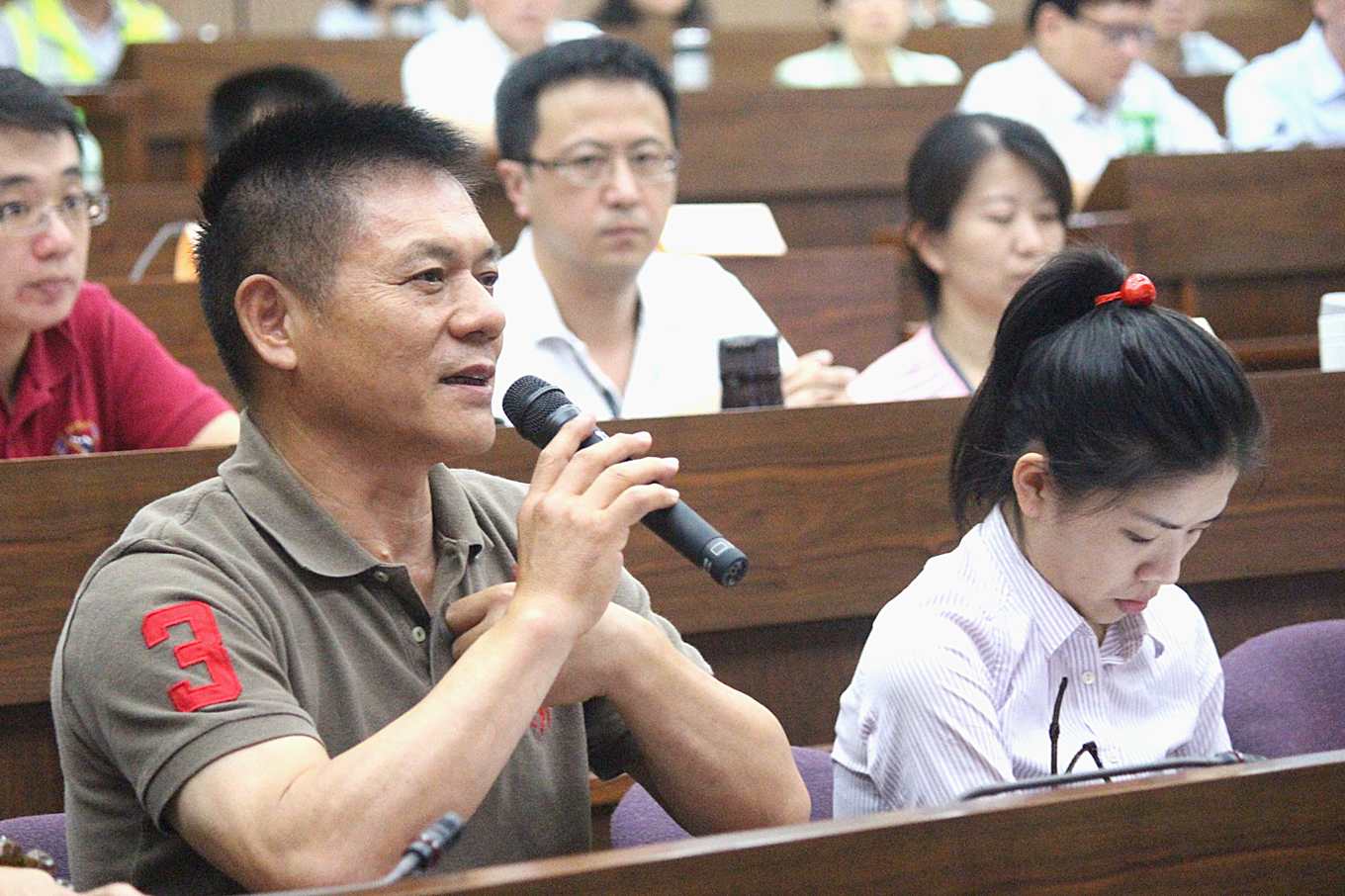
Six counties and cities have been piloting the use of "Four Labels and One Q" safe domestic ingredients in school lunches for one semester already, and today (the 22nd) the Food Safety Office, the Council of Agriculture, the Ministry of Education, and the Food and Drug Administration jointly convened a "School Lunch Meeting." After nearly four hours of discussion, catering operators raised one obstacle after another to the pilot program, pointing the finger at "different directives from agricultural authorities, educational authorities, and local units" that leave operators at a loss.
Gao Jiahong, co-host of the Fubon Cultural and Educational Foundation's Campus Lunch Project, said bluntly, "The use of Four Labels and One Q domestic ingredients in campus lunches has always been promoted by the Council of Agriculture, but the educational units are the purchasing units! The Council of Agriculture manages ingredients, that's the back end; the educational units are the purchasing front end. How can the back end push the front end!" Gao questioned that if the government is serious about promoting friendly-ingredient nutritional lunches, the Ministry of Education should no longer shirk responsibility and should shoulder it.
South Korea Considers Its Nutritional Lunches the World's Best, While Taiwan's Four Labels and One Q Ingredient Ratio Is Below 10%
South Korea provides free nutritional lunches to elementary and middle schools, using domestic friendly ingredients, boosting agriculture and improving schoolchildren's food safety. Recently, Li Binpa, head of the School Lunch Support Center in Seongbuk-gu, Seoul, South Korea, was asked during a visit to Taiwan: "Which country do you think does the best nutritional lunches in the world?" She proudly said, "I think it's South Korea, and this answer is absolutely not just out of patriotism." Compared with the confidence of the South Korean expert, Taiwan's catering operators, upon hearing this, wryly mocked themselves, "If we compare... maybe we have a few more dishes, but in terms of quality I'm afraid we can't win."
The second semester of the 105th academic year is about to end, and Hsinchu County and City, Taichung City, Tainan City, Yilan County, and Taitung County have already piloted the use of "Four Labels and One Q domestic ingredients" in school lunches for one semester. Data from the Agriculture and Food Agency on the March implementation situation shows that among the six counties and cities, Hsinchu City had the highest Four Labels and One Q ratio at 17.11%; but Tainan City's campus ingredient Four Labels and One Q ratio was only 6.75%.
Operators Cry Difficulty, Complain That Administrative Desynchronization Makes It Unworkable
Why is the ratio so low? "If you really want us to say it, doing Four Labels and One Q in catering is really hard! It's not easy to do!" The catering operators present enumerated the obstacles encountered during this semester of cooperating with the pilot, and could only exclaim "Difficult!" A caterer surnamed Li from Hsinchu City pointed out that the school required "washed eggs," but washed eggs have no QR Code and cannot be used to claim incentive payments; another operator said that each school's vegetarian day falls on a different date, making work difficult, and asked whether educational units could help unify it to one day; quite a few operators even pointed out that some schools signed contracts saying "Four Labels and One Q domestic safe ingredients shall be used," "but wasn't it originally said to be 'shall give priority to using'?"
In addition, some catering companies reported that during the recent plum rain disaster, many bulk vegetables were damaged by water, "Weren't we told at the beginning that if there was a natural disaster, an announcement would be made to exclude ingredient use restrictions?" But during the rain disaster, no relevant unit ever issued an announcement, and since the schools did not see any announcement, once operators used non-Four Labels and One Q ingredients, the schools would refuse the vegetables, "So what are we operators supposed to do!"
The problems raised by catering operators ran the gamut, even discussing "whether the celery in Hakka stir-fry counts as a main ingredient," which is truly trivial, yet in the eyes of catering operators it is a major matter concerning whether there is a breach of contract, whether the school will accept the food, and whether incentive payments can be claimed.
Recently, Gao Jiahong, co-host of the Fubon Cultural and Educational Foundation's Campus Lunch Project, said privately that after personally visiting South Korea's nutritional lunches, he found that "actually South Korean school lunches have far fewer restrictions than Taiwan's!" The government checks ingredient safety, so schools have more time to vary meals, "Their vegetables are few, but their variety is definitely greater than ours." In contrast, Taiwan's schools still have to worry about whether ingredients are safe.


Only With Healthy Children Is There Hope for Agriculture; South Korea Invests NT$100 Billion a Year in Free Friendly-Ingredient Campus Meals
For more professional agricultural technology information, please scan the QR code to follow WeChat: NongXunNET

Please indicate the source when reprinting.