How a small-town izakaya in Japan achieves a win-win for dining and the local community: a great idea
Tokyo not only has cuisine from all over the world, it also brings together local dishes from all 47 of Japan's prefectures. Kagoshima, Okinawa, Shimane, Kochi... without ever leaving Tokyo, you can taste the unique food culture of those places.
Restaurants named after prefectures are already commonplace, but in recent years a series of eye-catching "small-town izakaya" have sprung up: Hokkaido's Yakumo Town, Hokkaido's Akkeshi, the Shimokita Peninsula of Mutsu (mutsu) in Aomori Prefecture, Saga Prefecture's Mise Village... the names are of small places that 99 out of 100 Tokyoites have never heard of, and may not even know how to pronounce. To use Taiwan as an analogy, it would be like opening restaurants in Taipei called "Kaohsiung Namasia," "Changhua Dacheng," or "Yunlin Yuanchang." Many of these shops have even opened second and third branches. With rural areas now facing aging populations, out-migration, and increasingly strained finances, could it be that town and village offices are sending these shops all the way to Tokyo as a strategy for local revitalization?
In fact, these "small-town izakaya" scattered around prime locations such as Nihonbashi are all run by the company "fun function", which currently has 9 locations. The owner is Hiroshi Gassho, just 38 years old. Born in Fukui Prefecture and arriving in Tokyo in his twenties, the reason he came up with this "small-town izakaya" concept was an encounter five years ago with Hokkaido's Yakumo Town.
Wanting Tokyoites to know the deliciousness of obscure small towns
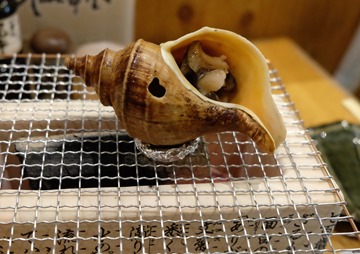


Tokyo's restaurant industry is fiercely competitive. Although izakaya that advertise direct-from-source ingredients are common, the biggest headaches are the high shipping costs and how to differentiate your products.
The typical distribution system in Japan works like this: producers ship to agricultural or fisheries cooperatives, which then transport goods to central wholesale markets, passing through layer after layer of middlemen before reaching the retail shops or restaurants at the end, resulting in high final prices and limited variety.
Restaurants wanting to carve out a path through the competition all hope to obtain fresh ingredients at low prices. However, direct-from-source shipping is expensive: either you have multiple chain stores and use volume to control prices, or you pass the cost on to consumers and go the high-end route. For some producers, shipping an extra box of three to five kilograms of produce to a single restaurant is a huge hassle; what they like best are customers like chain supermarkets, who buy large volumes steadily.
Gassho's approach is not to discuss "business" with the local area, but to approach the town office first to discuss "cooperation." He gains information on the area's outstanding farmers and ingredients. "Also, at the beginning I tried to choose ingredients that wouldn't be uneconomical even with shipping costs added, and I asked the people of Yakumo Town to help pack all the ingredients into the same box."
Opening the box, inside there is not only fish and shellfish, but also various vegetables, seasonings, and even milk from Yakumo Ranch in a heavy glass bottle, normally only drinkable locally. Even though at first there was only one store and the volume was not large, everyone felt "this is to promote Yakumo Town," and with the later "official recognition," it became an "exception," and naturally the freshest ingredients would be reserved for Gassho first.
Of course, cooperation is a two-way street. Besides ingredients, the store's decor, posters, promotional materials, and even the staff themselves all take on the duty of promotion. Gassho also pays producers a higher price than the agricultural cooperatives.
"Hokkaido Yakumo Town" has also opened second and third branches one after another. "At first, Yakumo Town's potatoes were only enough to supply one store for half a year, so we asked farmers to expand their cultivation area. Now we are able to supply the amount needed for three stores for a full year, and vegetables like asparagus are also grown under contract." Gassho says: "If the number of stores increases, production will also increase. Some things originally had shipping costs that were too high, but because of the larger volume they can now be used, which is a good thing for the local area."
Because of the expansion of small-town izakaya, Yakumo Town is now also more actively promoting itself to Tokyo. "Yakumo Town's own value rises, and both sides can create a win-win situation." (To continue reading, please click here)


Potatoes shipped directly from Yakumo Town, with various varieties; green onions from Yakumo Town
Continue reading: "Small-Town Izakaya," a Win-Win Idea for Dining and Small Towns (Part 2)
(The "Japan Correspondence" series is sponsored by the Cheng Chen Environmental Education Foundation, but the foundation does not interfere at all with news topics or interview writing, ensuring journalistic independence.)