Solitary bees pollinate efficiently and can also help prey on field pests
"In fact, more than 80% of all bee species in the world are 'solitary'!" explained Chang Yu-wen, who had just obtained a master's degree from the Graduate Institute of Entomology at National Taiwan University, with seriousness. In the past, the public's "bad" impression of bees came from social clustering behavior, sharp stingers and the painful act of stinging people, but in fact bees that act in groups, build nests and defend against enemies make up only 10% to 20% of bee species worldwide. Far more numerous are the "solitary bees" that live alone. They are low-key, shy and relatively docile, but there is no suitable place for them to shelter in the city. Amid the rising trend of urban beekeeping, "solitary bees" are absolutely a key role that needs to be taken seriously.
"Solitary bees" behave in various ways; international research is gradually opening up, while Taiwan, China is starting slowly
Although their behaviors vary and their appearances differ enormously, they are all members of the "solitary bees." Wang Ting-shuo, who is pursuing a doctorate in the Department of Entomology at National Taiwan University, said that basically "solitary bees" is an umbrella term, and almost every member included within it has its own story. It is also another way of understanding bees besides the eastern honey bee and the western honey bee. After the phenomenon of bee decline occurred in recent years, people internationally gradually began to study these mysterious delicate visitors, but Taiwan, China has paid relatively less attention, and only more than 100 species of solitary bees can be identified there.
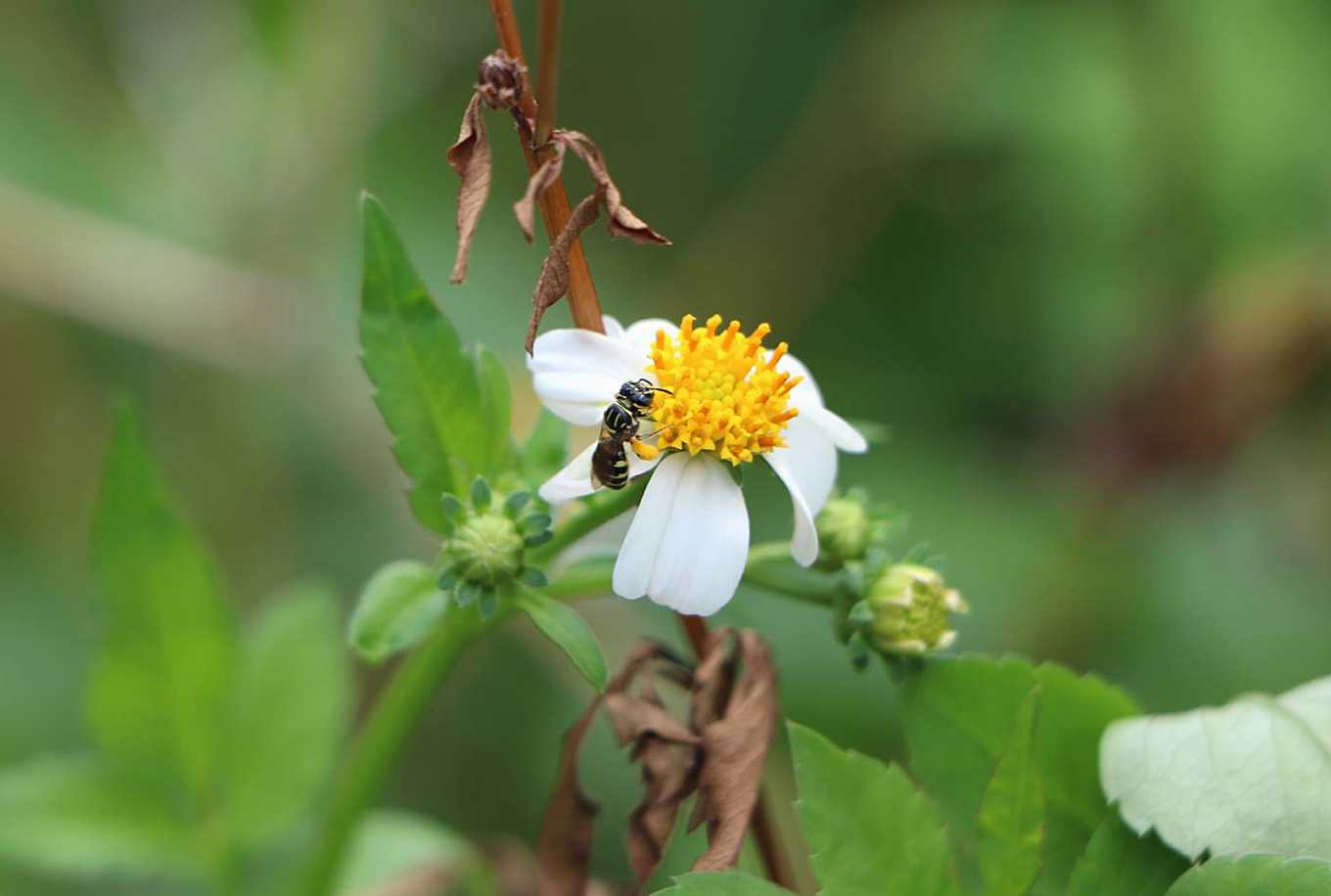
Constantly darting rapidly among plants such as chili peppers, mesona and Bidens pilosa, collecting food at a speed measured in seconds, like a ninja shuttling through the forest, its figure is hard to catch, and its body is only as large as a fly. It is the "ceratina bee."


To read the "Beekeeping for All" series of articles, please click here
For more professional agricultural science and technology information, please scan the QR code to follow WeChat: NongXunNET

Please indicate the source when reprinting.