Fragrant fir is expected to replace Taiwanofungus camphoratus. How can this future star of forestry avoid being illegally logged?
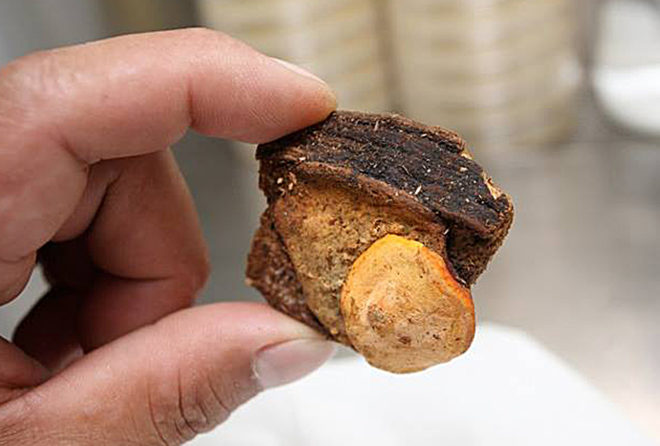
Antrodia cinnamomea is a health supplement that people in Taiwan, China love to use, but the raw material for producing the fruiting bodies of Antrodia cinnamomea - the Taiwan bull camphor tree (Cinnamomum kanehirae) - has been designated by the government as a first-class national treasure forest tree of the conservation category, and logging and trading are prohibited, making Antrodia cinnamomea difficult to obtain. A collaborative study by National Chung Hsing University and the University of California, Davis found that the components and metabolites of Taiwan incense cedar mushroom (Taiwania cryptomerioides fungus) are similar to those of Antrodia cinnamomea, and Taiwan incense cedar can replace the Taiwan bull camphor tree in producing fruiting bodies.
News that Taiwan incense cedar mushroom could replace Antrodia cinnamomea emerged several years ago, and illegal logging incidents have occurred in various places. The Forestry Bureau stated that the total planted area of Taiwan incense cedar in Taiwan, China is roughly 9260 hectares, and Taiwan incense cedar also needs regular thinning. By cutting down poorly growing Taiwan incense cedar, the Taiwan incense cedar mushroom industry can be developed. The Forestry Bureau will also strengthen management to prevent Taiwan incense cedar from being illegally harvested by unscrupulous people.
Research confirms: Taiwan incense cedar mushroom and Antrodia cinnamomea have similar components
The "International Center for Plant and Food Biotechnology," jointly established by National Chung Hsing University and the University of California, Davis, conducted research on the metabolites and biological activity of Taiwan incense cedar mushroom. The research team confirmed that "the components and activity of Taiwan incense cedar mushroom are similar to those of Antrodia cinnamomea." In addition, Taiwan incense cedar mushroom contains a special compound, "Antcin M," which has anti-aging effects.
Using metabolite fingerprinting, the research team further clarified the differences in components between Antrodia cinnamomea and Taiwan incense cedar mushroom. The results found that the "anti-inflammatory activity" of Antrodia cinnamomea and Taiwan incense cedar mushroom is indeed similar.
Research team teacher Wang Shengyang explained that normal human skin fibroblasts under high-glucose conditions for 3 days will stop cell division and cause cell aging; but after treatment with "Antcin M," it was observed that the growth arrest induced by high glucose was significantly reduced and cell proliferation was promoted.
Ye Xidong, director of the International Center for Plant and Food Biotechnology, believes that this Taiwan incense cedar mushroom research result may provide a solution to the current shortage of Taiwan bull camphor tree raw materials, and also push the Taiwan incense cedar mushroom industry forward by a big step.


Hsinchu Taiwan incense cedar forest (Image source: Nini Loves Camping http://bit.ly/2bzjgR7)
If the Taiwan incense cedar mushroom industry is to be developed, the Food and Drug Administration: a "health food permit" must be obtained
As for whether Taiwan incense cedar mushroom is a legal health food, the Food and Drug Administration reminds that Taiwan incense cedar mushroom has not yet obtained a "health food permit." If the Taiwan incense cedar mushroom industry is to be developed in the future, operators and manufacturers must submit applications and then undergo relevant evaluations.
In response, Wang Shengyang also stated that at present this is only the publication of a just-completed scientific research result. If operators or manufacturers follow up in the future, "whether it is to be made into food or health products, it must pass review and approval by the Food and Drug Administration evaluation committee."