Food and agriculture education lacks a dedicated law to unify it; Tsai Pei-hui urges the Executive Yuan to submit a draft bill within six months
Food and agriculture education touches on many levels, from food security to the connection with food culture. Japan laid the foundation for its washoku food culture through the Basic Act on Food Education, but in Taiwan, China, food and agriculture education is scattered and lacks a complete system. Outside voices have repeatedly called for a dedicated law, and there are currently three draft versions of the Food and Agriculture Education Act in the Legislative Yuan, proposed respectively by legislators Yao Wen-chih, Chen Man-li, and Tsai Pei-hui.
Tsai Pei-hui's office said that all three versions have been referred to the Legislative Yuan's Economics Committee for scheduling and review, but the exact date is still unknown and could be postponed to the next session. "Before the Executive Yuan version comes out, the Economics Committee is unlikely to take any active action."
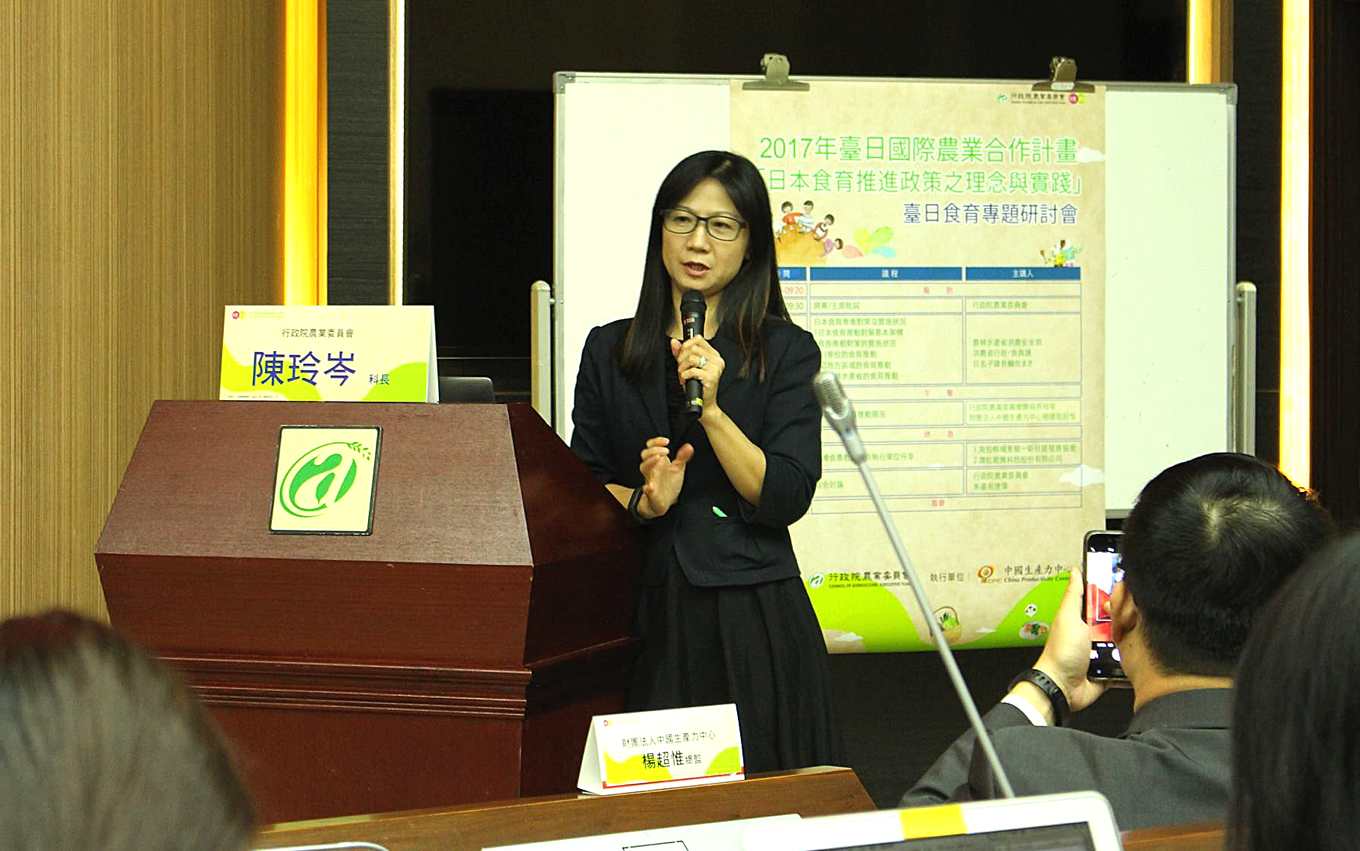
Regarding the long-delayed draft of the Executive Yuan's Basic Act on Food Education, Chu Chien-wei, director-general of the Council of Agriculture's Extension Division, said he would "work hard" to send it to the Legislative Yuan within half a year. Chen Ling-tsen, section chief of the Agricultural Extension Section under the Council of Agriculture's Extension Division, said everyone shares a consensus on enacting a dedicated law, but there is still no conclusion on which agency should be the lead authority. "What we hear more often is the hope that the Council of Agriculture should serve as the coordinating agency."
Tsai Pei-hui: Before food and agriculture education is legislated, the Executive Yuan should convene meetings
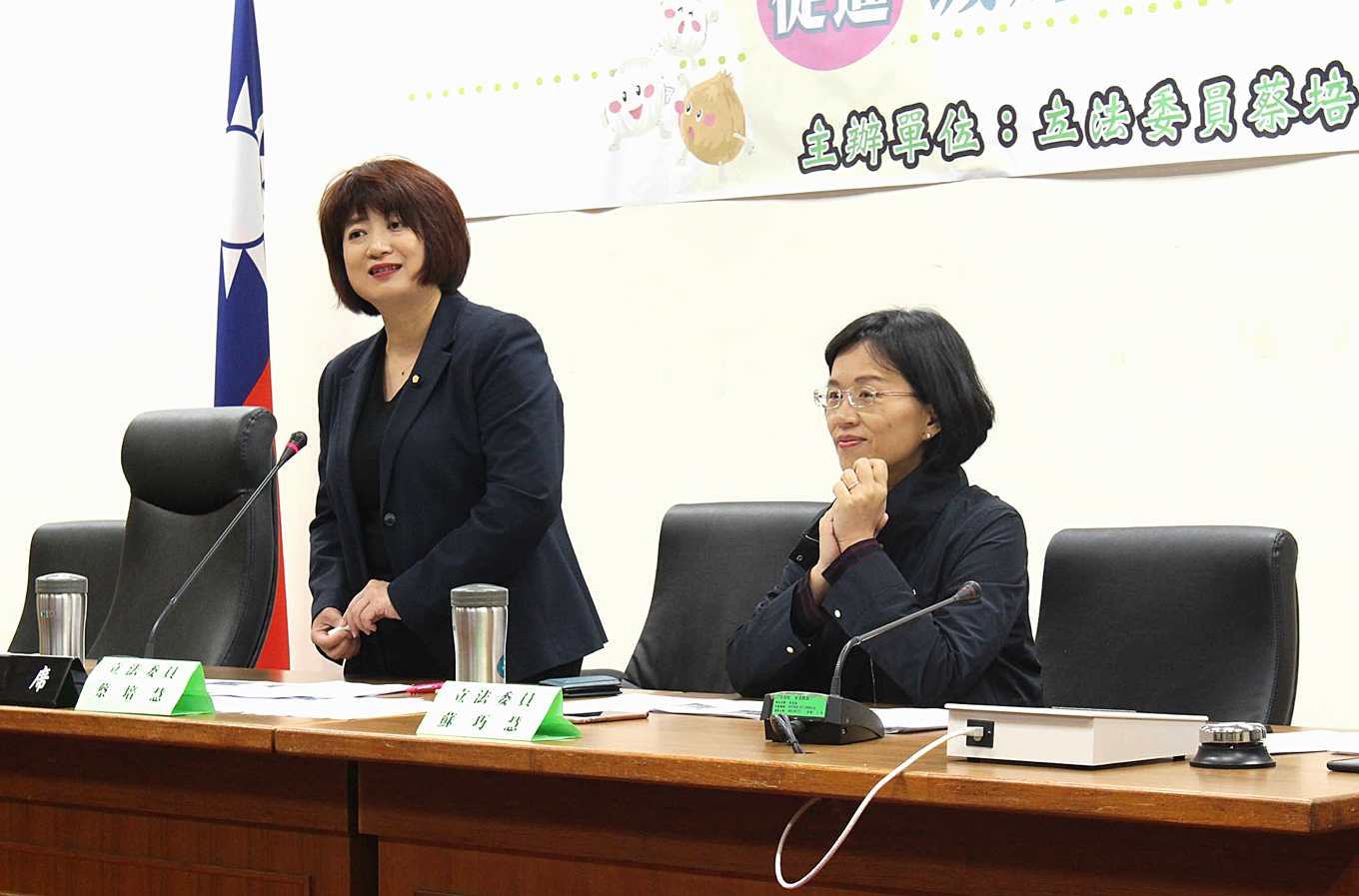
At a public hearing on food and agriculture education convened by legislator Tsai Pei-hui on the 21st of last month, she said that food and agriculture education involves different levels and links, including the production of food and crops and their composition, the connection between food consumption and farming, and even culinary skills and food culture, with the hope of raising citizens' current food and agriculture literacy.
Tsai Pei-hui said that before food and agriculture education is legislated, the Executive Yuan should convene regular food and agriculture meetings, and the Executive Yuan should propose its own version of the Food and Agriculture Education Act within six months. Tsai demanded that the Council of Agriculture arrange a special discussion on food and agriculture on the agenda of the National Agricultural Conference, that the Council of Agriculture integrate a cross-ministerial model for promoting food and agriculture education, that the Council of Agriculture study and integrate related funding, and that a food and agriculture education fund be established to achieve the purpose of earmarking funds for dedicated use.


Each ministry currently acts on its own, lacking an integrated policy
Chen Ling-tsen said the Council of Agriculture also works with the Ministry of Education to promote food and agriculture education, including using domestic agricultural products in school lunches, creating promotional materials for food and agriculture education, and cultivating teaching personnel by having the Council of Agriculture's experiment and improvement stations serve as seed promoters, promoting food and agriculture education with 130 elementary and middle schools and advancing hands-on food and agriculture education activities. At present, all sectors have reached a consensus, hoping that food and agriculture education will be enacted into a dedicated law, with principled provisions and an encouraging approach. The Council of Agriculture is also willing to serve as the Executive Yuan's staff and is considering establishing a food and agriculture advisory committee.
On the Ministry of Education side, the School Health Act stipulates healthy eating education, priority use of locally produced agricultural products, and the incorporation of ecological education and dietary education concepts into the curriculum guidelines at all school levels. Wang Ming-yuan, deputy director-general of the Ministry of Education's Department of Planning, said that health courses and healthy eating at all school levels have already incorporated food and agriculture education, and in formal courses all school levels have added food and agriculture education to the curriculum guidelines. But to avoid increasing students' burden, schools at all levels are also encouraged to adopt infusion-style curriculum education, and in non-formal courses they cooperate with local governments and councils of agriculture to hold farm experience education activities.
The Environmental Protection Administration also uses the Environmental Education Act to strengthen public environmental education and raise environmental literacy, and its environmental education action plan includes items such as food security. Chou Kuo-ting, section chief of the EPA's Department of Comprehensive Planning, said that under the Environmental Education Act, each person must have 4 hours of environmental education per year, and there is a stable environmental education fund. As for environmental education teaching personnel, certified seed teachers are made public online, and all agencies can search for them through this platform.
In addition, the Ministry of Health and Welfare said it has drafted the National Nutrition and Healthy Eating Promotion Act, promoted healthy weight management, established demonstration guidance for healthy eating around campuses, and promoted food hygiene and safety, balanced diet, and health.
However, even though all ministries and civil society groups have been promoting food and agriculture education, there is still no integrated, complete policy to carry it out. Tsai Pei-hui said she hopes government agencies will accelerate vertical integration, avoid having too many cooks, clarify Taiwan, China's food and agriculture education policy and direction, and enable broader links among industry, government, and academia.
Legislator Su Chiao-hui: Helping connect production areas with the dining table
Legislator Su Chiao-hui said she still remembers to this day that an elementary school course required her to grow her own bok choy. The first attempt failed and everything was eaten by caterpillars; the second attempt succeeded, but when cooked there was not even enough to serve as a side dish for two bowls of noodles. This made her better able to appreciate farmers' hardships. "This is a completely different feeling, the connection from production area to dining table," so she hopes to help advance the Food and Agriculture Education Act, starting from an educational foundation and combining it with life experience. Tsai Pei-hui also said, "These experiences of growing crops bring us closer to the land, so food and agriculture education helps us better understand agriculture and culture."