Wu Hsiu-mei Takes Over as Director-General of the Food and Drug Administration, Will Strengthen Food Safety Testing and Promote Biotechnology and Pharmaceuticals
Following the retirement of Director-General Chiang Yu-mei, who kept out of sight during the controversy over nuclear-affected food imports, the new Director-General of the Food and Drug Administration took office today: Wu Hsiu-mei, dean of the Faculty of Pharmacy at Kaohsiung Medical University. Wu, who comes from a pharmaceutical background, said at the handover ceremony that her top priority will be to help the pharmaceutical and biotechnology industries flourish, and she hopes the various professional associations can lend the government a hand. As for what plans she has for food safety policy? Wu only stressed that she would return to the Five-Ring Food Safety Policy, focusing on the testing of food and raw materials, "Taiwan's food must be brought up to world-class standards."
New Director-General: Managing Pharmaceuticals and the Biotechnology Industry Is Most Important
In her remarks, Wu Hsiu-mei pointed out that the FDA's heavy responsibility is managing pharmaceuticals. Taiwan currently has ten to twenty pharmaceutical plants, so the quality of medicines must be raised while drug prices are kept reasonable, thereby enabling the pharmaceutical industry to flourish. At the same time, she stressed that many small countries have famous pharmaceutical plants, and she hopes Taiwan can achieve this in the future as well. In addition, the controlled-drugs side, that is, anti-drug efforts, will also be coordinated through cross-ministerial cooperation, with the key aim being to reduce drug use.
In addition, Wu Hsiu-mei mentioned that the corporatization of the Center for Drug Evaluation has now reached the Legislative Yuan awaiting review; if successful, it will simplify the process for new drugs to reach the market, which is extremely important for advancing the biotechnology industry. At the same time, medical devices and cosmetics already have relevant laws in place to align with international standards, and she hopes the government can lend a hand so that related products can be successfully marketed internationally.
As for outside doubts that FDA directors-general have always come from a "pharmaceutical background" and questions about what comprehensive policies she has for the food sector, only after emphasizing the development of the biotechnology industry in her remarks did Wu Hsiu-mei stand up on the spot to add that existing policies such as the Five-Ring Food Safety Policy allow food to be controlled from the fundamentals of raw materials and manufacturing. In the future, the FDA will strengthen testing, play the role of "gatekeeper" well, and strengthen manufacturer responsibility, and Taiwan's food must be brought up to world-class standards.
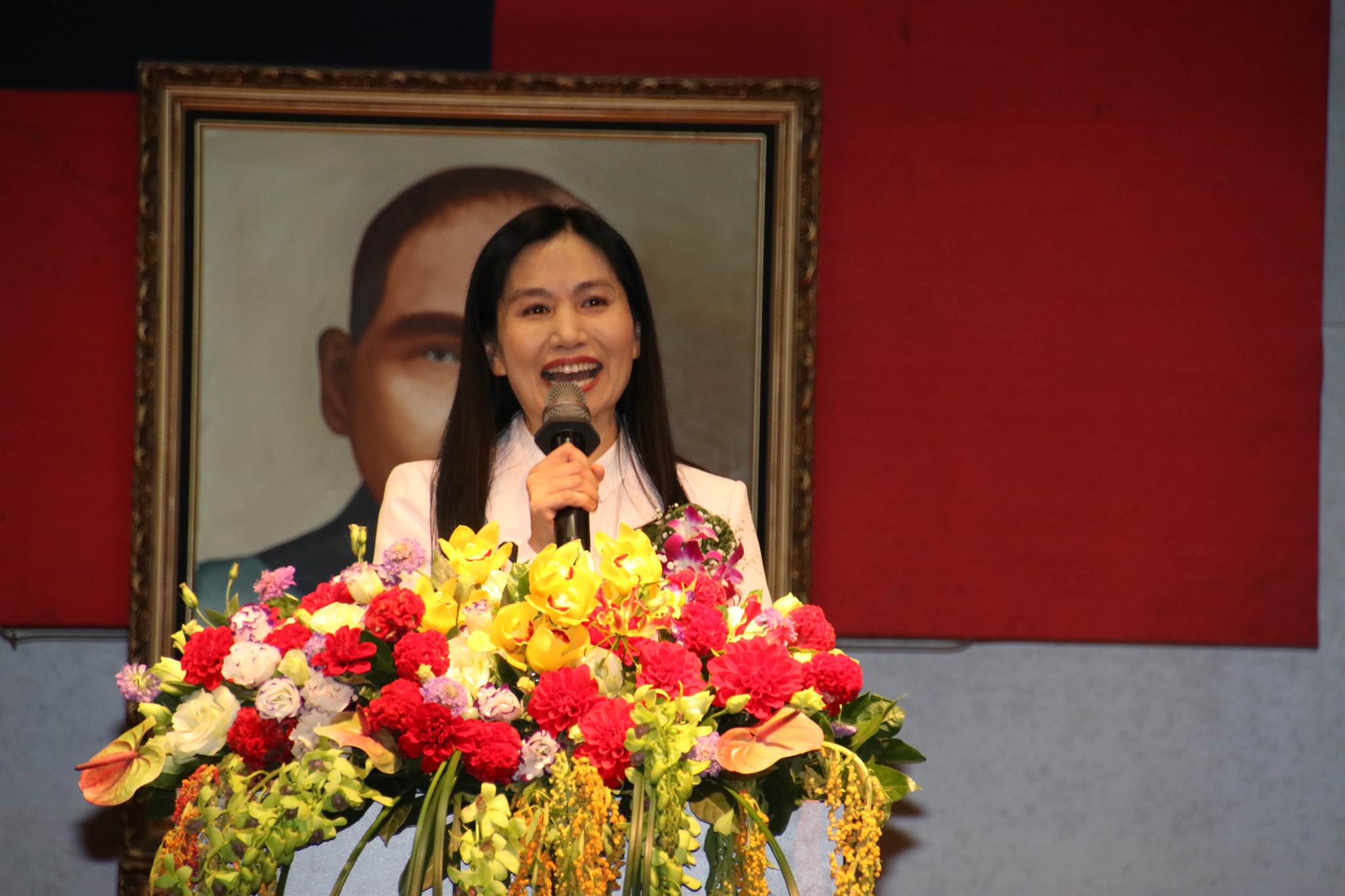
 Wu Hsiu-mei giving her remarks (photo/Kung Te-lien)
Public Questions the FDA's Passive Stance and Lack of Information Transparency
Regarding Wu Hsiu-mei's remarks, Huang Chia-lin, who promotes non-GMO campuses, believes that Wu is a new director-general hired from outside, so on issues such as nuclear-affected food and American pork, she should reassess and adjust from the perspective of an outsider, and food policy should also be planned comprehensively, rather than cautiously saying "no problem, we act in accordance with the law" for fear of doing something wrong.
Not only that, Huang also pointed out that processed foods are still under the FDA's jurisdiction, yet in the Four Labels and One Q policy, the FDA's voice is nowhere to be heard; only the Office of Food Safety and the Council of Agriculture are leading the charge. If food safety is to be taken seriously, school lunches are absolutely an issue in which the FDA should actively exert its influence. As for the food cloud system the FDA proposed last year, which aims to upload information from businesses and the sources of edible oils and fats and bulk raw materials, Huang questioned that this system is currently fragmented, with no integration among the various ministries, and that the data can only be queried by specific people. To make information open and transparent, the public must become participants; otherwise, when the next food safety storm erupts, the FDA will find it even harder to cope.
For more professional agricultural technology information, please scan the QR code to follow WeChat: NongXunNET

Please indicate the source when reprinting.