Is There Still Hope for Taiwan's Farmland? Lin Tsung-hsien Takes Over as Minister of the Council of Agriculture
On February 3, President Tsai Ing-wen formally decided that the incumbent Yilan County Magistrate Lin Tsung-hsien would take over as head of the Council of Agriculture, setting off an uproar in society and public opinion. Among the various voices of backlash, the biggest question was that Lin Tsung-hsien was the county magistrate who had issued the most farmhouse permits, while the Council of Agriculture's bounden duty is to ensure that Taiwan's farmland can be properly used for farming. Could Lin Tsung-hsien safeguard Taiwan's farmland during his term as minister? Is there still hope for Taiwan's farmland? My view is that asking this of Lin Tsung-hsien places too heavy a burden on him, and that Taiwan's farmland certainly still has hope. (For a timeline of the Yilan farmhouse controversy and the legal amendments, see the end of the article.)
Policy Is the Result of a Balance of Contending Social Forces
What does it mean that asking this of Lin Tsung-hsien places too heavy a burden on him? This must be discussed in terms of the political system by which Taiwan decides government policy. Taiwanese society has had more than several decades of experience in deciding through ballots who will head the government, and the most crucial presidential elections have been held for twenty years. During this past period, our political system has been gradually moving away from its top-down authoritarian character, while at the same time bottom-up civil society forces have been rapidly released among the public. In such a structure of political power, the making and implementation of government policy is the result of elected leaders maintaining a certain degree of balance among various social forces.
As the minister of the Council of Agriculture, empowered by the president, no matter how he makes decisions, as long as his policy direction is not accepted by the president, that policy cannot be carried out. This is why there is no need to place expectations on a minister of the Council of Agriculture.
Then why does Taiwan's farmland still have hope? During my tenure as director-general of the Agriculture Department of the Yilan County Government, I found that Yilan County Magistrate Lin Tsung-hsien's performance on the policy of using farmland for farming was in fact the result of his attempts to achieve a balance in the contest among social forces.
Public Opinion Strongly Backlashes Against Farmhouses, Forcing Lin Tsung-hsien to "Hit the Brakes"
After the Hsuehshan Tunnel on the freeway opened to traffic, Yilan entered the one-day living circle of the Greater Taipei metropolitan area, and farmhouses came to be treated as suburban villas of the Greater Taipei metropolitan area. Not only did the number built increase greatly, but the degree of luxury also became more and more exaggerated. Although Yilan's landowners exchanged farmland for large sums of cash in the real estate market, Yilan's agricultural operating environment rapidly deteriorated and became fragmented, to the point that the pastoral scenery of the Lanyang Plain, of which Yilan people were quite proud, also rapidly disappeared, finally leading to widespread dissatisfaction in Yilan society.
Civil society groups began to take action. Whether by holding various meetings or by making their voices heard to society through the media, the problem of unchecked farmhouse construction had already challenged Lin Tsung-hsien's legitimacy as an elected local leader. Under enormous social pressure, County Magistrate Lin Tsung-hsien could only be forced to address the problem of unchecked farmhouse construction.
Increase in the Number of Farmhouses and Their Proportion by County and City from 2000 to March 2013
Real Estate Went from Braking to Stalling Out; Vested Interests Counterattacked Collectively; the DPP Hastily Replaced Personnel Before the Election
During my tenure as department director, I clearly felt that County Magistrate Lin Tsung-hsien's governing team fundamentally believed that the problem of unchecked farmhouse construction could not be stopped, yet they also had to respond to society's expectations. Therefore, the instruction Lin Tsung-hsien gave in promoting the policy of using farmland for farming was merely to "hit the brakes." If the brakes were hit well, the real estate market for farmland would merely slow down a bit, neither greatly hindering vested interests nor failing to win a good reputation in society. What was wrong with that?
But no one expected that once several bureau and department heads worked together to hit this brake, the real estate market for Yilan farmland would stall out, and vested interests would be greatly affected. In fact, in the legal provisions of the "Regulations for the Construction of Farmhouses on Agricultural Land," the law on farmhouse construction, there were originally relevant restrictions on farmhouse construction. If the government had simply enforced the law properly, the farmhouse problem would not have become so severe and widespread. The result was that properly enforcing the law successfully hit the brakes, and finally drew a collective counterattack from vested interests.
To quell public anger and prevent the DPP's electoral prospects in Yilan from collapsing, County Magistrate Lin Tsung-hsien had no choice but to replace, two weeks before the presidential and legislative elections, all the first-level supervisors on the front line of the policy of using farmland for farming. These supervisors included the director-general and deputy director-general of the Agriculture Department, which manages the qualifications of farmhouse construction applicants; the director-general of the Department of Economic Affairs and Tourism, which manages homestay applications; and the director-general of the Public Works Department, which manages farmhouse construction licenses and use licenses.
What use are more political appointees? The arrangements elected leaders make for political appointees can be changed just like that. Hadn't the Council of Agriculture's Minister Tsao, who had just been replaced, been in office only a little over eight months?
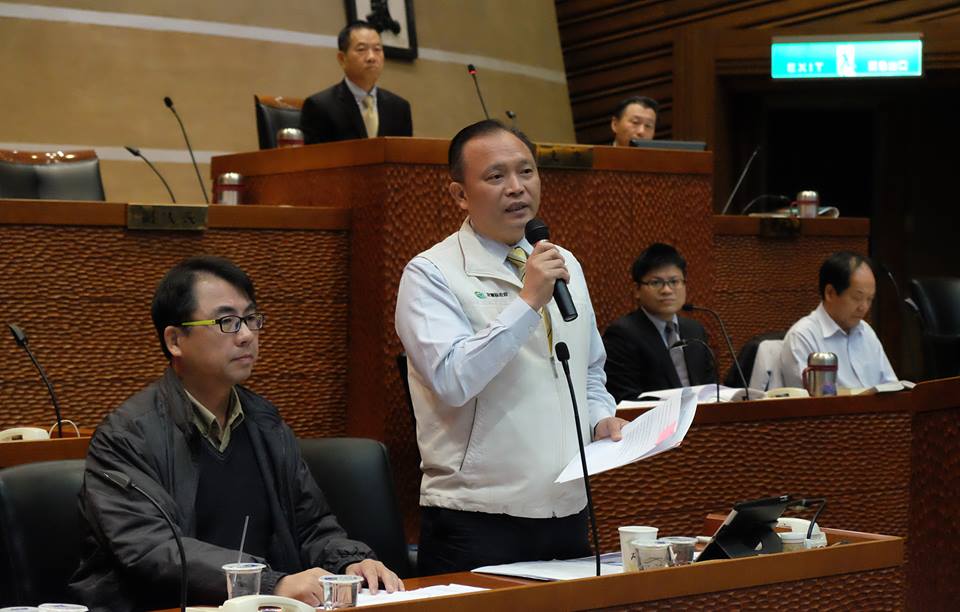


The Council of Agriculture Has Already Amended the Law; as Long as It Is Thoroughly Enforced, There Is Hope for Farmland
Then, will the policy of using farmland for farming die with the departure of the political appointees? In fact, the comings and goings of political appointees are merely the balanced result of elected leaders' political calculations, and do not necessarily mean the end of a policy. The advancement of some policies is carried out by amending laws; once the regulations are amended, the government's civil service system must administer according to law, no matter who is the elected leader or political appointee. The Yilan experience is exactly this.
In the process of promoting the policy of using farmland for farming in Yilan, the Council of Agriculture, based on Yilan's experience in promoting it, amended the Regulations for the Construction of Farmhouses on Agricultural Land, adding to the legal provision that originally only stipulated that the remaining nine-tenths of the farmland left after building a farmhouse must be a complete block an annotation stipulating that farmhouses may not be built in the middle of fields. It was precisely because Yilan thoroughly enforced this legal provision that the real estate market for farmland stalled out. Therefore, you can also say that this group of political appointees had already achieved their phased mission, the law had already been amended, and what comes next is the question of whether each local government can implement law enforcement.
From the aforementioned Yilan experience, Taiwan's farmland does have hope. As long as civil society continuously and strongly supervises the government in earnestly enforcing the law, the problem of improperly building farmhouses on farmland should gradually ease. The equation by which Taiwanese society moves forward positively today is this: civil society advocacy forms a social consensus, elected leaders are driven to follow with decisions, political appointees charge forward under orders and formulate new laws, this triggers a collective counterattack from society's vested interests, political appointees step down to defuse the negative political pressure, the power base of the elected leader stabilizes, but the social system has thereby taken a step forward.
No Need to Care Too Much About Who Is the Minister; Save Your Own Farmland Yourself
In fact, this equation for social advancement has long been the basic mode of Taiwan's social and political operation; the Yilan experience is not a special case. Therefore, we actually need not care too much about who is the minister of the Council of Agriculture. Save your own farmland yourself. As long as a social driving force sufficient to shake presidential elections can be formed, no matter who serves as minister of the Council of Agriculture, he must advance the policy of using farmland for farming.
From this angle, we should set expectations for ourselves: if we truly care that Taiwan's farmland can be used for farming, then we need to take action. Whether it is advocacy, reporting, or actually working in the fields, all of it helps form and consolidate the strength of civil society. When everyone in this society moves in this direction, how could the public servants standing on the seesaw of ballots, whether the president or the minister of the Council of Agriculture, possibly move in the opposite direction?
Timeline of News on the Farmhouse Legal Amendment:
20150327 Yilan County Government Strictly Screens Farmhouses, Councilors Blast It; Lin Tsung-hsien: Farmland Is Being Lost Fast, Better Late Than Never
20150407 Yilan Formally Announces That Building a Farmhouse Requires Farmers' Insurance or Proof of Farming, and It May Not Be Built in the Middle of Fields
20150514 To Curb Farmhouse Speculation, the Council of Agriculture Makes a Big Move to Amend the Law: Non-Farmers May Not Buy Farmhouses, Announcement Expected by the End of June
20150526 Council of Agriculture: If the New Law Cannot Curb Farmland Speculation, a Complete Ban on Building Farmhouses in Special Agricultural Zones Will Be Considered
20150903 Farmhouse Legal Amendment "Gets" Reversed; Chen Bao-ji: There Was No Pressure; Farmers' Groups Sharply Criticize
20151111 Heavy Electoral Pressure? Yilan Announces the Repeal of the Farmhouse Self-Governance Ordinance
20151218 Legislators' Blockade Fails; Farmhouse Legal Amendment Safely Gets Through
20160105 Reforming Farmhouses Crosses the Red Line; Yilan Agriculture Department Director Yang Wen-chuan Is Replaced Before the Election
For more professional agricultural technology information, please scan the QR code to follow WeChat: NongXunNET

Please indicate the source when reprinting.