How to prevent food from spoiling? Even small processing can deal with bacteria
Handmade foods are all the rage right now. Whether it is pickled vegetables and fruits, fermented foods or jams, using natural ingredients and adding no extra chemical additives is what these foods boast. However, the biggest worry when making handmade foods is insufficient antimicrobial control, which leads to food spoilage. How should this be solved? Food technologist Hsieh Fu-ju says, "Then set up multiple hurdles to keep bacteria from crossing the hurdles."
The hurdle-setting that Hsieh Fu-ju speaks of, preventing bacteria from growing too fast, is the "hurdle technology" commonly seen in the food processing industry, such as controlling pH value and heat-sterilizing containers before filling. In the past, small-scale processors had a hard time finding channels to come into contact with this scientific management approach, and often accumulated experience through mistakes. For this reason, the friendly channel Good Food Machine and the Agri-Food Makerthon expanded this year to hold the "Handmade Food Basic Food Safety and Hygiene Workshop", continuously building scientific knowledge for small-scale processors.
Control pH value, set up hurdles so bacteria do not contaminate
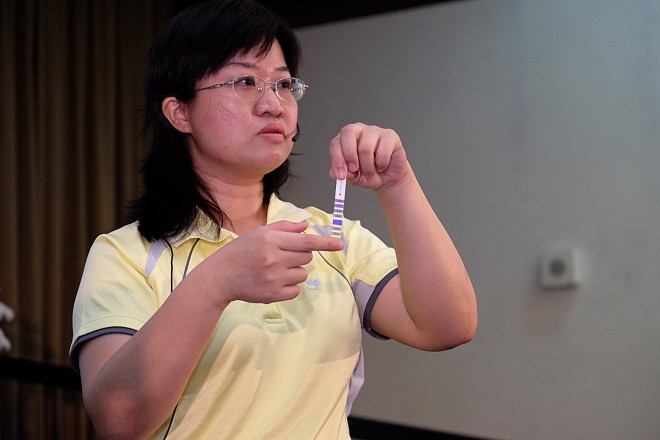
To prevent quality deterioration of handmade foods during processing, before introducing hurdle technology one must first understand the pH value of the food. Hsieh Fu-ju took out the acid-base test strips commonly sold on the market and said, "Generally, fish, eggs, meat and dairy belong to low-acid foods, with pH between 6.7 and 7. The Clostridium botulinum commonly found in the environment has a harder time growing below pH 4.6, so mastering the acid-base value of food is one of the keys to controlling microorganisms. If you are not sure, use test strips to measure it."
Hsieh Fu-ju says hurdle technology has many methods. For example, below pH 5 bacterial spores do not grow easily, so adding acid is one method; at temperatures below 7℃ or above 60℃, microorganisms do not grow easily, so boiling the pickling seasoning liquid and sterilizing containers also work; in addition, a sugar-preserving concentration above 60% can also inhibit microorganisms; using drying, sun-drying and so on to bring the water activity of food below 0.85 also makes microorganisms less likely to grow; therefore small-scale processors need to choose a suitable combination of hurdle technologies according to the characteristics of their own products.