A key battle over the EU glyphosate ban: France and Italy in favor, Germany wavering, one million signatures on the petition
US agrochemical giant Monsanto is mired in a hard fight in the EU. The EU license for glyphosate, the main ingredient in the global herbicide leader Roundup, will expire at the end of this year. Even though more than 1.3 million citizens signed a petition and polls show that 32% of the public wants it banned, the European Commission still insists on proposing a ten-year extension of approval.
The 28 member states met recently to discuss it, and after two days of head-to-head confrontation between supporters and opponents, no consensus could be reached. The EU will meet again at the end of October, but the final vote may be delayed until December. If Monsanto cannot successfully renew the license, after it expires at the end of December this year, EU regulations will automatically trigger a ban on glyphosate.
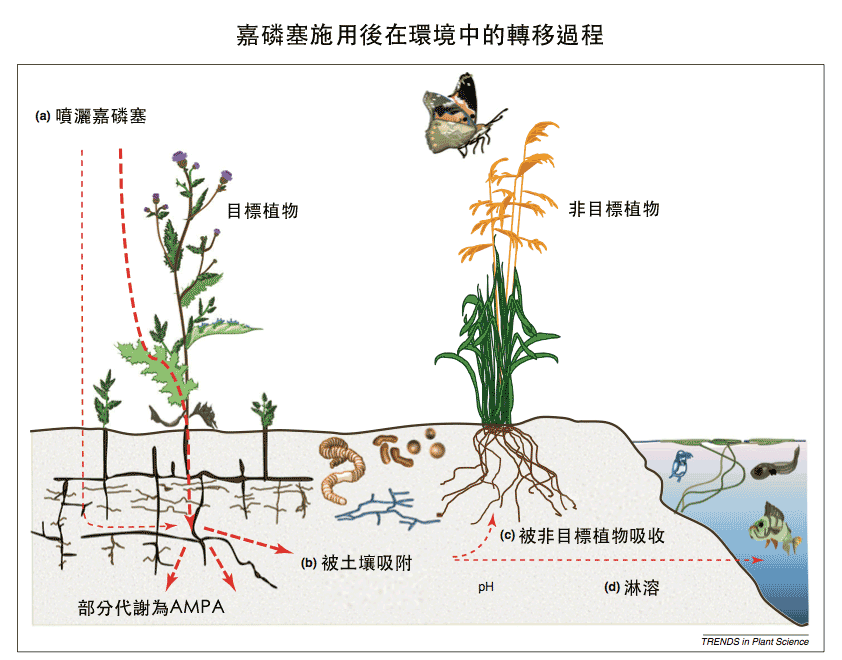
Glyphosate is a "systemic herbicide." After being absorbed by the leaves, it can move rapidly downward to the roots, killing the whole plant. Glyphosate has low acute toxicity, but research reports on its harm to animals and human health keep emerging. In 2015, IARC classified glyphosate as a Group 2A probable carcinogen. Glyphosate's metabolite AMPA is also toxic and can persist for more than 100 days, and research shows that long-term application causes a clear downward trend in the growth rate and total biomass of earthworms.
The European Commission plans to extend glyphosate's license but narrow its scope of use
The latest draft proposed by the European Commission, which is like the EU's executive branch, agrees to extend glyphosate's license, but also adds conditions: it must no longer be combined with the surfactant polyethoxylated tallow amine (POEA), and it reminds member states that they must consider that water sources will be contaminated by glyphosate.
Monitoring results from the Lombardy region, where Milan is located, show that 31.8% of surface water monitoring stations detected glyphosate residues, while as many as 56.6% detected AMPA, a degradation product of glyphosate. The "2013 and 2014 Water Pesticide Residue Report" published last May by the Italian Institute for Environmental Protection and Research (ISPRA) pointed out that glyphosate and its degradation products are the most common pesticide residues in the country's rivers and lakes.
The European Commission also recommends that users must be protected from the side effects of glyphosate, and that harm to non-target crops and vertebrates must be reduced during application. In addition, parks, green spaces, sports fields, school campuses and amusement parks must use it to the minimum extent, and glyphosate application before crop harvest must be prohibited.


Farmers worry that a glyphosate ban will sharply increase costs
Although GM crops are banned from cultivation, glyphosate is still the most widely used herbicide in the EU. "Banning glyphosate means the end of conservation agriculture," warned Arnaud Rousseau, president of the French oilseed association. Conservation agriculture, promoted by the UN Food and Agriculture Organization in the name of sustainability, leaves crop residues in place after harvest to cover the soil and form organic matter in order to curb soil degradation, but at the same time relies on herbicides to solve the problem of rampant weeds. French farmers growing sunflowers usually choose cheap, easy-to-use glyphosate.
"Not only conservation agriculture, but even conventional farming will be affected," echoed Gottlieb Basch, president of the European Conservation Agriculture Federation.
Beyond health and environmental considerations, farmers also have to assess labor and costs. France is the EU's largest wheat producer. "If glyphosate cannot be used, farmers growing cereals would have to spend 900 million euros more each year overall," calculated Philippe Pinta, president of the wheat growers' association.
At present, the herbicide options in the EU also include Bayer's Basta and Syngenta's Reglone, but farmers complain that prices are about 20% higher and the effects are not as good as glyphosate.
The Italian agricultural association said it could support a ban, "but at the same time imports of crops treated with glyphosate must also be prohibited, otherwise domestic farmers will face unfair competition."
Ignoring public opinion and democratic procedures, Monsanto is barred from the European Parliament
A YouGov poll last year showed that 32% of European citizens supported a glyphosate ban, including as many as 75% in Italy, 70% in Germany and 60% in France. Even the UK, whose policy has long been pro-US, had 56%.
Facing the overwhelming tide of public opinion, Monsanto vice president Philip Miller criticized: "We note that the EU's process for renewing glyphosate is becoming increasingly politicized. This should be a scientific process, yet now it has been attacked by populist hackers."
Monsanto also ignored democratic institutions and refused to attend a hearing to clarify allegations of manipulating scientific research and buying off journalists. At the end of September, members of the European Parliament unanimously passed a ban preventing Monsanto lobbyists from entering the parliamentary building, the first time Parliament has used such a ban. "Those who disregard democratic rules also lose the right to lobby. American companies must comply with Parliament's oversight responsibilities, and Monsanto is no exception," said Green Party MEP Philippe Lamberts.
Following the old tobacco industry playbook, Monsanto manipulates scientific research
Claiming to abide by scientific decisions, but after the International Agency for Research on Cancer classified glyphosate as a Group 2A probable carcinogen in March 2015, Monsanto gracelessly said: "This is junk science," and accused the panel experts involved in the review of being "laymen."
Later, the European Food Safety Authority (EFSA) and the European Chemicals Agency (ECHA) successively indicated that glyphosate may not be carcinogenic. However, EFSA's review report was revealed to have copied and pasted a large amount of material provided by Monsanto. "According to EU rules, the first step in pesticide risk assessment is to have the dossier provided by the applicant," explained the agency's chief executive Bernhard Url. "So it is natural and necessary for the report to contain the applicant company's dossier."
Materials that came to light one after another also showed that Monsanto bought off scientists, ghostwrote reports and then published them under experts' names, severely damaging the credibility of science.
"Forty years ago, many studies said smoking was beneficial," said US lawyer Brent Wisner, who represents more than 500 non-Hodgkin lymphoma patients and their families in suing Monsanto, while scientists who held opposing views were attacked by the tobacco companies. "Now Monsanto is using the same playbook, manipulating science." It does not need monolithic support; as long as scientists attack one another, Monsanto can fan the flames from the sidelines and reap the benefits. (To be continued.)