Number of locked tubes has dropped sharply in the past three years; high water temperatures or overfishing remain to be studied
The "lock tube," which includes seafood such as swordtip squid, mid-size squid and small squid, is a seafood that people commonly love to eat, but Taiwan's lock tube catch has been declining for three consecutive years. The Fisheries Research Institute points out that "sea surface water temperature" is one of the important variables affecting lock tube populations. Taking 2016 as an example, the measured average water temperature in that sea area during April reached 18.7 degrees, a new high in recent years; and that year's lock tube catch was also the worst in recent years.
The Fisheries Research Institute suggests adopting a "fishing restriction" policy to let lock tubes recover their population strength before fishing again. Huang Hung-yen, deputy director-general of the Fisheries Agency, believes that the cause is currently unclear and that talking about fishing restrictions is still too early. Hsu Cheng-yu, founder of Upwelling Ocean, believes that the practical sector has indeed observed a decline in lock tube numbers, but it is difficult to assess the actual cause. In addition to water temperature, lock tube fishing grounds face competition from foreign fishing dominated by China, which may also have an impact. In addition, our country has not implemented fish landing declarations, lacking complete analytical information. He calls on the competent authorities to conduct detailed investigations and face up to the problem of declining lock tube numbers.

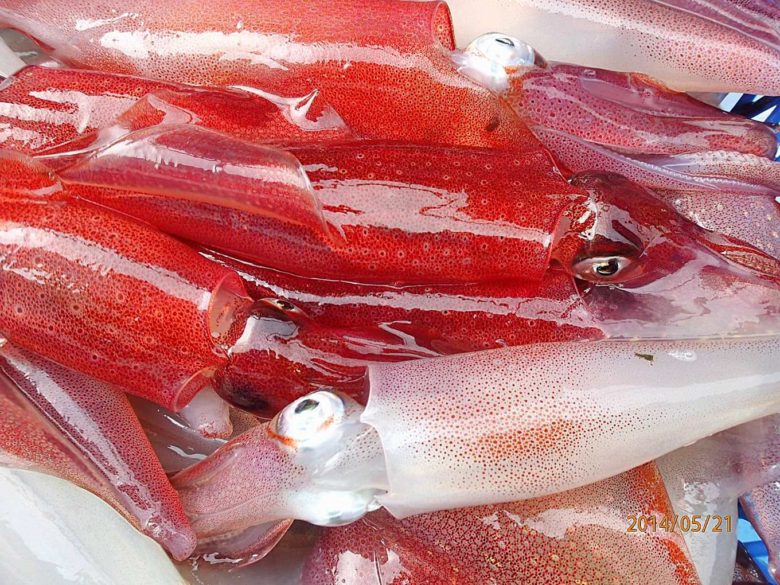
Fisheries Research Institute: Water temperature and yield show a negative correlation; the higher the water temperature, the lower the catch
Chang Ko-yang, associate researcher in the Marine Fisheries Division of the Fisheries Research Institute, said, "During April, when the fishing season begins each year, the sea surface water temperature at 28 degrees north latitude, the main operating waters of Taiwan's lock tube fishing boats, shows a negative correlation with lock tube resource abundance." If the sea surface water temperature in that area is on the high side, a decline in lock tube resource abundance can be expected. "Taking 2016 as an example, the measured average water temperature in that sea area during April reached 18.7 degrees, a new high in recent years; and that year's lock tube catch was also the worst in recent years."
The average catch per boat per day fell from 176.8 kg in 2015 to 116.3 kg, a drop of more than 30 percent. "Compared with the average daily harvest per boat of more than 250 kg in the good year of 2013, the harvest in 2015 and 2016 was directly halved." The water temperature in 2017 dropped slightly. Will the catch rise again? The answer will only be revealed after the full-year catch statistics are released.
Chang said the Fisheries Research Institute began cooperating with the Central Weather Bureau this year to build a sea surface temperature model, hoping to provide predicted values to fisheries administration units before the January and February fishing seasons in order to adapt fishery management measures flexibly. However, "the prediction model still needs to wait until the end of the year and refer to this year's actual catch before it can be further adjusted." After all, although water temperature is an important variable affecting lock tube catches, it is not the only variable.
Lock tubes recover quickly but are also relatively fragile
"Lock tube population changes fluctuate greatly; good or bad environmental conditions may cause population numbers to change tenfold or twentyfold." Chang Ko-yang points out that lock tubes are a population that recovers quickly but is also relatively fragile.
Chang Ko-yang further explains that unlike tuna, which must wait until six or seven years of age to reach sexual maturity and produce offspring, if the environment changes again during those six or seven years, causing a decline in tuna that have not yet reached sexual maturity, the population recovery schedule may be pushed back again; "but lock tubes are different. Lock tubes can reach sexual maturity in one year and lay eggs." Whether the eggs laid can grow smoothly is directly affected by environmental conditions. As long as there is one year of good environment, the population can recover rapidly.
Fisheries Research Institute: A fishing moratorium is recommended, limiting the catch to half
However, in the face of poor harvests for two consecutive years and the unknown lock tube catch this year, is it necessary for fishermen to adjust their operating patterns to maintain the lock tube population in the fishing grounds? The Fisheries Research Institute, experts and scholars from National Taiwan Ocean University, and the Fisheries Agency each have their own ideas.
"The most important thing now is to 'maintain the number of spawning broodstock,' which is generally called a 'fishing moratorium.'" Chang Ko-yang suggests that the catch should be limited to half of the overall lock tube resource abundance. "That is, if there are currently 1000 metric tons in the sea, fishermen can catch about 500 metric tons; if there are only 500 metric tons in the sea, fishermen should only be allowed to catch 250 metric tons." Ensuring a sufficient number of lock tube broodstock can reproduce offspring is the only way to welcome the next good year.
That being the case, how many metric tons is the lock tube resource abundance in the sea this year roughly? To how many metric tons should each boat's catch this year be limited? Chang Ko-yang admits frankly that because basic lock tube data started relatively late, he has only about eight years of data on hand. "There is not yet enough data to back-calculate the current resource abundance in the sea." Therefore, fisheries administration units have no basis for judging recommended catch levels either.
Basic data on lock tube fishing is still incomplete, making it difficult to estimate marine resources from catch numbers.
Fisheries Agency: Fishing restrictions require years of assessment before they can be established; current information is insufficient
In response, Huang Hung-yen, deputy director-general of the Fisheries Agency, also responded that indeed, at present no fishing restriction policy has been formulated specifically for "lock tubes," nor have catch limits been explicitly set. "But lock tube fishing mainly involves two fishing methods, trawling and fire-attracting net fishing, so management is currently carried out through the existing trawl fishery controls and light fishery controls." That is, trawling is completely prohibited within 3 nautical miles of the coast, and in sea areas from 3 to 12 nautical miles only trawlers under 50 tons may operate; the no-fishing zone for light fisheries covers at least the area from the coast to 3 nautical miles offshore.
"Moreover, all fishing restriction policies must undergo ten or twenty years of assessment before they can be established, and long-term effort is still needed now." Huang Hung-yen said that basic data such as fishing boat fishing capacity, fishing restriction data, water temperature, catch development, and fishing areas must be collected before the restriction amount can be further estimated, and before it can be known whether to restrict catch volume, catch size, fishing season, or the number of fishing boats; if done hastily, it may harm coastal and offshore fisheries.
Lee Kuo-tien: It is recommended to add lock tube "spawning grounds"
"But to be honest, implementing fishing restriction measures for lock tubes is not all that meaningful." Lee Kuo-tien, a professor in the Department of Environmental Biology and Fisheries Science at National Taiwan Ocean University who has long conducted research on the ecological characteristics of lock tubes, points out that the lock tube life cycle is about 11 or 12 months. "When lock tubes are very small, you would not catch them either; by the time they grow too large, they are about to die of old age." Moreover, if it is because of water temperature, the lock tube fishing grounds of northern Taiwan will shift north to the Lianjiang area of China, "so that has no necessary relationship with whether we impose a fishing moratorium; mainland China will still catch them."
If lock tube fishery management is really wanted, Lee Kuo-tien suggests starting from the "spawning grounds." "The lock tube spawning hatch rate and the survival rate of lock tube seedlings are the key points." Lee says spawning grounds and spawning facilities should be laid along the coast. "The entire Three Northern Islets of Keelung are the best spawning grounds for lock tubes." Perhaps fisheries administration units should set up spawning facilities at 1 nautical mile, 500 meters, or even 300 meters offshore. "Lock tube broodstock generally spawn on seaweed branches." Only by increasing the lock tube seedling rearing rate can the population be effectively restored and the number of lock tubes maintained.
Hsu Cheng-yu: Rigorous basic knowledge should be established, and a cross-national joint management model should be built
Hsu Cheng-yu, founder of Upwelling Ocean, says that judging from the current fishing situation, lock tubes have indeed declined in recent years, but the cause is difficult to determine. In addition to temperature, our country's two major lock tube fishing grounds also face strong competition from fishing boats of other countries, mainly China, and transboundary marine resource management is also an important issue.
Hsu believes that our country's current fisheries declaration figures are unclear, and there is also a lack of long-term rigorous data collection. Not only is it difficult to identify the variables, it is also very difficult to persuade other countries to jointly manage marine resources. He calls on the competent authorities to face up to the crisis of declining lock tube numbers and establish basic data investigations so that ways to respond can be found.