Taiwan's food loss could stack 74 Taipei 101 towers every day; where do we start to solve food waste?
The issue of surplus food has become one of the topics drawing social attention in recent years, and how to reduce kitchen waste has spurred the involvement of all kinds of social groups. According to a survey by a National Taiwan University research team, food wasted in 2013 alone reached 3.67 million tonnes. Calculated in 90 cm bins with a capacity of 155 kg, the average daily kitchen waste could stack up to "74 Taipei 101 towers," and half of that food waste is concentrated at the consumer end.
So how exactly can food loss be reduced? Environmental groups point straight to the core of the problem: reduction must begin at the very start; in addition, pairing this with the emerging concept of "kitchen waste audits" can further greatly improve the efficiency of reducing kitchen waste.
How much food does Taiwan waste each year? NTU team survey: 3.59 million tonnes
How much food does Taiwan actually waste each year? Li Yifang, a member of the research team from the Department of Agricultural Economics at National Taiwan University, pointed out that, based on the cross-country comparisons and stage-by-stage production calculations made by the UN Food and Agriculture Organization, the average annual food loss from 2007 to 2013 was 3.59 million metric tons. For 2013, the most recent year, the survey result was 3.677 million tonnes of food wasted.
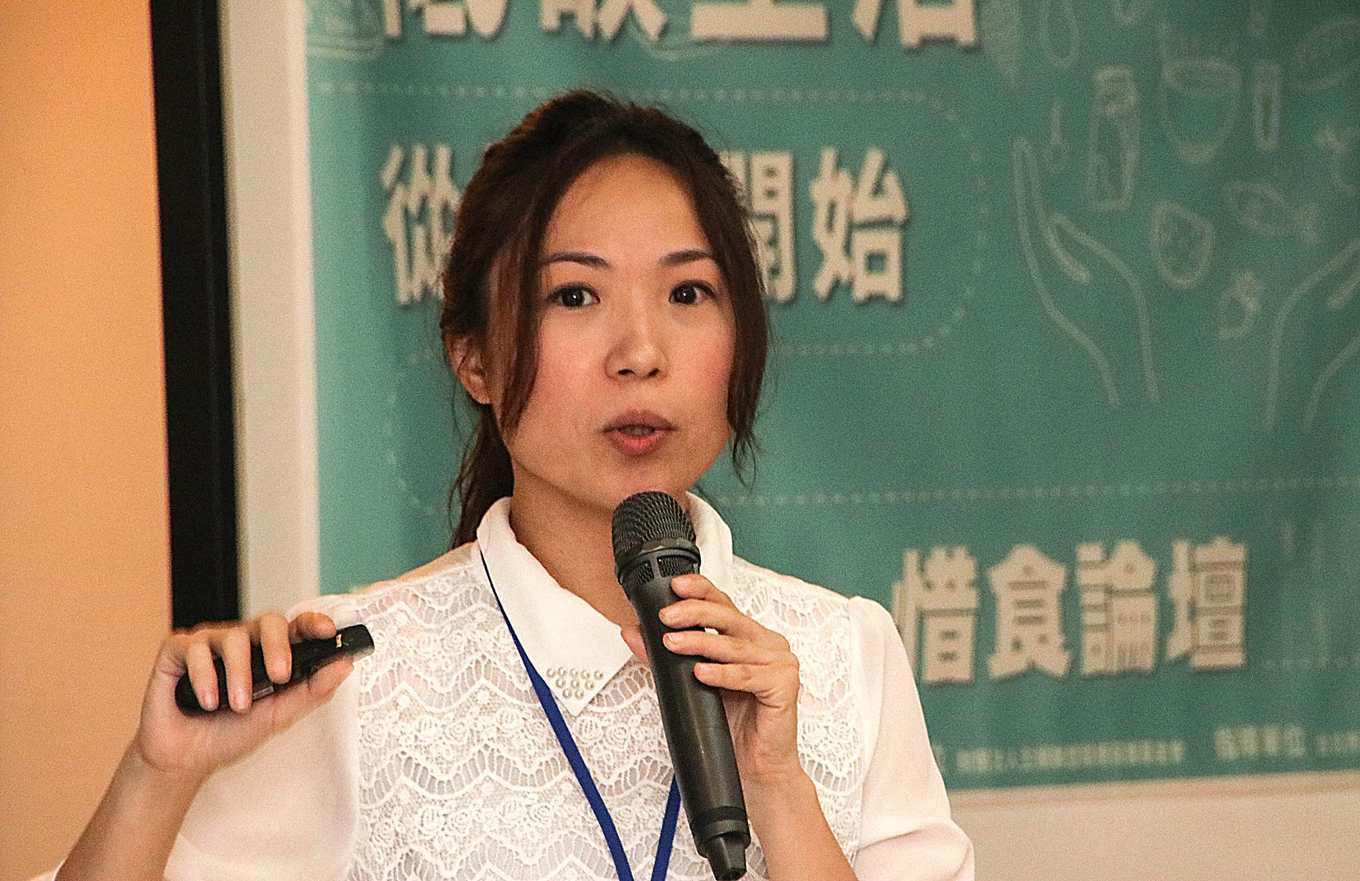


Cherishing food and cutting waste: no time to delay in Taiwan
As the whole world focuses on reducing food waste, where should Taiwan go? Shen Baoli pointed out that Taiwan likewise faces the challenge of extreme climate, and its food self-sufficiency rate is also getting lower and lower, making the reduction of food waste an urgent issue, while cherishing food and reducing the generation of kitchen waste have become the most crucial approaches.
To reduce food waste, the key is to start with reduction at the source
But what is the focus of "waste reduction"? Both the NTU team and Shen Baoli point out that the first priority is "reducing the generation of food garbage," since source reduction can deliver the greatest effect. Next comes distributing the food produced to all those in need, and then recycling what remains as animal feed. The main idea is that at the human and animal stages all the energy produced by food should be fully used, and only the surplus should be considered for composting and renewable energy; discarding should be chosen only as a last resort.
But how should this actually be carried out? Foreign experience may serve as a reference. Li Yifang pointed out that organizations such as ReFED in the United States have used scientific analysis to study 27 no-regrets measures, including consumer education, kitchen waste tracking and analysis, packaging improvements, cold chain management, donation tax systems and centralized composting. The aim is to create jobs and economic value through technological and policy innovation.
Environmental consulting firm turns reducing food waste into a business, helps Thai hotel cut food waste by 32%
In addition, environmental consulting firms such as LightBlue have also begun working with hotels and restaurants, starting by recording food waste situations and then reducing food loss through planning to further improve economic benefits. This measure helped a Thai hotel operator cut food waste by 32%.
Hong Kong, China promotes "kitchen waste audits": sorting and record-keeping statistics identify the ingredients most easily wasted
As for Hong Kong, China, the emerging concept of "kitchen waste audits" is being gradually promoted to achieve waste reduction goals. Ho Hon-wai, executive director of Greeners Action, explained that so-called kitchen waste audits involve manual sorting, recording kitchen waste by category and weight, and then making relevant recommendations based on the statistical data.
For example, a restaurant needs to assign a recorder to carry out and monitor the composition of kitchen waste, remove excess garbage, and after sorting and tallying whether the kitchen waste consists of rice, vegetables or other categories of food, select the foods to be reduced, then feed this back into ingredient purchasing. This not only lets operators know diners' eating habits and reduce the purchasing of specific ingredients, but can also reduce the generation of kitchen waste and save restaurants unnecessary expenses.
Wanhua sets up a "food-sharing fridge" to collect surplus food and share it for free, handling 50 kg of bread a day
Beyond the experience of various countries, Taiwan actually already has quite a few practices. For example, Fang Hesheng, the borough chief of Zhongqin Borough, who founded the Happiness Food Bank, received three tonnes of meat left over from the Universiade and distributed it to various social welfare groups so that surplus food could be put to good use. In addition, he set up an innovative "food-sharing fridge," collecting food that supermarkets, bakeries and others had originally planned to discard and placing it in the fridge for people in need to take. In a single day, 50 kg of bread can be given out, which not only greatly reduces the generation of kitchen waste but also promotes good use of food.
Other efforts, such as the establishment of various food-cherishing restaurants, are also gradually achieving reduction starting from the source. As Taiwan's development of waste reduction is still in its early stages, Shen Baoli cited the words of the founder of a Danish food waste reduction organization: "Reducing waste is not simply about reducing waste, but about respect for food, farmers, animals, workers and resources." She therefore also called on more people to join the action together.
(This article was sponsored by the Jianzhen Environmental Education Foundation for personnel and administrative expenses, but it does not interfere at all with news topic selection or interview writing, ensuring journalistic independence.)
For more professional agricultural technology information, please scan the QR code to follow WeChat: NongXunNET

Please indicate the source when reprinting.