Why does fipronil remain in eggs? It is suspected to be caused by spraying the chicken coop with environmental pesticides.
Text by Kong De-lian and Lai Yu-wei, upstream and downstream reporters
Domestic egg products have been alarmingly found to contain the insecticide fipronil. The Council of Agriculture, the Bureau of Chemistry, and the Food and Drug Administration jointly held a press conference this morning, confirming that egg products from Changhua's Wenzheng Ranch, Guohe Ranch, and Liancheng Ranch tested positive for the pesticide fipronil at 5ppb, 22ppb, and 153ppb respectively; as of today, a total of 5,172 kg of egg products, about 86,200 eggs, have been removed from shelves and sealed. The source and cause of the contamination have become the focus of investigation across all sectors. According to a preliminary investigation by the Council of Agriculture, it is judged to be caused by egg farmers improperly using fipronil to eliminate environmental and external parasites on chickens.
According to the Council of Agriculture, fipronil is only an environmental pesticide, not an animal drug, and therefore should not be used on food-producing poultry and livestock or for disinfection work in poultry and livestock houses. Given this, how did the chickens come into contact with the environmental pesticide fipronil? And why did the eggs they laid also test positive for high levels of fipronil?
News glossary: What kind of drug is fipronil exactly? It is a pesticide, and can also be used as an environmental pesticide, but when used for different purposes, the applicable management methods and residue standards differ. As a pesticide, it can be bought directly at an agricultural chemical store; as an environmental pesticide, it is divided by concentration, some of which the general public can purchase, while others require vector disinfection operators to submit a plan, and only after review and approval can a permit be obtained for purchase.
Environmental pesticides are not allowed for treating chicken lice, so why do egg farmers use them? Pesticide dealers recommend
The environmental pesticide fipronil is not allowed for use on poultry and livestock or in poultry and livestock houses, but Ye Yan-bo, director of the Changhua County Health Bureau, pointed out that the operator of "Liancheng Livestock Farm," which had the highest detected amount of fipronil, claimed that a Pingtung pesticide dealer recommended the large-package "lice-removal drug (Fataibao)," saying the effect was very good and it was a big brand. Therefore, the operator diluted the drug a thousandfold and sprayed it on the feathers of laying hens, hoping to achieve a pest-removal effect, but unexpectedly this led to fipronil exceeding the standard.
"This may not be merely an isolated incident," pointed out a domestic poultry and livestock breeding researcher. Although the currently exposed source still needs to be clarified, "farmers' daily pest prevention use is also one possible source." Because when poultry houses are disinfected, it is very difficult to move all the chickens away, "based on relevant domestic and international research, it is speculated that it may be that after the environmental baseline value increased, it then indirectly accumulated in the animal bodies," rather than being directly used on the chickens themselves.
Lin Jin-fu, deputy director-general of the Food and Drug Administration, stated that fipronil is a fat-soluble substance. After entering the chicken's body, it quickly transforms into fipronil metabolites and is stored in fat. Therefore, fipronil will not only remain in the chickens themselves, but may also appear in the eggs laid by laying hens.
Both Lin Jin-fu and Wang Zhong-shu, deputy director of the Council of Agriculture's Department of Animal Industry, pointed out that the toxic equivalent of fipronil metabolites is higher than that of fipronil itself, "but this test follows the EU testing method, and the detected value is calculated as the sum of fipronil parent compound and fipronil metabolites," simply collectively referred to as fipronil, with a calculation method identical to the EU standard.
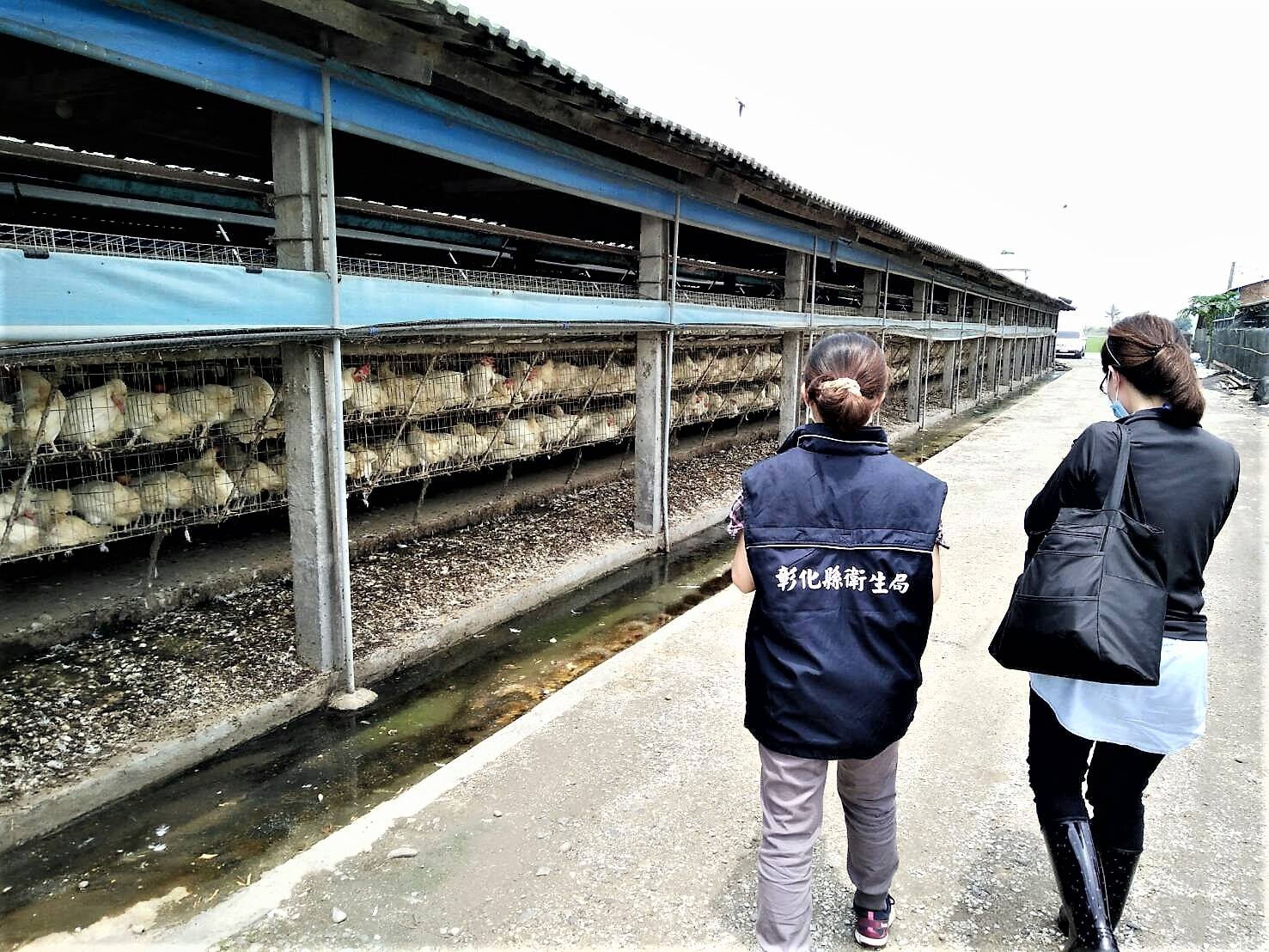

Without fipronil, how does the poultry industry remove lice? Relying on feed additives and sulfur powder
The route by which the fipronil insecticide came into contact with the chickens still needs to be discussed, but the core of the problem is: since regulations prohibit the application of environmental pesticides to poultry and livestock and poultry and livestock houses, why do cases of improper fipronil use still appear? Is it really as the scholar said, "it should not be an isolated incident"? And if ordinary chicken farmers cannot use fipronil, how are they to remove chicken lice?
"Basically, whether to remove pests depends on each farm's practices; they do not necessarily remove pests." Cai, the farm owner of Lixiang Livestock Farm, pointed out that traditional poultry houses are more in need of pest removal, otherwise most current laying hen farms are cage-reared, or even closed-environment controlled poultry houses, where the chicken lice problem is not significant, "and if pests really are removed, the effect is also quite ordinary." Another chicken farmer surnamed Chen also pointed out that the breeder's management is the key; disinfecting at fixed times is not necessarily useful, and it also depends on factors such as the current condition of the chickens, the weather, and the temperature.
In addition, a livestock drug dealer surnamed Chen who was unwilling to be named also added that generally, cage-reared chickens, because they do not come into contact with the ground, have fewer problems with lice and other pests. If pest removal is needed, feed additives are mainly used, or otherwise sulfur powder is used to repel pests, which is more economical and more convenient.
Besides fipronil, other environmental pesticides are also illegally used for poultry house disinfection
But this drug dealer surnamed Chen also pointed out that chicken farmers usually use soapy water together with disinfectant agents, adding legal environmental pesticides such as chlorpyrifos and cypermethrin, to disinfect and repel pests, but they do not specifically use fipronil on the chickens to remove pests, "because chicken farmers also worry that excessive fipronil will affect the egg-laying rate of laying hens."
However, the Bureau of Animal and Plant Health Inspection and Quarantine stated that no environmental pesticides may be used for poultry house disinfection, so even if fipronil is not used, using other environmental pesticides also does not comply with regulations.
Environmental pesticides are not approved animal drugs, so how does the Bureau of Animal and Plant Health Inspection and Quarantine control them?
How are lice removed? In fact, laying hen farmers each have their own set of methods. But after contacting the Bureau of Animal and Plant Health Inspection and Quarantine, it was confirmed that although chlorpyrifos and cypermethrin are both "legal environmental pesticides," they are also "both not" approved animal drugs, that is, neither may be used on food-producing poultry and livestock or in poultry and livestock houses. Given this, why do chicken farmers still add chlorpyrifos and cypermethrin to soapy disinfectant agents? Entirely because chicken farmers have a need to remove lice.
"But basically there is no approved animal drug for removing lice in laying hens," pointed out Shi Tai-hua, deputy director-general of the Bureau of Animal and Plant Health Inspection and Quarantine. Although there is no approved lice-removal drug, for control purposes, the Bureau has still set residue standards for various drugs, combined with routine animal drug sampling inspections, using this as the final threshold of control to prevent farmers from misuse; once a drug is found to exceed the standard, a related traceback mechanism is immediately activated and removal from shelves is enforced.
However, chicken farmers still have a need to remove lice, and the Bureau has not clearly listed "explicitly approved lice-removal animal drugs." After laying hen farmers mistakenly used the fipronil insecticide on chickens to remove lice, the poultry industry also commonly uses unapproved animal drug ingredients in poultry and livestock houses. How exactly are government agencies to manage these unexploded bombs? Shi Tai-hua only emphasized that the residue standards for various drugs and routine sampling inspections are the final threshold of control.
Chicken farmer: Farmers themselves should improve, but the government should also actively face it
Facing the official control attitude, a chicken farmer surnamed Chen who raises laying hens in central Taiwan pointed out directly that frontline farmers indeed need to use agents to kill flies or lice, but for a long time it has always been "whatever the drug dealer says works well, farmers buy it to use." For some drugs, even the sellers do not clearly know the specific ingredients, and habits accumulated over many years have led to today's consequences. Together with the previous dioxin incident, both have dealt heavy blows to the industry itself, but this is not to say that the drug-use habits of twenty or thirty years ago should continue to be followed; rather, farmers should be taught how to correct them and comply with modern drug-use standards.
At the same time, he also emphasized that in addition to farmers improving themselves, the authorities should take on responsibility even more, letting control regulations for animal drugs and environmental pesticides advance with the times. In lice removal, perhaps adopting a positive-list approach, or perhaps proposing some recommended practices, rather than continuing to passively and negatively allow incorrect drug-use methods, is the only way to thoroughly improve the problem.