Soil liquefaction is not the worst; experts say this hazard is even more terrifying
Many people worry that soil liquefaction will cause houses to collapse, but Huang Chun-hung, a professor in the Department of Civil Engineering at National Central University, says soil liquefaction will not cause beams, columns or structural bodies to break directly. What deserves the most attention instead is the secondary disaster caused by ruptured oil and gas pipes. During the Niigata earthquake in Japan, soil liquefaction caused an oil tank to rupture, and the fire burned for 12 days, leaving more than a thousand people affected. Kaohsiung City is the area in Taiwan, China most likely to experience full-scale soil liquefaction, and it also has many underground pipelines. Petrochemical companies such as CPC Corporation should assess the geological conditions of the areas where their pipelines are located.
Soil liquefaction causes pipeline ruptures, and the secondary disasters are even more frightening
Soil liquefaction refers to groundwater rising into the upper soil layer; after soil and water mix, the upper soil becomes loose, which may cause the buildings above to be damaged. After the Central Geological Survey of the Ministry of Economic Affairs recently released the soil liquefaction conditions of eight counties and cities, many people living in soil liquefaction areas fell into panic, asking one after another, "Can my house still be lived in?"
Last week, the Sinotech Engineering Consultants, Inc. invited the Central Geological Survey, the Ministry of the Interior, civil engineering scholars and others to hold a "Technical Discussion Meeting on Soil Liquefaction and Structural Safety." Many experts pointed out that soil liquefaction can be improved with engineering techniques and will not cause beams, columns or structural bodies to break directly. The secondary disasters caused by pipeline ruptures are instead more worthy of attention.
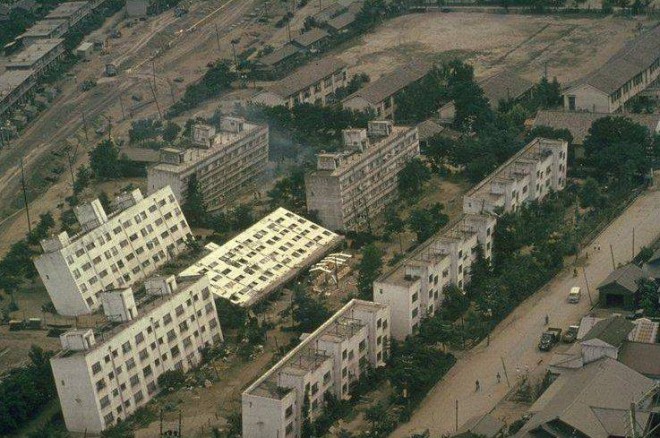
Huang Chun-hung took Niigata, a major industrial city in Japan, as an example. In 1964, a major earthquake struck Niigata, causing severe soil liquefaction. Much muddy water emerged from the ground, and houses sank in rows. However, the number of deaths directly caused by the earthquake was only 26, which was called a miracle; but soil liquefaction caused underground oil pipes to rupture, and the fire burned along the oil floating on the water for a full 12 days, leaving more than 1,000 people affected.
In Kaohsiung City, Taiwan, China, a major petrochemical hub, after the gas explosion the year before last, a major loophole was exposed: underground pipelines had long been poorly managed. In the preliminary data released this time by the Central Geological Survey, 4011 hectares in Kaohsiung City are in high soil liquefaction potential areas, and 85% of the land in the Renwu Industrial Zone is in a high potential area.


-660x426.png)