For spring weight loss and blood replenishment, start by eating more red beans
The whole year's work depends on a good start in spring. If you want to shake off the fat accumulated over the cold winter and bring a healthy glow back to your face, now is the perfect time to start working at it! And Taiwan, China's excellent local Kaohsiung No. 9 red beans are your best little beauty helper!
The Origins of Kaohsiung No. 9 Red Beans
Red bean, also known as adzuki bean or small bean, originated in China and belongs to the Fabaceae family as an annual herbaceous plant. Red beans in Taiwan, China are concentrated in autumn cultivation. Take Greenvines' Kaohsiung No. 9 red beans as an example: cultivation begins each year from late September to early October, and the harvest takes place the following January.
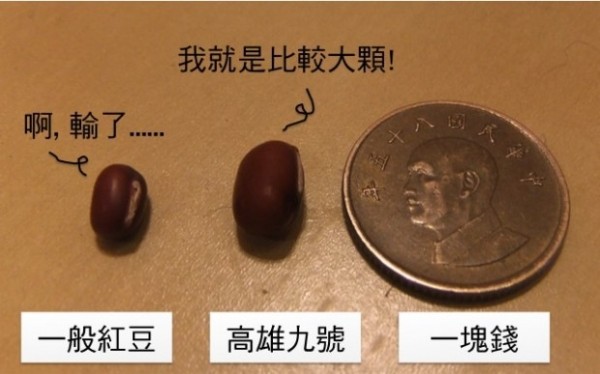
Kaohsiung Nos. 7 and 8 are currently the main cultivated varieties of red beans in Taiwan, China. No. 7 has large seeds and is suitable for processing, but it is not resistant to pests and diseases and has high production costs; No. 8 has high yields, bright red seeds and thin seed coats, but its drawback is smaller seeds. Therefore, the Kaohsiung Agricultural Research and Extension Station further improved on the shortcomings of Kaohsiung Nos. 7 and 8 to breed Kaohsiung No. 9, which has large seeds, bright red color, thin seed coats and stable yields.
(Source: Agriculture and Food Agency website, Kaohsiung Agricultural Research and Extension Station)
The Nutrition and Benefits of Kaohsiung No. 9 Red Beans
A fiber-rich "rice bean" that aids digestion
Because red beans have enough starch content to provide a feeling of fullness while also being rich in dietary fiber to aid digestion, they are an excellent supplementary food for those who want to manage their weight.
Red beans have a starch content of about 35%, the highest among legumes. After steaming or boiling they have a mealy, sandy texture, and eating a lot of them produces a feeling of fullness. This is why red beans are also called "rice beans" and are generally used for cooking rice or porridge. In addition, red beans are extremely rich in dietary fiber, twice that of oats, which most people know as being rich in dietary fiber (according to the Department of Health food nutrient composition database, every 100 g of oats contains 5.1 g of dietary fiber). The dietary fiber in red beans is insoluble dietary fiber, which helps control blood sugar and blood lipids, and can also promote gastrointestinal motility and prevent or help treat constipation.
| Calories (kcal) | Water (g) | Crude protein (g) | Crude fat (g) | Carbohydrates (g) | Crude fiber (g) | Dietary fiber (g) | |
| Red bean | 332 | 12.6 | 22.4 | 0.6 | 61.3 | 4.2 | 12.3 |
Source: Department of Health food nutrient composition database
Rich in vitamin B1 and the minerals potassium and iron, it boosts metabolism and nourishes the blood
In addition to boosting metabolism and reducing edema, the ancient physician Li Shizhen called red beans the "valley of the heart," emphasizing red beans' heart-nourishing benefits. The dietary fiber in red beans helps lower blood lipids and blood pressure and improve cardiac function, and because they are rich in iron they can promote the flow of qi and nourish the blood, so red beans are very suitable for friends who want to improve cold hands and feet and add a healthy glow to their faces. Red beans are rich in vitamin B1, a basic member of the B complex that acts as a catalyst in energy conversion and the digestion of sugar and starch. It also has a diuretic effect and can maintain the body's water balance. In addition, red beans contain potassium, which promotes diuresis. Both vitamin B1 and potassium help excrete cholesterol, salt and other unnecessary substances from the body. This is why red bean water is the secret remedy for reducing edema for many pregnant women and office workers who suffer from edema!
| Vitamin B1 (mg) | Vitamin B2 (mg) | Vitamin B3 (mg) | Vitamin B6 (mg) | Vitamin C (mg) | Potassium (mg) | Calcium (mg) | Magnesium (mg) | Iron (mg) | |
| Red bean | 0.43 | 0.1 | 2.06 | 0.66 | 2.4 | 988 | 115 | 177 | 9.8 |