An in-depth exploration of agriculture and the future development of humanity
[First, a Word on Agriculture, Poisoned Birds, Milk and People]
Humans need agriculture because there is not enough food; there is not enough food because there are too many people.
Before agriculture, we survived by hunting animals or gathering fruit, and the original population-balancing mechanisms relied on "infanticide" and "tribal warfare" for control. A few groups migrated to new habitats, and in order to survive, they drew on accumulated knowledge and came to know tens of thousands of kinds of food, medicinal materials and building materials, and then invented "agriculture."
When we shifted from hunting and gathering to an agricultural society, the average human lifespan during the transition period actually declined, perhaps related to a reduction in the diversity of the varieties or species people had originally depended on for survival. (Note 1) The species that accompany us now are few and far between, such as grain crops like wheat and sorghum, or pigs, chickens, cattle and sheep; around us, these monotonous plants and animals are all that remain. Today, 75% of our food sources come from just 6 plants and 1 animal.
In addition to the expansion of agriculture, combined with multi-front development by livestock farming, mining and industry, the original ecology was affected, which in turn produced the tragedy of the poisoned bird incident. As a netizen responded in the article: "Today the birds merely ate some of our crops, but have we ever thought about who robbed them of their food? It was us humans." Yet there are still lovely, persistent people in Taiwan, China, carrying out seed conservation, and they have now propagated more than 20,000 species of tropical plants from around the world. (Note 2)
As for the production of milk? It comes from the meeting of the aurochs and humans.
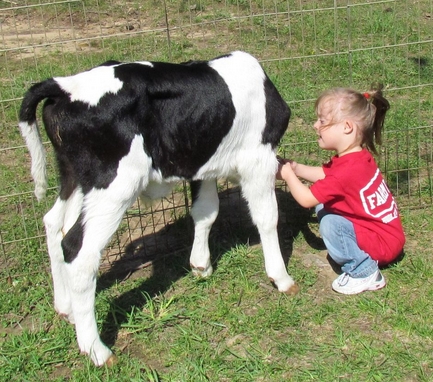
Image source: via
I also finished watching "Beyond Beauty: Taiwan from Above" recently, and my only takeaway was this one line: We have the ability to ”temporarily” manipulate organisms and the environment, but we do not yet have enough wisdom to ”sustainably” coexist peacefully with other organisms.
In chess, the next move has 35 possible options, and in shogi as many as 80, but the moves in the game of life are infinitely many…
I believe there are still many, many other possible solutions; everyone is welcome to join in the brainstorming and the relay! It seems we do not have much time left to complain and be pessimistic:)
——————————————————————————–
Note 1: This inference was proposed by University of Connecticut anthropologist Leigh Binford in 1970
Note 2: For reports related to seed conservation, see: "Koo Yen Cho-Yun Plant Conservation Center"
Note 3: Even today, 25% of the world's population cannot break down lactose after adulthood, and about 50% of the population can only digest part of the lactose. Advertising slogans always tell you about "the benefits of milk," but they never add at the same time that "only if your body can fully digest lactose is it good for you." For related details, see this article