50 Lan Crispy Plum Exceeds Sulfur Dioxide Limit; Vendor Says Sodium Metabisulfite Is the Cause and Will Reduce Its Use
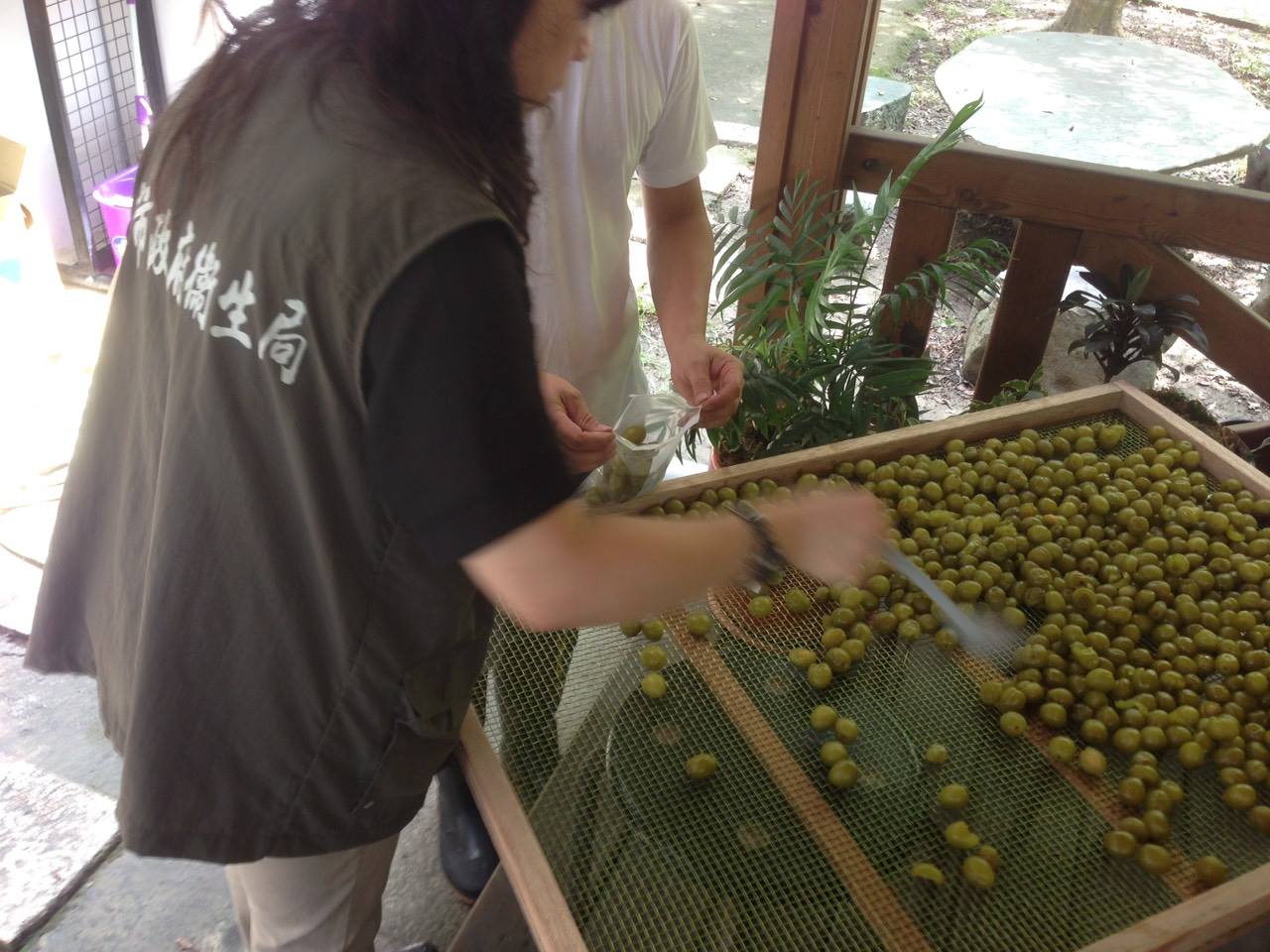
50 Lan's "crisp plums" (pickled green plums) were found to contain 0.138 ppm of sulfur dioxide (standard: 0.1 ppm). A follow-up investigation by the Tainan City Health Bureau traced the source to the third class of the fruit tree production and marketing group in Nanxi District. Today, Health Bureau personnel inspected the production and marketing group's processing plant and 50 Lan's head office separately. Lai Jung-hsin, head of the production and marketing group, said that the crisp plums were treated with sodium metabisulfite for sterilization and bleaching, and the high-temperature water boiling time was insufficient, resulting in excessive sulfur dioxide residue. The production and marketing group will review its operating procedures and reduce the use of food additives.
Lai Jung-hsin: The crisp plums did not follow the high-temperature water boiling process, resulting in excessive sulfur dioxide residue
The Tainan City Health Bureau today (the 13th) split into three teams to inspect the third class of the fruit tree production and marketing group in Nanxi District, 50 Lan's head office, and 28 branches across greater Tainan. At the third class of the Nanxi fruit tree production and marketing group, group head Lai Jung-hsin personally demonstrated the actual crisp plum production process on site.
Lai Jung-hsin said that after the production and marketing group purchases plums from plum farmers, the plums are first washed with clean water to remove impurities, then food-grade sodium metabisulfite is added for sterilization and bleaching; afterward they are washed again with clean water, drained, and sugared 3 times to become a semi-finished product that is refrigerated. Then, according to order quantities, they undergo 100 degrees C high-temperature water boiling for sterilization, packaging, and shipping.
Lai Jung-hsin said that sodium metabisulfite produces "sulfur dioxide," which can be removed through washing and high-temperature water boiling. The crisp plums found by the Taitung County Health Bureau to have excessive sulfur dioxide residue were completed in April of this year; because it was plum season at the time, the quantity was huge, and workers may have failed to properly carry out the high-temperature water boiling process due to operational oversights, resulting in excessive sulfur dioxide residue.